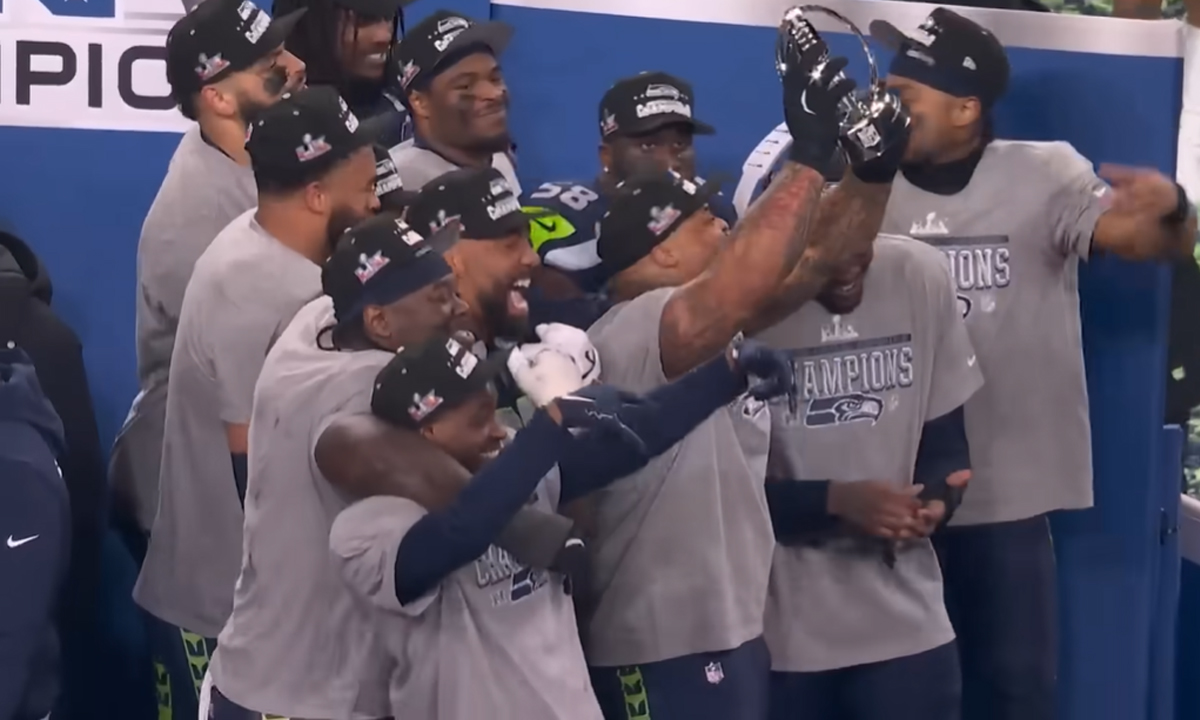
When sports and politics collide, things almost always get messy, and the fallout fromSuper Bowl LXis proving to be no different. Fresh off the Seattle Seahawks' big win, the internet is already buzzing with speculation about the team's post-championship plans. The biggest rumor flying around right now is that the franchise intentionally snubbedPresident Donald Trump's invitation to the White Houseto avoid a meeting.
But in the age of viral content, you have to separate what is real from what is just noise. As of Wednesday, February 18, the actual situation seems much less dramatic than what you might be reading online. There is currently zero official confirmation or documentation to back up the growing claims of a snub.
The Seahawks are sitting on top of the NFL world right now after taking down theNew England Patriots 29-13 in Super Bowl LXon February 8. Ever since that triumph, fans have started circulating a story that the team flat-out declined the White House visit.
This narrative has really picked up speed on platforms like Facebook, X, and Threads. Users are sharing the claim left and right, but so far, nobody is providing any sourced evidence to prove it actually happened.
Despite the traction these posts are receiving, they remain fundamentally unsourced. Several viral posts have also been met with pushback on Threads specifically noting there's 'zero evidence' of a decline. This highlights a critical distinction for news consumers: a trending search topic does not equate to a verified report.
To understand the validity of these claims, one must look for official trails of communication, which are currently non-existent. Despite the rumour's popularity, no credible outlet has produced a White House confirmation of an invitation being sent.
Furthermore, there has been no documentation of a Seahawks confirmation of accepting, or a Seahawks confirmation of declining.
The White House also publicly acknowledged the matchup that day with an official message tied to Super Bowl Sunday. However, an acknowledgement of the game is not the same as a formal scheduling request for a visit.
As it stands, the public is debating a decision that technically has not yet been made, or at least has not been publicised in any capacity.
It is easy to see why fans might believe the narrative, as two things can be true at once: teams often get invited and the timing is rarely immediate or clean. History provides useful context for this delay, showing that a gap between the trophy ceremony and the political invite is standard procedure rather than a sign of protest.
Source: International Business Times UK