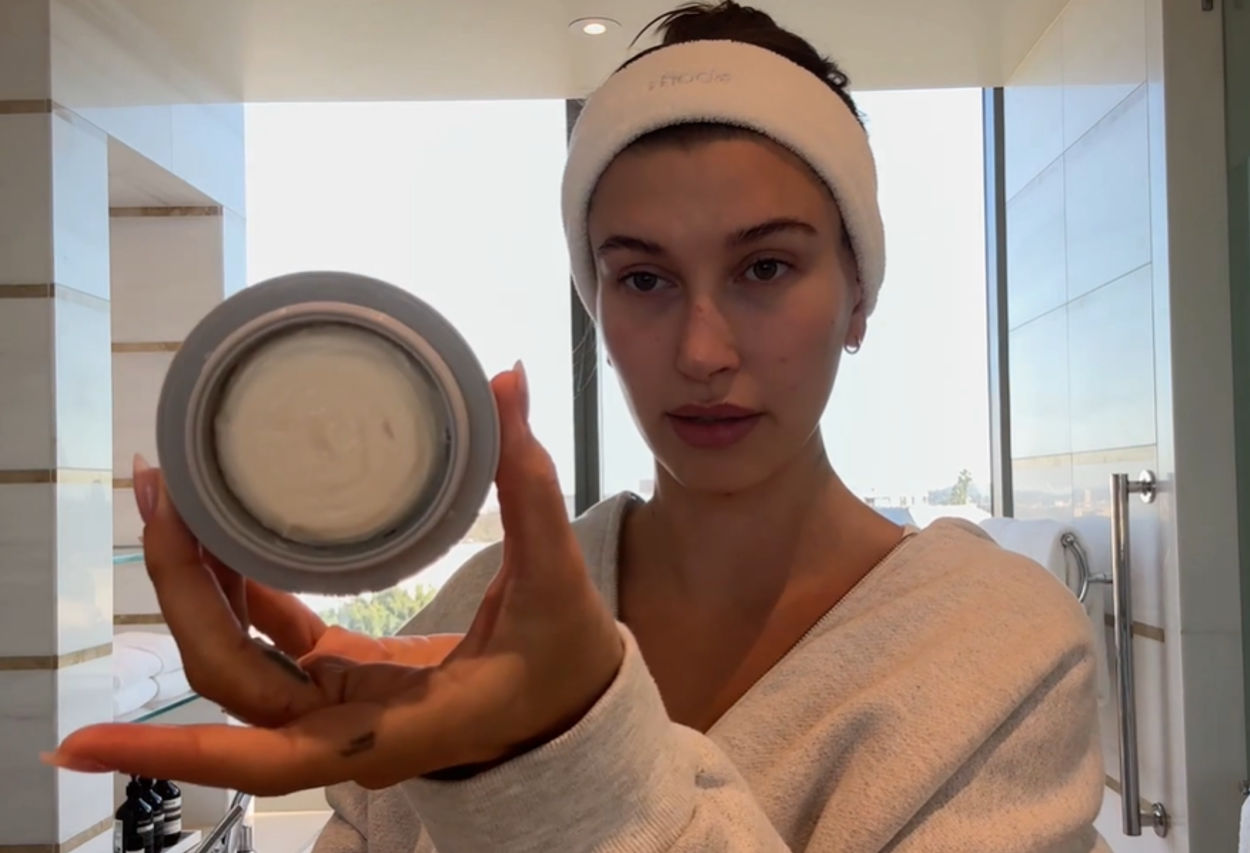
Hailey Bieber's skincare brand Rhodecontinues to dominate the beauty space, but her latest drop is sparking more than just a glow. On 9 February, the brand released Caffeine Reset, a $38 (£28.18) sculpting cream face mask designed to depuff and energise 'tired' skin.
To celebrate, Bieber hosted a high-profile 'Rhode Bakery' event in Sydney on 12 February, complete with themed pastries and coffee.
However, what began as a celebratory launch quickly turned controversial. Just a week after the release, netizens began questioning Bieber about the mask's intense side effects after she addressed the formula in an Instagram story.
At the centre of the heat is Vanillyl Butyl Ether or VBE—the polarising ingredient that Bieber claims creates an 'intentional' redness. But is it a healthy flush, or just controlled irritation? Here is everything you need to know.
The social media firestorm began when Bieber took to her Instagram stories to pull back the curtain on the Caffeine Reset formula. Addressing her followers directly, she wrote: 'Wanna share a tidbit about our new Caffeine Reset mask. As someone who has super sensitive, reactive skin and has perioral dermatitis and am prone to rosacea, our mask has an ingredient called VBE which helps bring blood flow to the skin.'
Bieber added, 'So if you notice any slight flush or warmth after using, that is intentional and from that ingredient.'
However, users on social media quickly locked in on the explanation. An X user argued that Bieber's claims directly contradict the known effects of VBE on sensitive skin types: 'Hailey Bieber reveals via IG that her Rhode Caffeine Reset mask contains VBE, an ingredient designed to cause "intentional redness" and a warming sensation. This ingredient is considered high-risk for rosacea-prone or sensitive skin by multiple clinical sources.'
🚨| BREAKING: Hailey Bieber reveals via IG that her RHODE Caffeine Reset mask contains VBE, an ingredient designed to cause “intentional redness” and a warming sensation.The ingredient is considered high-risk for rosacea-prone or sensitive skin by sources.pic.twitter.com/1NocXupEpT
Netizens quickly jumped in to add their thoughts on the product's logic. One commenter quipped, '"Synthetic warming agent" LMAOO (laugh my a** out) — it purposely makes your skin irritated so you think something is happening.'
Others took a more clinical approach to the critique, focusing on the danger of rebranding inflammation as a 'glow.' One response stated: 'The deeper issue isn't just one ingredient; it's the normalization of controlled inflammation as a beauty outcome. In clinical dermatology, redness is usually treated as a symptom to calm, not something to induce. When brands frame irritation as innovation, consumers lose the ability to distinguish between stimulation and damage.'
Source: International Business Times UK