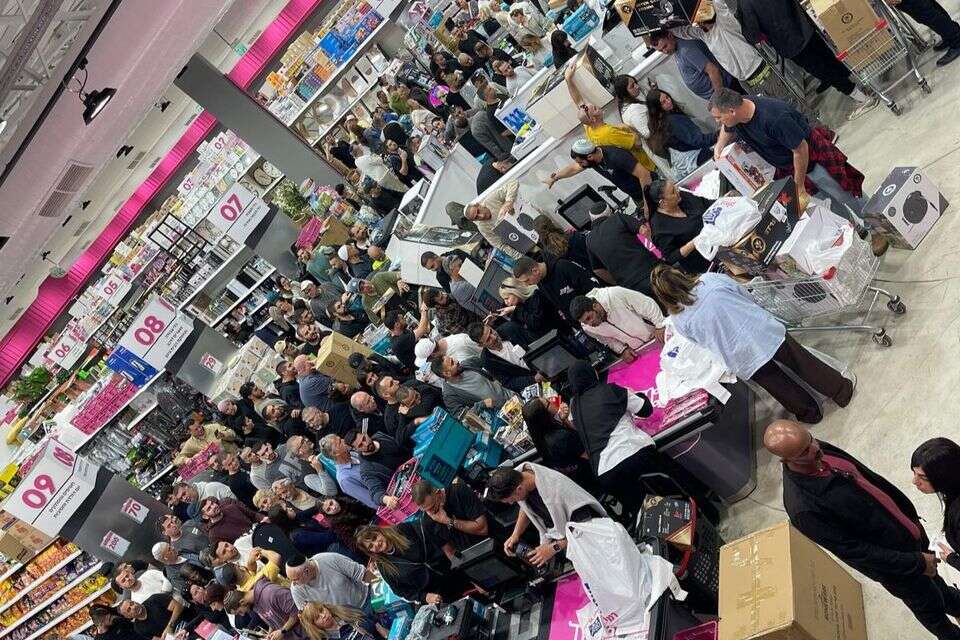
Chaos engulfed the Rami Levy Stock branch in Jerusalem's Malha neighborhood yesterday afternoon, as frenzied shoppers overwhelmed the store with overflowing carts and interminable checkout lines stretching deep into the aisles. What began as a routine promotion on staple goods spiraled into pandemonium, with reports of carts bursting at the seams from bulk buys of rice, oil, and canned goods, and altercations breaking out over the last remaining discounted items. Eyewitnesses described a scene reminiscent of Black Friday mayhem, but fueled by Israel's escalating cost-of-living crisis rather than holiday hype.
The trigger was Rami Levy's flash sale on essential groceries, slashing prices by up to 50% amid national inflation hovering at 4.2%. By midday, hundreds had queued outside the branch hours before opening, many arriving with empty suitcases and trolleys to maximize hauls. Inside, shelves emptied within minutes, leading to shoving matches and spilled merchandise. Security footage obtained by The Culture War shows staff struggling to maintain order as lines at checkouts ballooned to over two hours, with some customers abandoning carts mid-aisle in frustration.
Shoppers voiced a mix of desperation and defiance. "We can't afford to eat otherwise," said Miriam Cohen, a mother of four clutching bags of pasta. "Prices everywhere else are killing us." Palestinian-Israeli families, who make up a significant portion of the store's clientele in this diverse area, echoed the sentiment, highlighting how economic pressures transcend ethnic divides. One local activist noted the irony: Rami Levy, often criticized for its West Bank operations, becomes a rare unifier in times of scarcity.
Store management issued a statement apologizing for the disruption and promising enhanced staffing for future promotions, while Jerusalem police intervened to disperse the crowd and prevent injuries. No arrests were made, but the incident underscores vulnerabilities in discount retail models during economic squeezes. Rami Levy, Israel's largest supermarket chain with over 40 branches, has faced similar episodes before, particularly in low-income neighborhoods where its "lowest prices guaranteed" slogan draws the masses.
Analysts point to broader forces at play: persistent supply chain issues from regional conflicts, coupled with government subsidies failing to keep pace with rising energy and import costs. This Malha meltdown is not isolated; similar scenes have unfolded at branches in Ashdod and Nazareth, signaling a tipping point in public tolerance for affordability woes. As Prime Minister Netanyahu's coalition grapples with budget debates, such grassroots eruptions could amplify calls for price controls and welfare reforms, turning supermarket skirmishes into a microcosm of national discontent.