War with Iran could be days away. And if it happens, you'll feel it at the petrol pump.
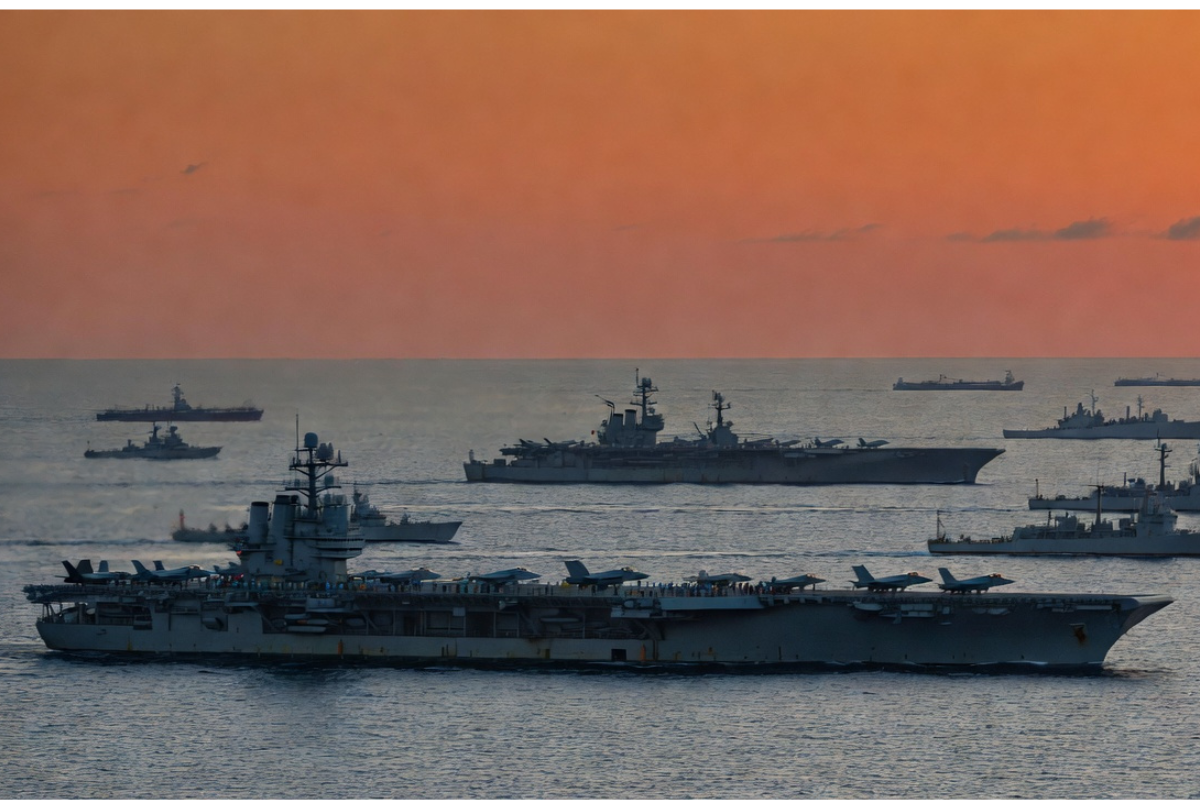
Top national security officials have told PresidentDonald Trumpthe US military is ready for strikes on Iran as early as Saturday. Trump hasn't made a final call. But the pieces are in place. Two aircraft carriers. More than 12 warships. Hundreds of fighter jets. Another 50 jets, including F-35s and F-22s, arrived in the region in the past 24 hours alone.
'The boss is getting fed up,' one Trump adviser told Axios. 'I think there is 90% chance we see kinetic action in the next few weeks.'
Here's what most headlines are missing. Current oil market conditions may be giving Trump a rare window to strike with less economic blowback.
Brent crudesits around $67–$70 (£49.66–£51.88) per barrel. Supply is healthy. Demand growth is modest. Iran's regional proxies, battered by last year's 12-day war, aren't what they used to be. Axios reports these factors could soften the price shock if strikes happen now rather than later.
That matters for households in the UK and beyond. A prolonged conflict could send Brent crude soaring to $90–$130 (£66.70–£96.35) per barrel, according to analysts at The National Interest, particularly if Iran blocks the Strait of Hormuz. About one-fifth of all global oil trade passes through that chokepoint. Higher energy bills, fresh inflation, supply chain chaos. All on the table.
The military isn't just gearing up. It's also getting people out of harm's way.
Over the next three days, the Pentagon is moving some personnel temporarily out of the Middle East, according to CBS. Most are heading to Europe or back to the US. Officials call it standard practice before any potential operation. It doesn't confirm an attack is coming. But it shows the White House is preparing for Iranian retaliation either way.
Meanwhile, Tehran is digging in. Literally.
Satellite imagery analysed by the Institute for Science and International Security shows Iran has buried all three tunnel entrances at the Isfahan nuclear complex with soil. At the Parchin military site, a new facility now sits under what analysts describe as a 'concrete sarcophagus.'
Source: International Business Times UK
