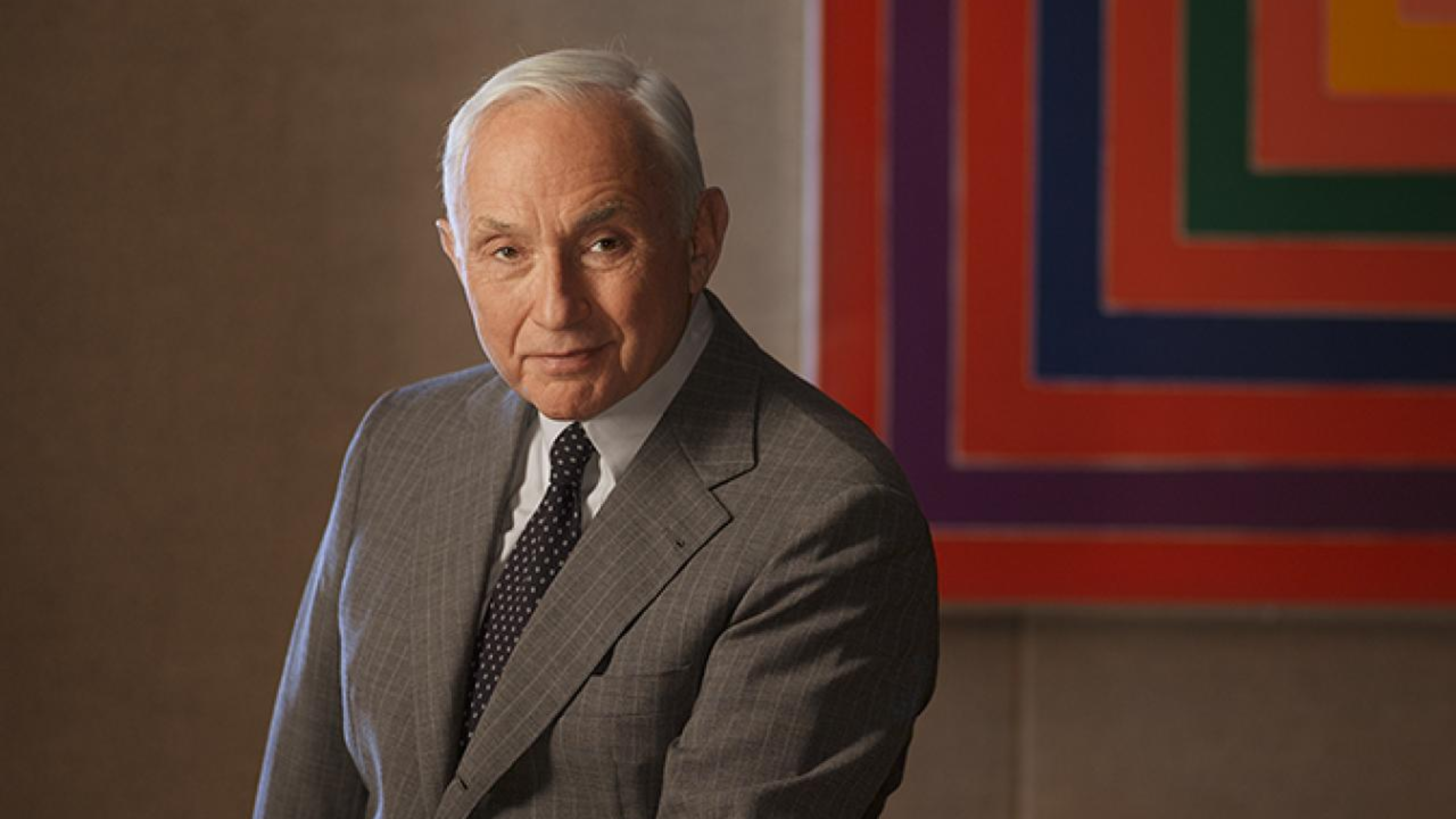
Leslie Herbert Wexner was born in Dayton, Ohio, in September 1937 to Russian‑Jewish immigrant parents who owned a small clothing store in Columbus. After attending Bexley High School, he studied business administration at Ohio State University, graduating in 1959 before serving in the Air National Guard. Wexner's early interest in commerce was shaped by his work in his parents' boutique, where he first developed a sense of inventory management and retail strategy.
His formative years in Ohio instilled a practical understanding of American consumer behaviour at a time when post‑war suburban expansion was creating new opportunities for retail growth. These experiences laid the foundation for his later success as a retail entrepreneur.
In 1963, with a $5,000 (£3,656) loan from his aunt and a matching bank loan, Wexner opened his first store, The Limited, in the Kingsdale Shopping Centre in Upper Arlington, Ohio. The concept focused on moderately priced women's apparel that sold quickly, generating steady revenue and customer loyalty.
The Limited expanded rapidly, with a second store opening in 1964 and success prompting a public listing of Limited Brands on the New York Stock Exchange in 1969. Under Wexner's leadership, the company became a powerhouse in American retail, capitalising on the burgeoning mall culture of the 1970s and 1980s.
A key turning point in Wexner's career came in 1982 with the acquisition of Victoria's Secret for $1 million (£731,314), a small and struggling lingerie chain based in San Francisco. Wexner recognised the potential to reframe the brand for a mainstream audience and overhaul its marketing strategy. Over the next decade, Victoria's Secret wastransformed into a globally recognised label, valued at around $1 billion (£731 million) by the early 1990s.
This expansion illustrated Wexner's skill in brand reinvention. He pushed Victoria's Secret into the mainstream fashion arena through innovative catalogue marketing and later through public fashion events that became cultural phenomena.
Beyond Victoria's Secret, Wexner built a diversified retail conglomerate. L Brands included Bath & Body Works, Pink, Henri Bendel, and other well‑known labels by the 1990s, dominating significant segments of the American apparel and beauty market. His aggressive acquisition strategy and ability to scale operations positioned him as one of the most influential figures in US retail.
The success of these brands was not solely financial; they shaped consumer expectations for specialty retail and contributed to the rise of the mall as a central shopping destination in suburban America.
By the late 1980s, Wexner was widely recognised as a retail magnate with considerable influence. He became a major philanthropist, donating to arts, education, and Jewish cultural initiatives, including the establishment of the Wexner Foundation to support community leadership.
His wealth and leadership extended beyond business. Wexner was listed by Forbes as one of Ohio's wealthiest figures and maintained a high profile in civic and cultural circles.
Source: International Business Times UK
