“Cannot be clearer anymore"—when aviation historian and analyst Tom Cooper claimed that India struck Pakistan’s Kirana Hills nuclear facility during Operation Sindoor, he came prepared for the pushback with evidence to support his claim, despite official denials from the Indian Air Force.
Speaking to NDTV, Cooper said the timing and nature of the strike suggest it was intended as a strong strategic message. “It’s a place you hit when you want to send a clear message without causing, let’s put it this way, too much damage. It means, ‘Listen, guys in Pakistan, we can hit you severely where we want, whenever we want, with as much ammunition as we want. Stop it, finally’," he said.
Asked about the evidence behind his assertion, Cooper said there were several indicators, including videos allegedly showing missile contrails descending onto the hillside. He pointed to smoke rising from what he described as the radar station of the 4091st Squadron of the Pakistani Air Force.
However, at a press conference on May 12, Director General of Air Operations Air Marshal AK Bharti responded to a query about the Kirana Hills strike, saying, “Thank you for telling us that Kirana Hills houses some nuclear installations. We did not know about it. We have not hit Kirana Hills. I did not say so in my briefing."
Kirana, a high-security zone linked to Pakistan’s nuclear weapons programme, is believed to contain an underground facility for storing nuclear arms and has reportedly been used for nuclear research and testing, including subcritical tests carried out in the 1980s.
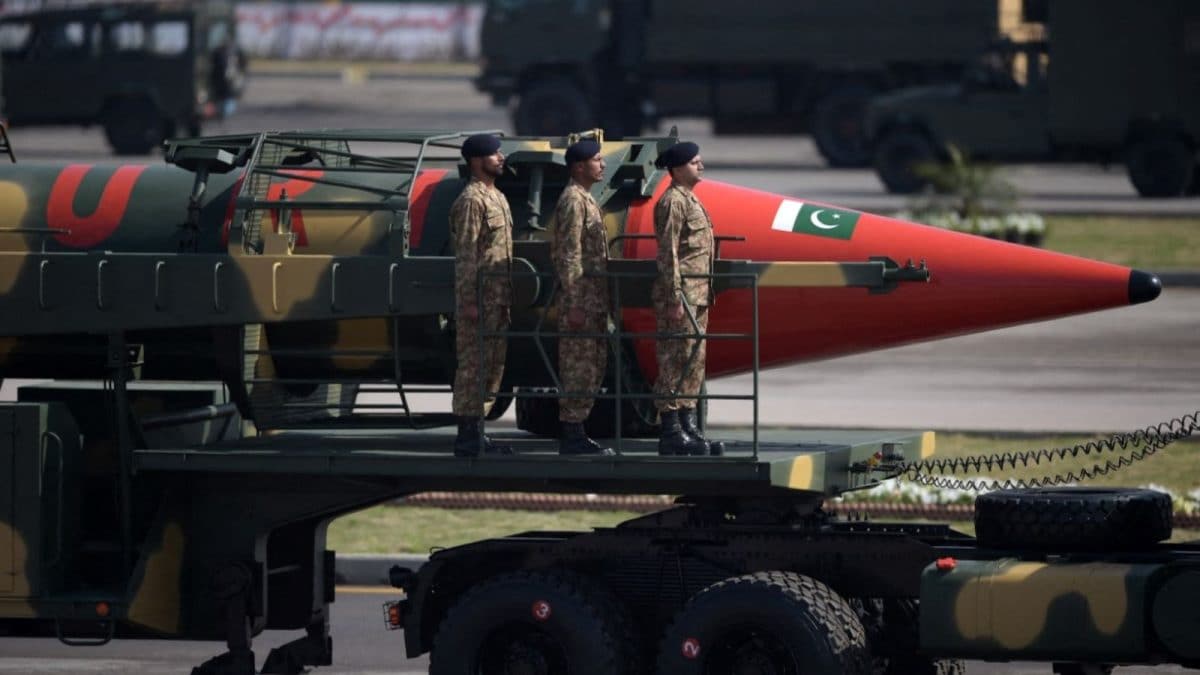
Cooper’s assertion has brought back the focus on Pakistan’s nuclear facilities and where the neighbour sources its uranium and plutonium from. Much of Pakistan’s nuclear programme is managed by the Pakistan Atomic Energy Commission (PAEC) and the Kahuta Research Laboratories (KRL) under the oversight of the National Command Authority (NCA).
While information about such sites is classified, according to open-source information, Pakistan’s Uranium enrichment and research facilities are located in Kahuta (Punjab), which is the primary uranium enrichment site and uses gas centrifuge technology and Nilore (near Islamabad), which has research reactors and R&D under the Pakistan Atomic Energy Commission.
Its Plutonium production facilities are located in Khushab Nuclear Complex (Punjab), where heavy-water reactors are dedicated to plutonium production and operated by Pakistan Atomic Energy Commission. The New Labs Reprocessing Plant in Rawalpindi reprocesses spent fuel to extract Plutonium. Similarly, Chashma Nuclear Complex (Punjab) houses civilian nuclear power reactors, including Chashma-1, 2, 3, and 4, under international safeguards (IAEA). The facility is built with Chinese assistance.
The civilian Nuclear Power Plants include the Karachi Nuclear Power Plant (KANUPP / K-2, K-3) which has new reactors (Hualong One design) built with Chinese support. There is also the Chashma Nuclear Power Plant located in Mianwali district with multiple Chinese-built operational reactors.
When it comes to sourcing, Pakistan sources most of its natural uranium domestically from Dera Ghazi Khan (Punjab) and Baghalchur mines. Its Uranium is enriched domestically at Kahuta Research Laboratories and according to sources, the technology originally developed covertly in the 1970s-80s (AQ Khan network). Its Plutonium is produced domestically in heavy-water reactors at Khushab and reprocessed at Rawalpindi facilities.
Source: World News in news18.com, World Latest News, World News
