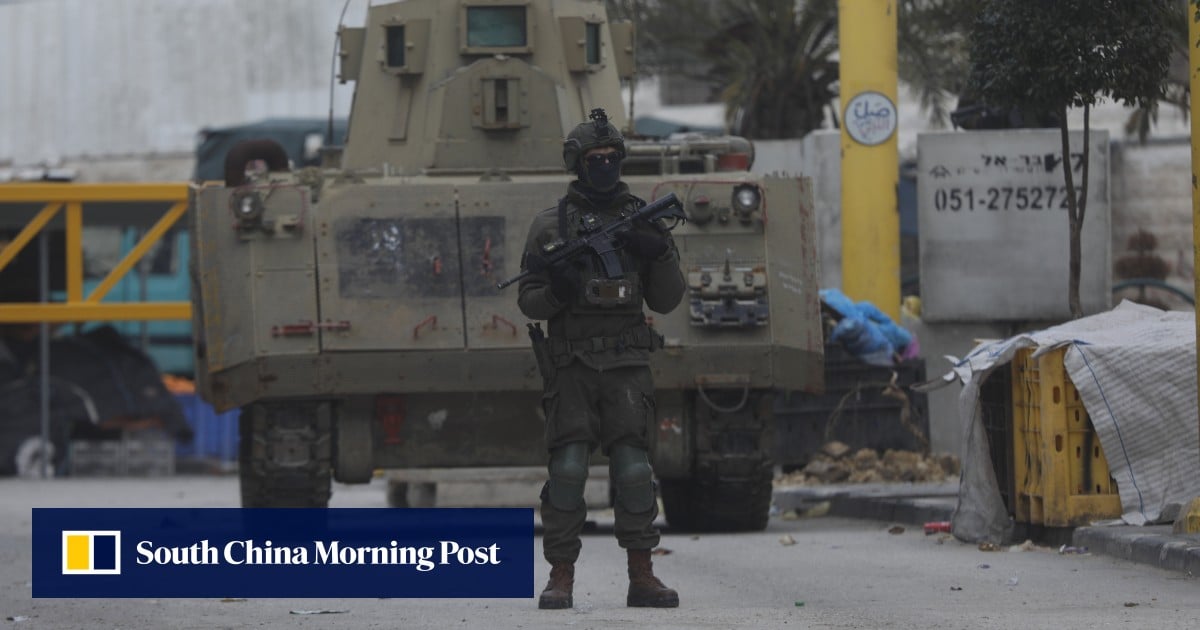
In the shadow of olive groves and rolling hills in the occupied West Bank, Palestinian families like that of 45-year-old farmer Ahmed Khalil are grappling with empty pantries and mounting despair. Israeli military restrictions, tightened since the October 2023 Hamas attacks, have choked off access to essential goods, leaving households in areas like Jenin and Tulkarm on the brink of starvation. Checkpoints that once allowed sporadic passage now stand as ironclad barriers, delaying or denying trucks laden with food, medicine, and fuel, as soldiers cite security threats from militant activity.
The restrictions form part of a broader Israeli strategy to dismantle armed networks in Palestinian refugee camps and villages, where operations have intensified over the past year. In Jenin alone, repeated raids have led to prolonged road closures and permit revocations for Palestinian workers and merchants. According to the United Nations Office for the Coordination of Humanitarian Affairs (OCHA), over 900 movement obstacles dot the West Bank, up 10% from pre-escalation levels, exacerbating a humanitarian crisis where 80% of surveyed households in northern areas report cutting meals or skipping days of eating entirely.
Personal stories underscore the human toll. Khalil, who once supplied neighboring villages with vegetables from his small plot, now watches his children grow thin as irrigation water and fertilizers—imported through Israeli-controlled crossings—fail to arrive. Aid groups like the World Food Programme document a surge in acute malnutrition among children under five, with cases doubling in restricted zones. Palestinian health officials blame not just blockades but also settler violence, which has displaced over 1,200 families since October 2023, further straining local resources.
Israeli officials defend the measures as vital for national security, pointing to foiled attacks and the neutralization of over 500 militants in the West Bank. Defense Minister Yoav Gallant has described the operations as targeted efforts to prevent the territory from becoming another Gaza frontline. Yet critics, including Human Rights Watch, argue the blanket restrictions amount to collective punishment, violating international law by indiscriminately harming civilians and undermining the Palestinian Authority's fragile control.
As winter bites harder, international calls for easing restrictions grow louder, with the European Union and Qatar pledging emergency funds that struggle to penetrate the barriers. Analysts warn that persistent hunger could fuel radicalization, perpetuating a cycle of violence in a region already frayed by decades of occupation. For families like Khalil's, survival hinges on a fragile hope that diplomacy might one day reopen the roads to sustenance.
