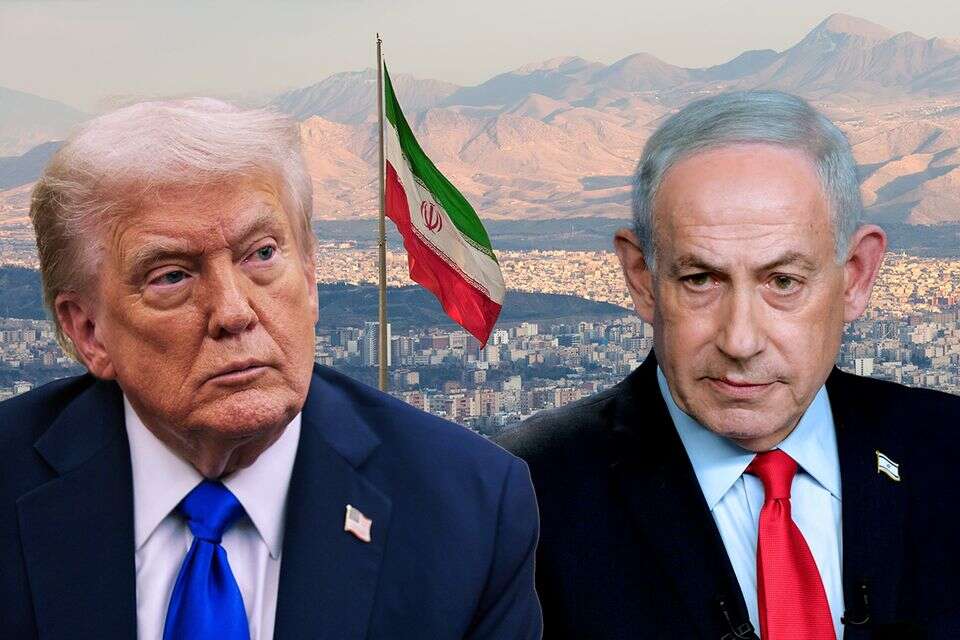
Israeli Prime Minister Benjamin Netanyahu touched down in Washington amid heightened tensions with Iran, declaring his intent to equip President Donald Trump with a set of ironclad principles for any future negotiations with the Islamic Republic. The surprise visit, announced just days after Iran's latest missile barrage near the Golan Heights, underscores Israel's unwavering push for a hardline U.S. stance against Tehran's nuclear ambitions and regional proxy wars.
Netanyahu's aircraft landed at Joint Base Andrews under crisp winter skies, where he was greeted by a delegation including Trump's national security advisor and key Republican senators. Speaking to reporters en route, the veteran leader outlined his blueprint: zero tolerance for uranium enrichment beyond civilian levels, the dismantlement of Iran's ballistic missile program, and full transparency on past nuclear weapons research. "These are not suggestions; they are the non-negotiables for peace," Netanyahu stated, emphasizing that any deal must neutralize the existential threat Iran poses to Israel and its Sunni Arab allies.
The timing of the trip aligns with Trump's second-term pivot toward maximum pressure on Iran, echoing his 2018 withdrawal from the Obama-era nuclear accord. Sources close to the White House indicate Trump is receptive, having already imposed fresh sanctions on Iranian oil exports and Revolutionary Guard affiliates. Netanyahu's principles build on this foundation, incorporating intelligence shared from recent Israeli strikes on Iranian assets in Syria, which reportedly set back Tehran's nuclear timeline by months.
Critics in Europe and among U.S. Democrats decry the approach as escalatory, warning it could provoke Iran into accelerating its bomb program. Yet Netanyahu, drawing on decades of experience, frames it as the only path to genuine deterrence. Israeli officials privately reveal that the principles also demand an end to Iran's support for Hamas, Hezbollah, and the Houthis, tying nuclear talks to broader de-escalation across the Middle East.
As talks unfold over the next 48 hours, the Netanyahu-Trump summit carries profound implications for global energy markets and alliance dynamics. With Iran enriching uranium to near-weapons grade levels, per IAEA reports, failure to align on these principles risks a cascade of conflict. Trump's administration, signaling no repeat of past concessions, appears poised to back Israel's red lines, potentially reshaping the post-JCPOA landscape for years to come.