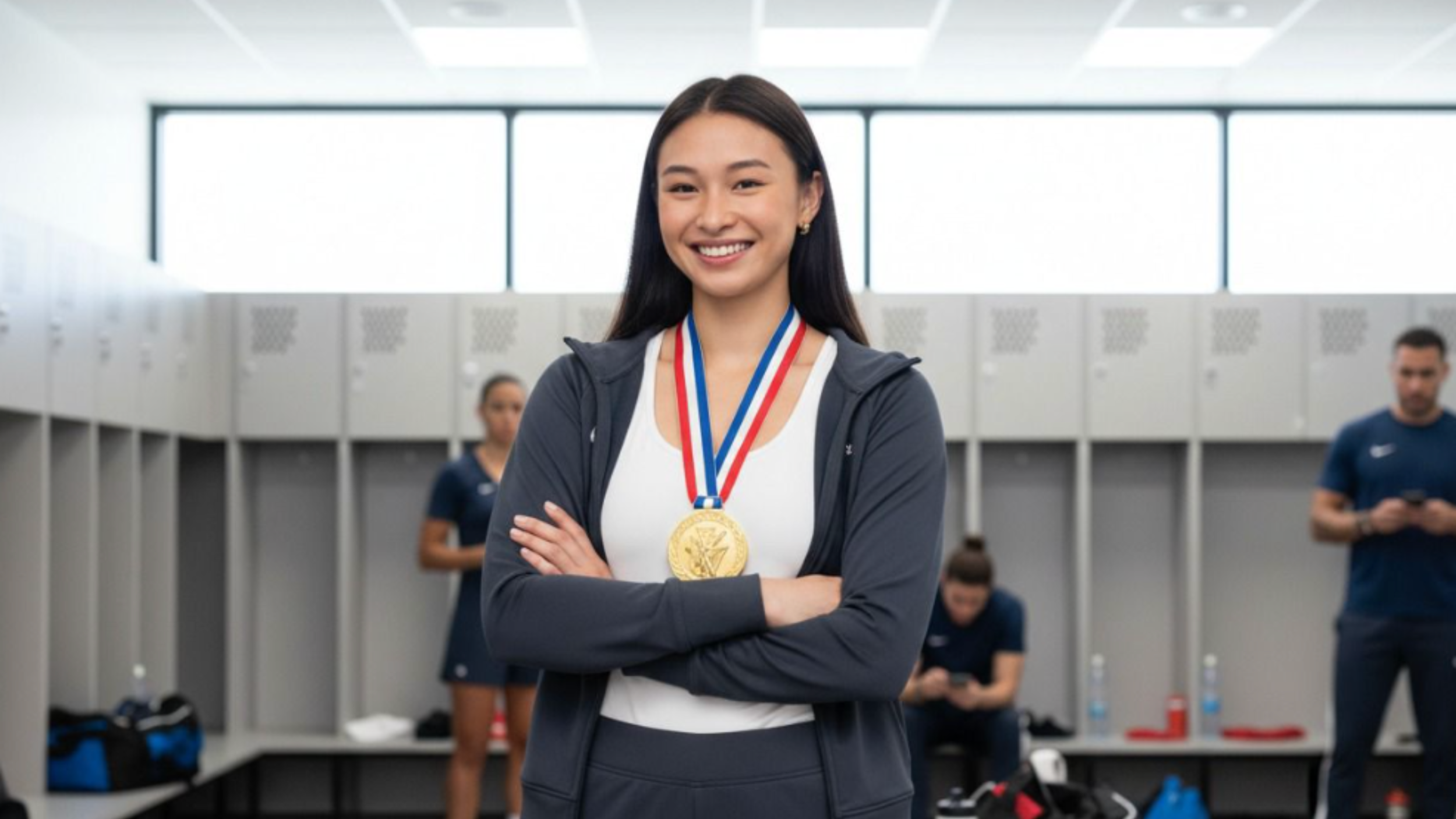
In the glittering world of international swimming, Zyan Cabrera has emerged as a prodigious talent, capturing a gold medal in the women's 100-meter freestyle at the 2026 World Aquatics Championships in Singapore. The 14-year-old from the Philippines stunned the field with a time of 52.18 seconds, shattering her personal best and edging out Olympic favorites. Yet, as celebrations fade, whispers of controversy have turned into a roar, with skeptics questioning whether Cabrera is truly the teenage phenom she claims to be or if deeper secrets lurk behind her meteoric rise.
Born in Manila on June 15, 2011, according to official records from the Philippine Swimming Federation, Cabrera's early life reads like a rags-to-riches tale. Raised in a modest fishing village in Quezon City, she discovered her affinity for the pool at age six through a local community program funded by international aid. By 10, she was dominating national youth meets, earning scholarships that propelled her to elite training camps in Australia. Personal details paint a picture of quiet determination: Cabrera lives with her single mother, a former factory worker, and credits her faith and family for her discipline. Social media glimpses show a typical teen— selfies at training sessions, family barbecues, and motivational quotes—but her explosive physique and mature stroke technique have fueled online detective work.
The gold medal authenticity hinges not on the race itself, which was witnessed by 15,000 fans and verified by World Aquatics officials, but on eligibility. Cabrera passed all pre- and post-competition drug tests, and her passport aligns with federation age requirements. However, rival coaches from the U.S. and Australia have called for an independent audit of her birth records, citing discrepancies in early competition photos where she appears unusually developed for her listed age. Digital forensics experts, hired by anonymous donors, analyzed grainy images from 2020 youth events, claiming facial recognition software suggests she could be as old as 18. Cabrera's team dismisses this as "sour grapes," pointing to consistent medical evaluations, including bone density scans, that confirm her youth.
This saga unfolds amid broader tensions in global sports governance. Age fraud scandals, from soccer's Fabrice Abriel in France to gymnastics' Diana Taurasi eligibility debates, have eroded trust in verification processes. World Aquatics, under pressure post-2024 Olympics controversies, introduced MRI-based age assessments last year, which Cabrera cleared with flying colors. Critics argue cultural factors in developing nations enable document tampering, while supporters like Philippine Sports Commission chair Richard Palmes hail Cabrera as a beacon for underrepresented athletes. Her win netted $50,000 in prize money and endorsement deals, amplifying the stakes.
As investigations loom, Cabrera trains undeterred in Cebu, eyeing the 2028 Los Angeles Olympics. Whether her story cements her as a legend or unravels under scrutiny, it underscores the high-wire act of youth sports: where innocence collides with ambition, and truth often swims deepest. For now, the gold hangs around her neck, but the real test may be proving her age beyond doubt.