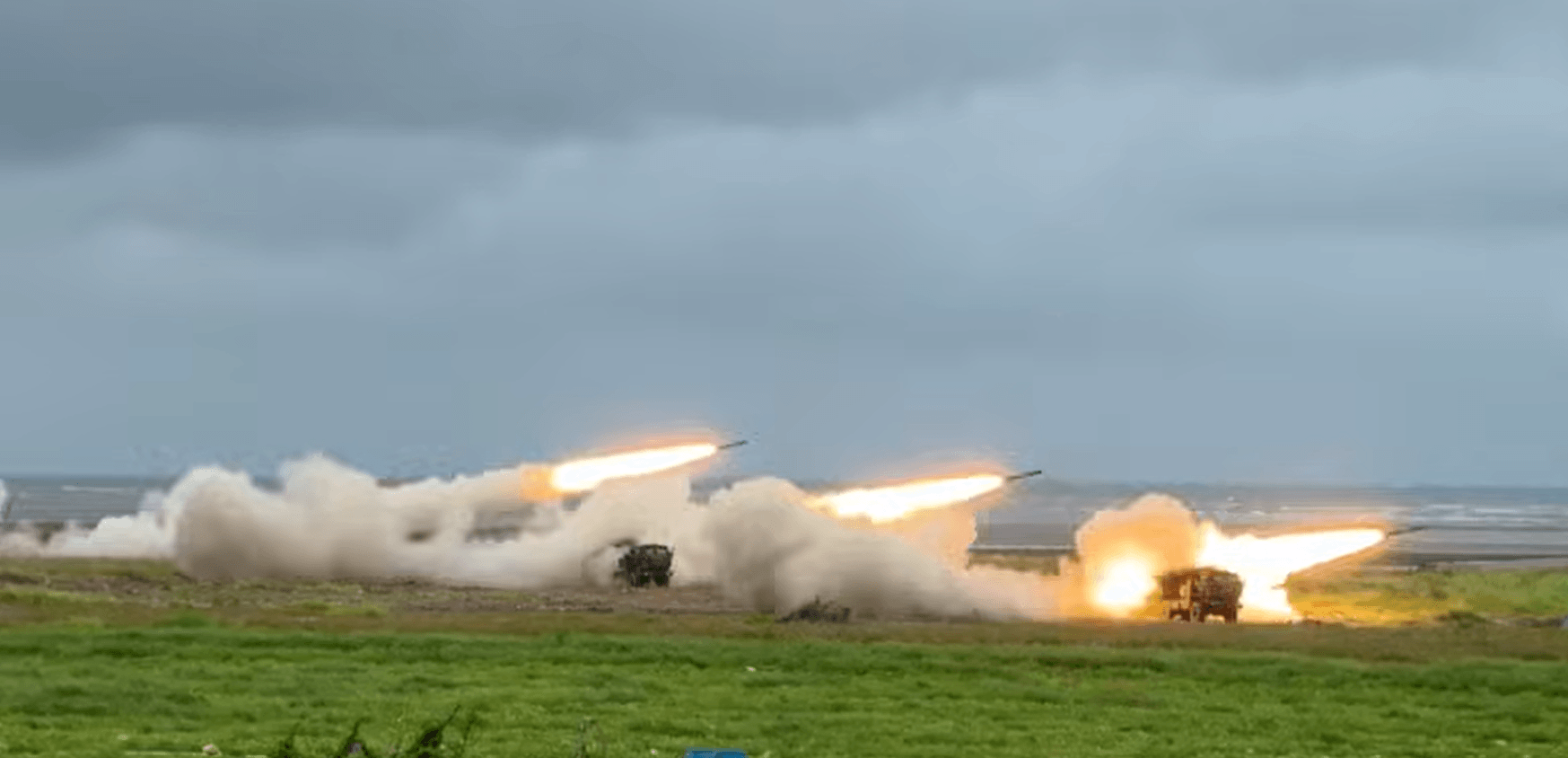
Taiwan has conducted its first military exercise explicitly designed to simulate a defence against a Chinese invasion using US-made HIMARS rockets. The live-fire drill, which took place along the western coastline near Taichung on 11 June 2026, marks a significant shift in Taipei's military doctrine.
For the first time, Taiwanese forces deployed High Mobility Artillery Rocket Systems(HIMARS)to practice coastal interception against potential maritime landing forces.
As cross-strait tensions continue to climb, Taiwan has tested its long-range artillery capabilities near potential amphibious landing zones in a clear signal of defensive intent.
The drill highlights how Taiwan is shifting toward more realistic coastal defence preparations, especially in areas considered vulnerable to amphibious assault. It also reflects a broader amphibious invasion defence strategy that Taiwan military planners are increasingly prioritising as Beijing maintains pressure across the strait.
The latest exercise took place along Taiwan's western coastline near Taichung, a region long viewed as a possible entry point in the event of a conflict. During the drill, Taiwanese forces fired 32 rockets using US.-supplied High Mobility Artillery Rocket Systems, known as HIMARS.
This marks a notable moment in the US HIMARS deployment in Taiwan defence drills, as the system was used in a coastal scenario facing strategic waters between Taiwan and mainland China. The military emphasised that the training was designed to improve readiness in realistic operational environments.
Military officials have increasingly moved away from remote training sites in favour of exercises conducted closer to likely conflict zones. The goal is to simulate real-world conditions more closely, particularly in defending against amphibious landings.
The focus on Taiwan's live-fire military exercises near the China-facing coast reflects this shift in doctrine. Analysts say it signals a broader effort to strengthen deterrence by demonstrating that Taiwan's forces are prepared to respond quickly and directly along its most exposed shoreline.
A major point of uncertainty surrounding Taiwan's defence planning is the proposed $14 billion US arms deal for Taiwan's defence systems, which remains under review. The package includes advanced rocket artillery systems and related munitions that would significantly expand Taiwan's long-range strike capabilities.
Reports indicate that US President Donald Trump has delayed approval of the deal, citing broader diplomatic considerations involving China. This has raised questions about the Trump administration's decision on Taiwan's weapons sales and its potential impact on Taiwan's defence timeline.
Source: International Business Times UK
