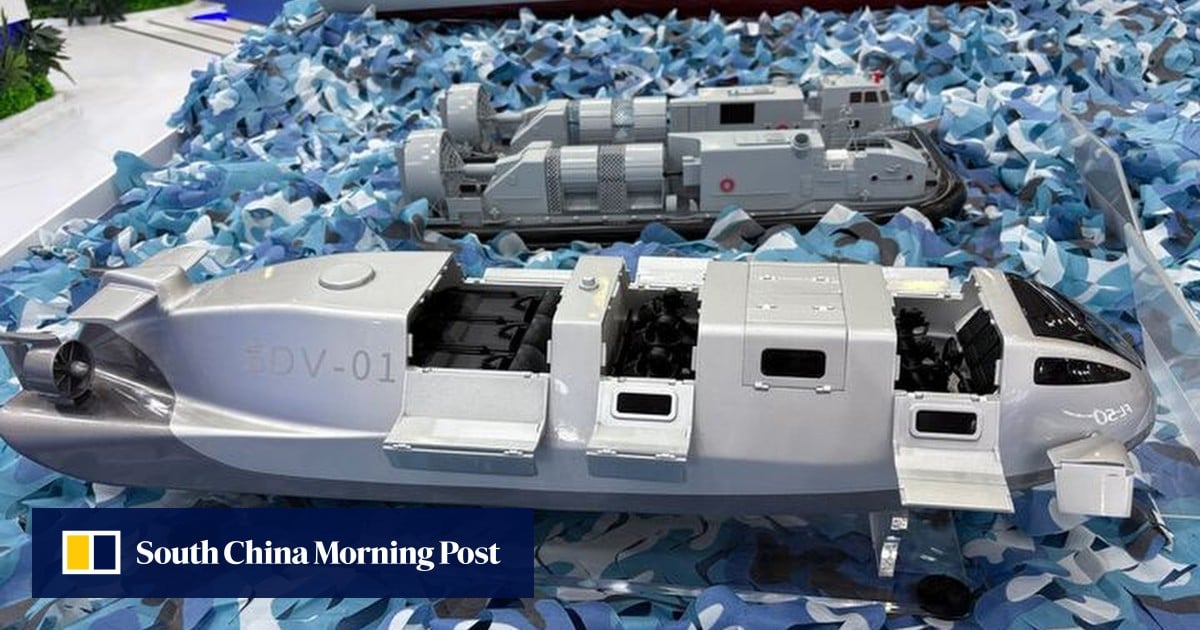
In a striking display of technological prowess, China unveiled its latest secretive underwater combat vehicle at the World Defense Show in Riyadh, Saudi Arabia, captivating defense industry leaders and military officials from across the globe. The vehicle, dubbed the "Haiyan-1" by its developers at the China Shipbuilding Industry Corporation (CSIC), represents a leap forward in unmanned underwater capabilities, designed for covert reconnaissance, anti-submarine warfare, and precision strikes in contested maritime environments.
The Haiyan-1, resembling a sleek torpedo with advanced modular payloads, boasts a range exceeding 1,000 kilometers and depths of up to 1,000 meters, powered by a hybrid fuel cell system for silent, extended operations. Equipped with AI-driven autonomy, sonar jamming tech, and swarming capabilities to coordinate with drone fleets, it addresses vulnerabilities in traditional submarine warfare amid rising tensions in the South China Sea and beyond. Chinese officials highlighted its role in "defensive maritime security," though analysts note its offensive potential against naval assets.
The reveal at Saudi Arabia's premier defense expo underscores deepening Sino-Saudi ties, fueled by Beijing's role as Riyadh's top oil buyer and arms supplier. Amid U.S.-Saudi frictions over energy and security, China has ramped up defense exports to the Gulf, with deals worth billions including drones and missiles. The Haiyan-1's debut aligns with Saudi Vision 2030's push for military modernization, potentially paving the way for joint ventures in underwater tech tailored to the kingdom's Red Sea and Persian Gulf interests.
Experts view the unveiling as China's bid to challenge Western dominance in underwater domains, where the U.S. Navy leads with programs like Orca extra-large unmanned undersea vehicles. "This signals Beijing's intent to export asymmetric warfare tools to strategic partners, reshaping regional power balances," said Dr. Li Wei, a naval analyst at the Peking University Institute of International Relations. Western delegations at the show expressed concerns over proliferation risks, particularly in chokepoints like the Strait of Hormuz.
Broader implications ripple through global security, as underwater vehicles evade satellite detection and complicate naval strategies. With conflicts like Ukraine highlighting drone warfare's evolution, the Haiyan-1 could proliferate to non-state actors or rivals, escalating undersea arms races. Saudi Arabia's interest hints at a multipolar Middle East defense market, where China's cost-effective innovations compete fiercely with Lockheed Martin and BAE Systems offerings.
