Authored by Connor O'Keefe via The Mises Institute,
As panic builds within the GOP over the approaching midterm elections, Republicans have renewed a push for one of their most popular policy proposals: voter ID.
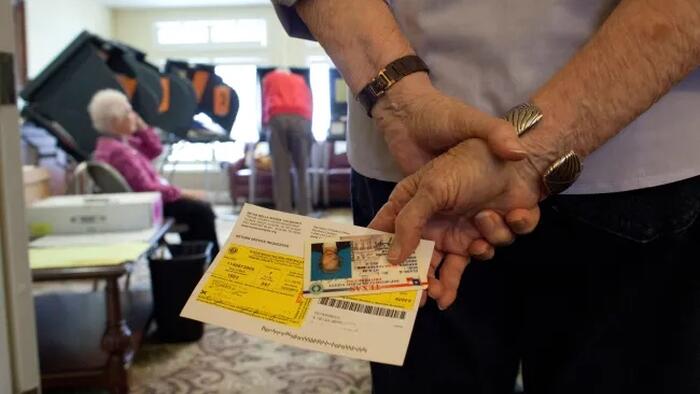
In the latest version of the so-calledSAVE America Act—formerly just the SAVE Act—Congressional Republicans added a requirement for every voter in federal elections to provide poll workers with a valid government-issued photo ID if they’re voting in person or a copy of a valid photo ID if they’re voting by mail.
On Friday—a day after the House passed the law and sent it to the Senate—President Trumpput out a postin support of voter ID requirements, which led Senate Democrats toissue familiar denunciationsof the policy while promising to block this version of the bill.
The arguments in favor of voter ID are pretty straightforward.If every eligible American citizen is entitled to one vote, poll workers and election officials should confirm that the person voting is who they say they are, so that people cannot submit extra or fraudulent votes by pretending to be someone else. And the best way to do that is the same way identities are confirmed in most other clerical settings—with an officially-recognized photo ID.
The vast majority of Americans, includingover 70 percent of Democrats, are in favor of this measure.But that hasn’t stopped top Democratic leaders and many of the Left’s most vocal activists from blocking legislation and loudly opposing any step towards a federal voter ID law.
However, the arguments most often made against voter ID do not stand up well to even the slightest scrutiny.
First, opponents will often point out—correctly—that there is no undisputable evidence of “widespread” voter fraud. They’ll then use that fact to argue that voter ID is a burdensome solution to a fake problem.
But if there was an actual conspiracy to either foment or permit voter fraud in a way that successfully flipped an election, it would not be “widespread,” it would be targeted. Even in large national elections like the presidential race, the outcome is almost always decided bya small handful of precincts. So a conspiracy to commit or allow “widespread” voter fraud would not only be pointless, it would all but guarantee its discovery.
Next, critics often assert that an ID requirement would prevent millions of legitimate voters from casting their ballots because they do not currently have a valid photo ID. But if that’s really true, the emphasis has been in the wrong place. The difficulties faced by people without any form of photo ID go far beyond voting, since ID requirements have become an increasingly frequent aspect of American public life. The obvious way for politicians to fix that problem would be to make it easier for people to get photo IDs, not to leave all those clerical barriers in place while preserving a gap that could allow people to commit voter fraud.
Source: ZeroHedge News
