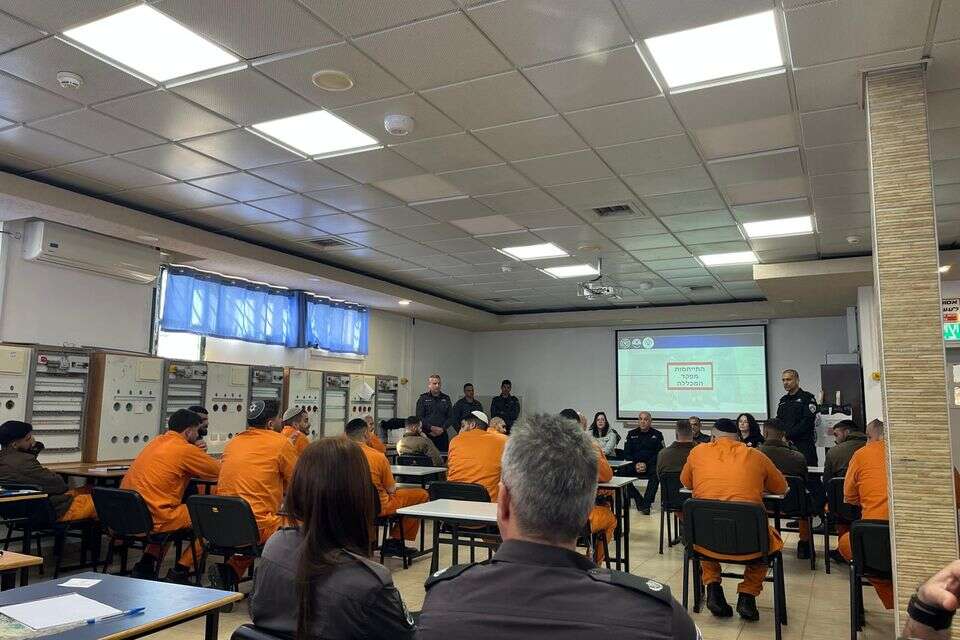
In a groundbreaking initiative at Hermon Prison in northern Israel, a group of inmates has become the first to complete a specialized training course as firefighters, marking a pioneering step in rehabilitation programs behind bars. The 12-week program, launched amid ongoing manpower shortages in Israel's firefighting services, equipped 15 carefully selected prisoners with essential skills in fire suppression, rescue operations, and emergency response. Graduates emerged not just with certificates but with a renewed sense of purpose, poised to contribute to public safety upon release.
The course, a collaboration between the Israel Prison Service (IPS) and the Israel Fire and Rescue Authority, was designed to address dual needs: bolstering the nation's firefighting ranks strained by frequent wildfires and urban blazes, and providing inmates with marketable vocational training. Participants, chosen for their good behavior records and physical fitness, underwent rigorous drills including hose handling, ladder climbing, and simulated fire scenarios within the prison's secure facilities. Instructors praised the group's dedication, noting that several inmates outperformed expectations despite their unconventional backgrounds.
Hermon Prison, located near the volatile Golan Heights, has long served as a facility for security prisoners and others convicted of varied offenses. Warden Rachel Levy highlighted the program's potential to transform lives, stating that firefighting demands discipline, teamwork, and heroism—qualities that align perfectly with rehabilitation goals. Early data from similar international programs in the U.S. and Europe suggest that vocational training like this reduces recidivism by up to 43%, offering a compelling case for expansion.
Yet the initiative has sparked debate. Critics, including victims' rights groups, question whether training prisoners as first responders risks public trust, especially if graduates are deployed to high-stakes emergencies. Proponents counter that successful completion includes psychological evaluations and supervised reintegration, with initial deployments limited to low-risk rural fires. Already, two graduates have secured conditional employment with regional fire brigades post-release, signaling early success.
Looking ahead, IPS officials are exploring replications in other facilities, potentially scaling up to train hundreds annually. As Israel grapples with climate-driven fire risks exacerbated by regional tensions, this fusion of punishment and preparedness could redefine the role of prisons in national resilience. For the inmates involved, it's a literal lifeline: a chance to extinguish past mistakes and ignite new futures.