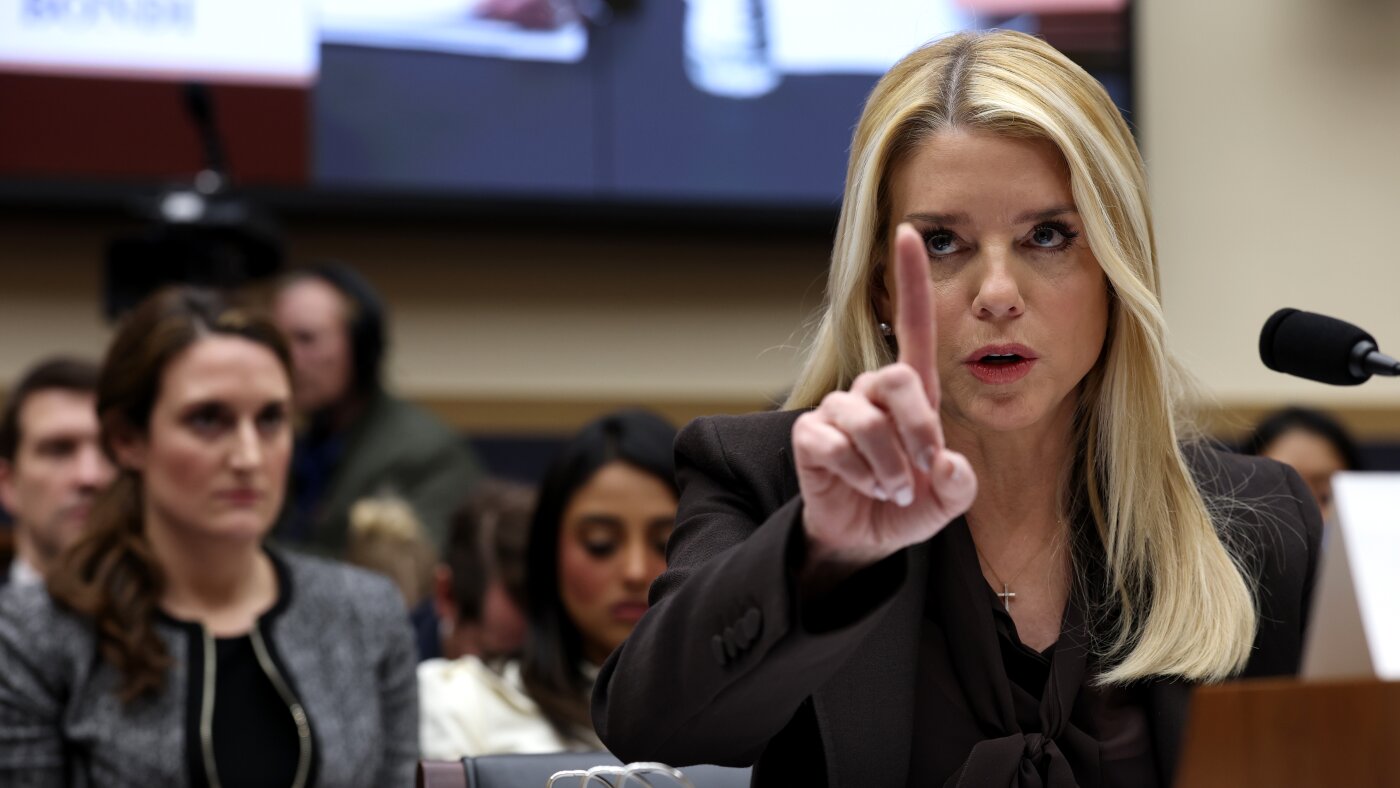
Attorney General Pam Bondi testifies before the House Judiciary Committee in Washington, D.C., on Feb. 11. Bondi has defended the Justice Department's prosecutions during her tenure.Win McNamee/Getty Imageshide caption
Some of the nation's leading defense lawyers have been trying to wrap their heads around what they consider abnormal behavior by the U.S. Department of Justice over the past year.
Now, they're debuting a tool tohelp track criminal casesthat appear to involve irregular charging practices, including aggressive legal theories and possible political retribution againstPresident Trump's foes.
"We created the Case Tracker because you cannot defend against an enemy you cannot see," said Steven Salky, a lawyer in the Washington, D.C., area who oversees the project. "The Tracker is intended to spotlight for the next several years the unusual cases being prosecuted by the Department of Justice."
The new database includes the federal cases against Sean Charles Dunn, whothrew a sub sandwichat a federal immigration officer, and Jacob Samuel Winkler, a homeless man accused of directing a laser pointer toward the Marine One presidential helicopter. Juries in Washington, D.C., acquitted both men.
Last week, in testimony before the House Judiciary Committee, Attorney GeneralPam Bondibatted away allegations that politics have motivated federal law enforcement decisions.
"I came into office with the goal of refocusing the Department of Justice on its core mission after years of bloated bureaucracy and political weaponization," Bondi said. "The Department of Justice's core mission is to fight violent crime; protect the American people; and defend the rule of law above all else. While our work is never done, we have made tremendous progress to make America safe again."
But judges and juries have been turning a skeptical eye toward the work of the Justice Department. Federal jurists have questioned whether the executive branch is complying with court orders on immigration and other issues at the heart of Trump's agenda — giving rise to concerns that federal prosecutors will no longer get the benefit of the doubt in court.
Grand juries across the U.S. haverejected effortsby prosecutors to bring indictments, once considered to be a cinch because of the low bar to charge defendants at that early stage in the criminal process.
The new tracker features a map that allows people to follow some of these trends across states, a way to search for specific statutes, and links to key court filings and judges' decisions.
Source: Drudge Report
