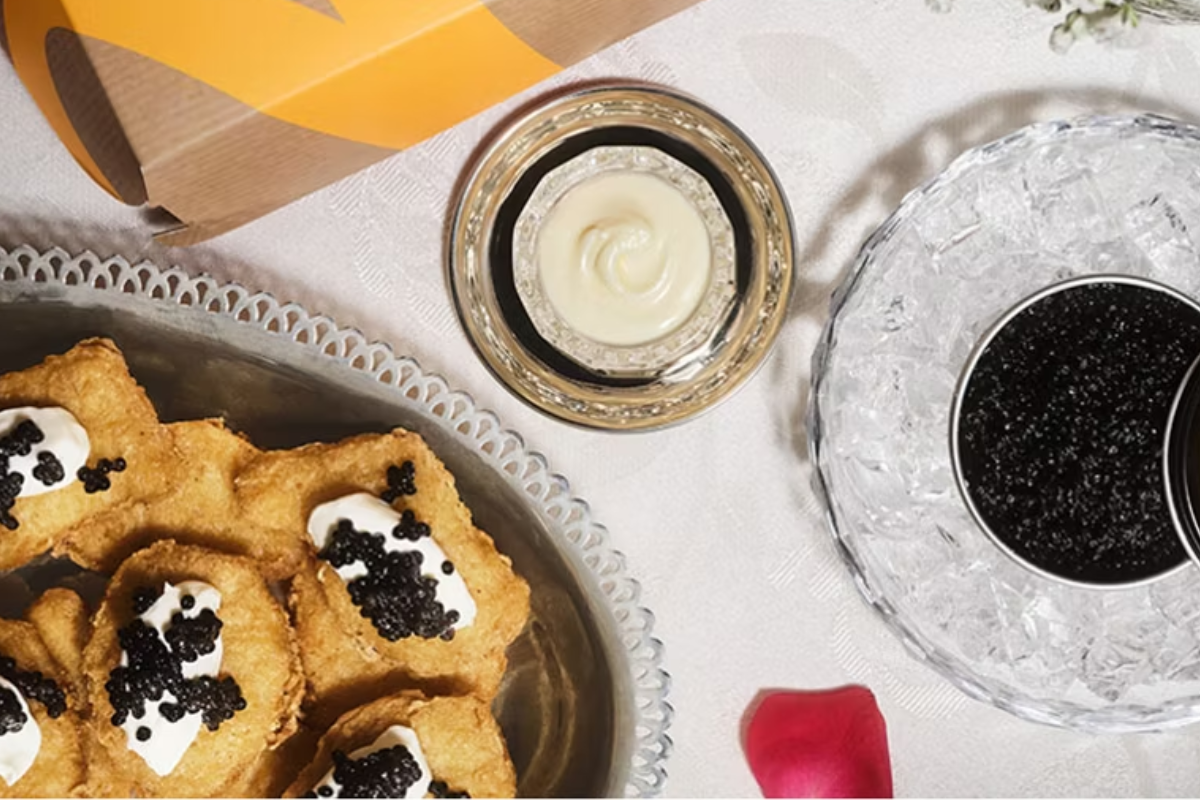
In a bold fusion of fast-food nostalgia and high-society indulgence, McDonald's has begun distributing free "Caviar Kits" to select customers across the UK, sparking a frenzy among collectors and foodies alike. The kits, tucked discreetly into Happy Meal boxes or available via the McDonald's app for loyalty program members, contain genuine black caviar sourced from sustainable sturgeon farms, paired with gold-plated spoons, crystal serving dishes, and a bottle of vintage champagne. What starts as a seemingly whimsical giveaway is quickly revealing itself as a treasure trove, with resale values soaring into the hundreds of pounds on platforms like eBay and Depop.
The promotion kicked off last week in response to McDonald's ongoing push into premium dining experiences, following successful trials of truffle fries and wagyu burgers in urban outlets. Limited to just 10,000 units nationwide, the Caviar Kit requires no purchase beyond a standard £5 app order, making it accessible yet scarce enough to drive demand. Inside the sleek, branded black box emblazoned with the Golden Arches reimagined in Art Deco style, customers find 50 grams of premium Ossetra caviar—retailing at around £200 per kilo on its own—alongside artisanal blinis, crème fraîche, and a digital certificate of authenticity verifiable via QR code.
Secondary market activity has exploded, with unopened kits fetching upwards of £450 within days of launch, according to data from resale trackers like StockX and eBay's completed listings. Savvy resellers report markups of 900% over the "free" acquisition cost, drawing parallels to luxury streetwear drops from brands like Supreme. One London-based flipper, who spoke on condition of anonymity, told The Culture War, "It's McDonald's doing high fashion—pure genius. People are paying for the irony as much as the caviar." Experts estimate the kit's true wholesale value at £150-£200, factoring in packaging and sourcing costs, but cultural cachet has inflated street prices further.
This stunt underscores McDonald's evolving strategy to blur lines between mass-market eats and elite gastronomy, a tactic honed amid rising competition from upscale chains like Pret A Manger's gourmet lines. Critics, however, question the sustainability: caviar's environmental footprint, even from farmed sources, remains contentious, and McDonald's has pledged donations to ocean conservation per kit distributed. Consumer reactions split along predictable lines—working-class diners decry it as tone-deaf elitism, while influencers hail it as democratized luxury.
As the promotion races toward sell-out, McDonald's UK executives remain tight-lipped on expansions, though whispers of a US rollout circulate. For now, the Caviar Kit stands as a microcosm of 2026's consumer landscape: where a Big Mac empire peddles fish eggs for free, only for the real feast to unfold in the resale arena. Those still hunting one might check their apps—before the golden opportunity swims away.
