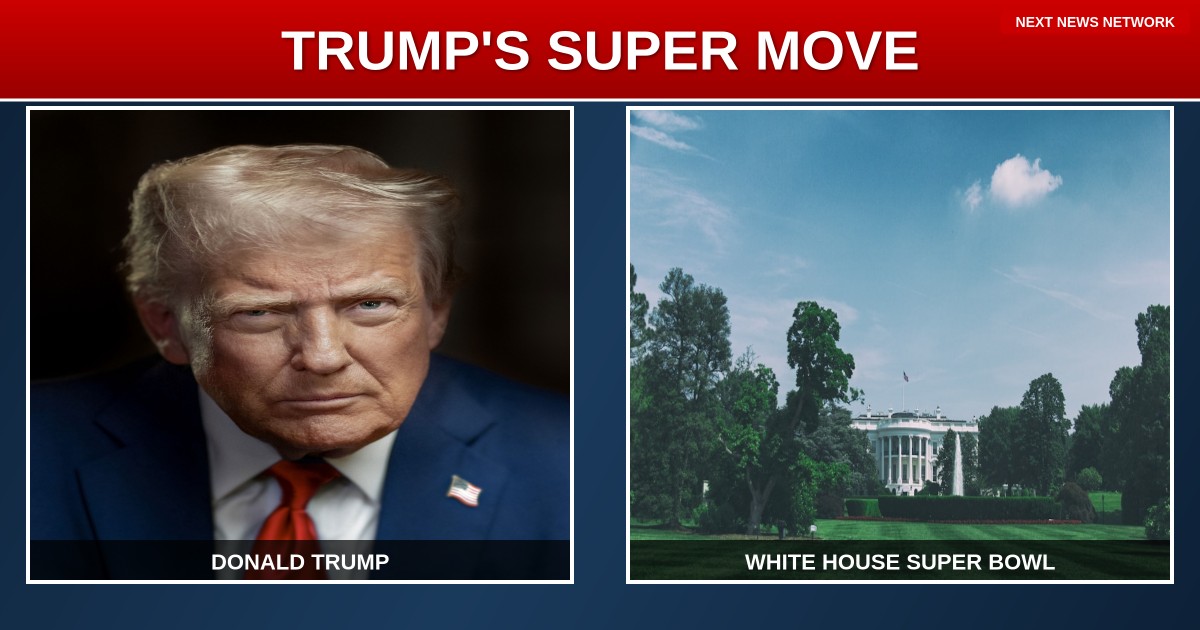
President Donald J. Trump electrified the nation from the White House briefing room on Tuesday, announcing that Super Bowl LX will mark a historic first by taking place in the heart of Washington, D.C., at a gleaming new stadium funded through his ambitious infrastructure initiative. Dubbed the "America First Arena," the $3.5 billion project promises to be the crown jewel of American sports venues, constructed entirely with domestic steel and labor to symbolize national resurgence under Trump's second term.
Flanked by NFL Commissioner Roger Goodell and construction magnates, Trump detailed the arena's cutting-edge features: a 100,000-seat capacity, holographic replay technology, and sustainable energy systems powered by American innovation. "This isn't just a game—it's a celebration of our greatness," Trump declared, vowing the event would draw over a million visitors and inject $10 billion into the local economy. The Super Bowl, set for February 8, 2027, will pit the AFC and NFC champions in the shadow of the Capitol, a venue shift lobbied for by Trump since his campaign trail promises to bring big-league excitement back to the capital.
The announcement caps a tumultuous history between Trump and the NFL, from his criticisms of player protests during national anthems to his push for merit-based athletics amid culture war battles over inclusivity mandates. Trump highlighted how the league has "cleaned up its act" post-2024, crediting fan backlash and his administration's tax incentives for steering the NFL toward patriotism. No longer will "woke distractions" overshadow the gridiron, he assured, pointing to upcoming rules barring political activism during broadcasts.
Reactions poured in swiftly. Goodell praised the move as "transformative for the league," while bipartisan lawmakers hailed the economic boon—Democrats eyeing job creation, Republicans the patriotic optics. Fan forums exploded with excitement, though some progressives decried it as "Trump's spectacle," fearing a politicized halftime show. Betting odds shifted dramatically, with early lines favoring high-scoring affairs in the dome's controlled climate.
Analysts see this as a masterstroke in Trump's playbook, leveraging sports to bridge divides in a polarized era. By anchoring Super Bowl LX in D.C., the president positions football as a unifying force against coastal elitism, potentially swaying swing-state voters ahead of midterms. Economically, it's projected to rival Olympic impacts, with ripple effects from youth leagues to veteran hiring programs tied to the build.
As blueprints roll out and site preparations begin at the RFK Stadium footprint, all eyes turn to the 2026 season. Trump's vision promises not just a game, but a spectacle etching his legacy into America's sporting soul—where touchdowns trump talking points, and the roar of the crowd drowns out division.
