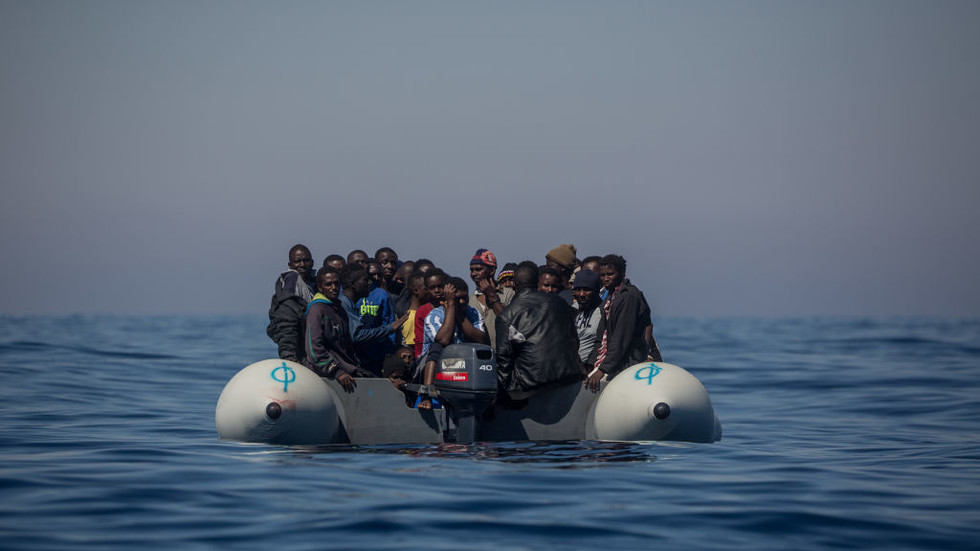
A rubber dinghy carrying over 100 migrants capsized in rough Mediterranean waters off the Libyan coast early Tuesday, leaving at least 37 people dead and dozens more missing, according to Libyan authorities and humanitarian groups. The vessel, believed to have departed from the smuggling hub of Zawiya under cover of darkness, overturned just hours into its desperate bid to reach Europe, highlighting the perilous gauntlet faced by those fleeing war, poverty, and persecution in Africa and the Middle East.
Libyan naval forces, alerted by a distress signal from rescuers aboard an NGO vessel nearby, recovered 47 survivors from the churning sea, many suffering from hypothermia and dehydration. Videos circulating on social media showed migrants clinging to floating debris amid towering waves, their cries piercing the storm-lashed night. The International Organization for Migration (IOM) confirmed the toll, noting that children and women were among the victims, with the exact number of those still unaccounted for potentially pushing the death count higher as search operations continue under deteriorating weather conditions.
Smugglers operating out of Libya's chaotic coastal towns have long exploited the country's post-Gaddafi power vacuum, packing frail boats with far more passengers than they can safely carry in exchange for exorbitant fees. This latest tragedy comes amid a surge in crossings, with over 15,000 migrants intercepted or rescued off Libya so far this year—a 30% increase from 2025, per UN data—fueled by instability in Sudan, economic collapse in Nigeria, and ongoing conflicts in the Sahel region. Survivors recounted being promised safe passage to Italy, only to be shoved aboard an unseaworthy craft riddled with leaks.
European leaders face mounting pressure as the disaster reignites debates over migration policy. Critics of the EU's border enforcement strategy argue that outsourcing rescues to Libya merely perpetuates a deadly cycle, empowering militias and traffickers who control the North African departure points. Italian Prime Minister Giorgia Meloni, whose government has pushed for tougher naval patrols and deals with Tripoli, vowed to investigate potential "pull factors" created by NGO operations, while humanitarian advocates demand an immediate end to Libyan interceptions, citing reports of abuse in detention centers.
In the broader culture war over borders, the incident underscores a stark divide: proponents of unrestricted humanitarian corridors decry Fortress Europe as morally bankrupt, while restrictionists point to overwhelmed welfare systems and rising crime in migrant-heavy cities as evidence that compassion without controls invites chaos. As winter storms subside and smuggling ramps up, the Mediterranean remains a watery graveyard, with little sign of resolution to the world's most lethal migration route.
