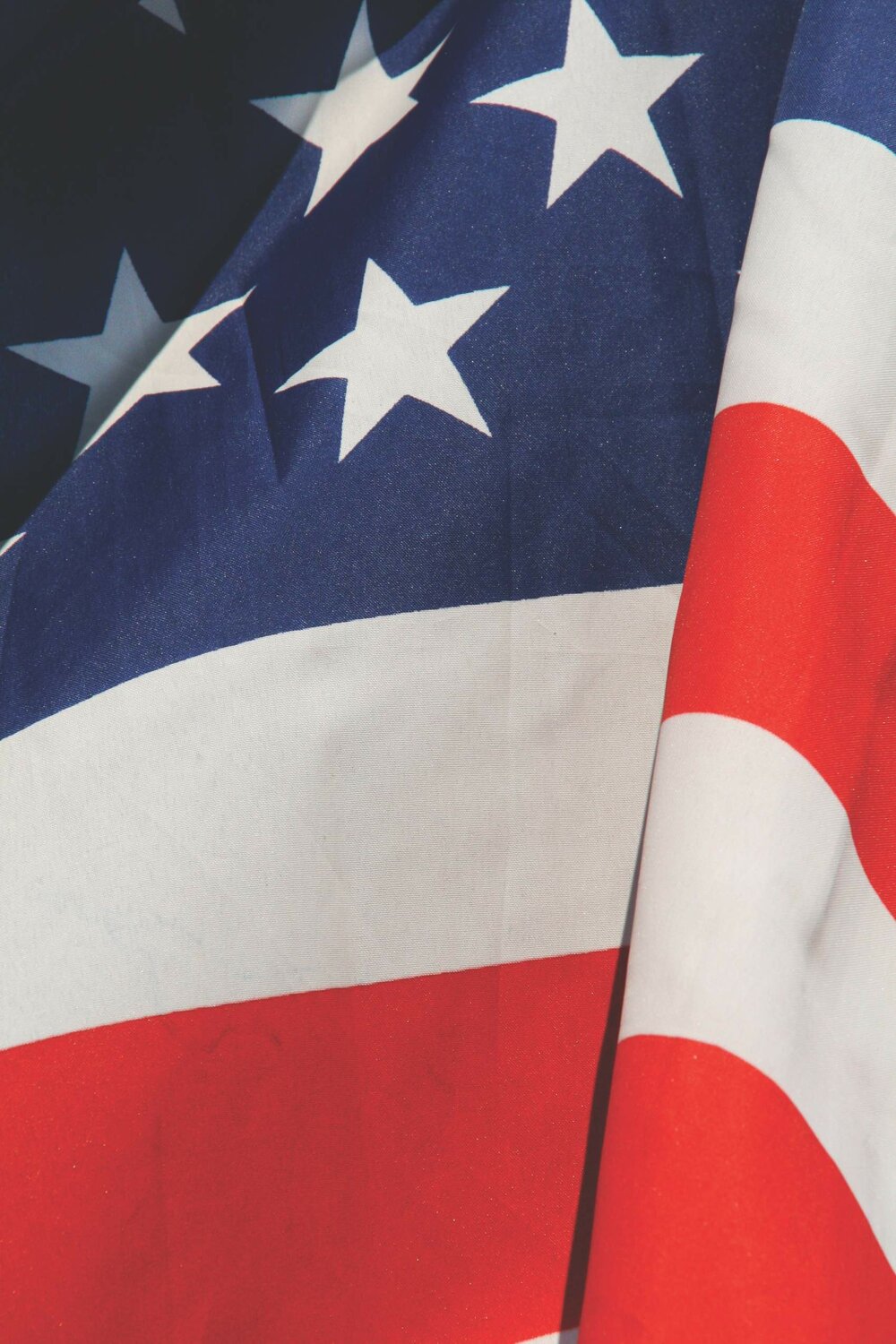
On June 14, 1777, the Continental Congress passed an act establishing an official flag for the new nation. The resolution stated, “Resolved, that the flag of the United States be 13 stripes, alternate red and white; that the union be 13 stars, white in a blue field, representing a new constellation.”
Though the origin of the flag is unknown, some believe it was designed by New Jersey congressman Francis Hopkins and sewn by Philadelphia seamstress Betsy Ross.
There are 12 folds. The first fold is the symbol of life; the second fold is belief in eternal life; the third is made in honor and remembrance of veterans; the fourth represents our weaker nature as Americans trusting in God in times of peace and war; the fifth is a tribute to the country; sixth is where our hearts lie in the pledge of allegiance; seventh is the tribute to the armed forces; eighth is in tribute to the one who entered into the valley of the shadow of death so that we might see the light of day and to honor our mother; ninth is a tribute to womanhood; 10th is tribute to the father; 11th is in the eyes of Hebrew citizens; and 12th is in the eyes of Christian citizens. Once completely folded and tucked in, the stars are left, reminding us of the national motto, “In God We Trust.” Folded flags should then be stored inside a display box.
When completely folded, only a triangular blue field of stars should be visible.
The flag has survived battles, inspired songs, and evolved in response to the growth of the country it represents, according to American Legion Post 269 Cmdr. Jon Ralph.
After the British bombardment, amateur poet Francis Scott Key was so inspired by the sign of the flag still flying over Baltimore’s Fort McHenry that he wrote the “Star-Spangled Banner” on Sept. 14, 1814. It became our national anthem in 1931.
The Pledge of Allegiance was formally adopted by Congress in 1942 as part of the U.S. Flag Code. It was written by Francis Bellamy in 1892. The American Legion and representatives of the Army and Navy formed the code in 1923. President Franklin Delano Roosevelt signed the code the next year in 1942 and President Harry S. Truman declared June 14 as Flag Day in 1949.
The flag has 13 horizontal stripes, seven red and six white, representing the original 13 colonies. Each star was added as each new state formed for a total of 50.
Red represents hardiness and valor; white symbolizes purity and innocence; and blue represents vigilance, perseverance and justice.
The flag should never be dipped to any person or thing; when displayed with another flag in front of a room, it should be on the flag’s own right and must be higher than the other flags. The flag should always be displayed to the left of the observer and should always be raised first and lowered last, with the union at the top of the pole. It should never touch the ground, and must be illuminated at night.
Source: - Latest Stories
