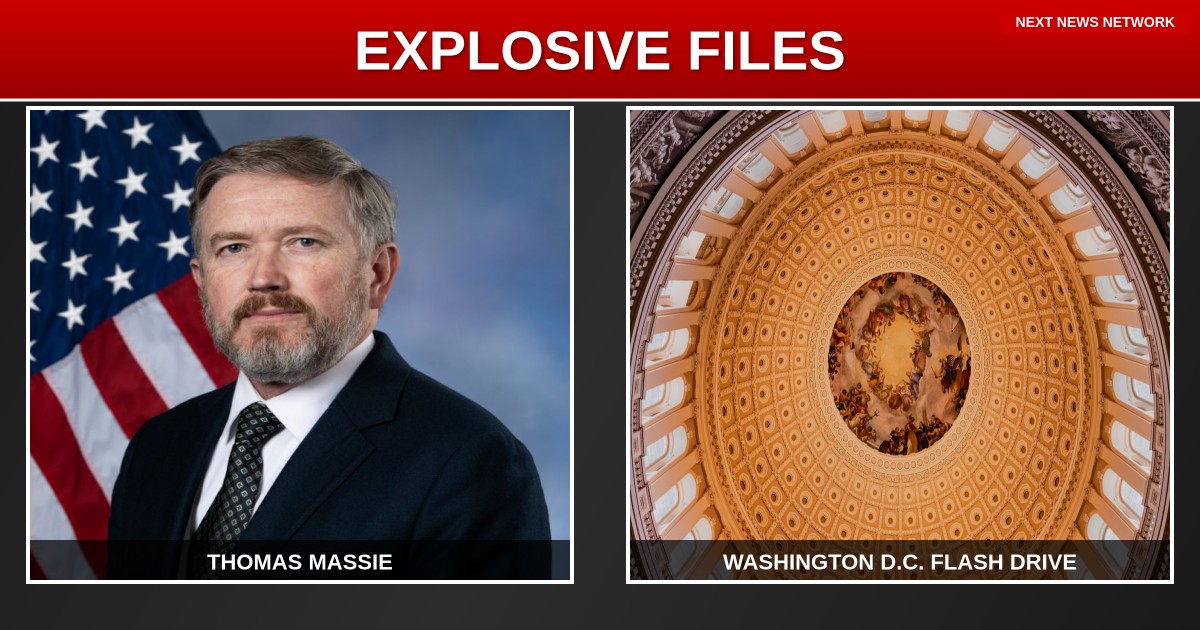
Representative Thomas Massie, the libertarian-leaning Republican from Kentucky, has ignited a firestorm in Washington by claiming possession of a flash drive purportedly containing the complete client list of convicted sex trafficker Jeffrey Epstein. In a bombshell revelation shared during a recent congressional hearing, Massie accused the Department of Justice of deliberately obstructing efforts to unseal these records, defying direct congressional subpoenas in what he describes as a cover-up to protect powerful elites.
Massie detailed how the flash drive came into his hands through a whistleblower source connected to Epstein's infamous Little St. James island operations. According to the congressman, the drive holds unredacted names, flight logs, financial transactions, and video evidence implicating high-profile figures from politics, business, and entertainment. He brandished the device on camera, vowing to fight for its public release despite threats and legal pushback, positioning himself as the lone crusader against institutional corruption.
The Epstein saga has long fueled suspicions of a bipartisan elite pedophile network, with partial document dumps in recent years naming figures like Bill Clinton, Prince Andrew, and Alan Dershowitz—but always with heavy redactions. Massie's intervention coincides with renewed pressure from House Republicans, who issued subpoenas to Attorney General Merrick Garland demanding full transparency. Yet the DOJ has cited national security and ongoing investigations as reasons for non-compliance, a stance critics liken to the agency's handling of other politically charged files like those from the January 6 committee.
Reactions poured in swiftly. House Speaker Mike Johnson praised Massie's boldness, hinting at potential impeachment proceedings against Garland, while Democrats dismissed the claims as "conspiracy theater" orchestrated by MAGA extremists. Social media erupted, with #ReleaseTheList trending worldwide as influencers and citizens demanded accountability. Legal experts warn that Massie's possession of the drive could trigger federal seizure attempts, testing the boundaries of congressional immunity.
This standoff underscores deeper fractures in America's justice system, where selective prosecution and information hoarding erode public trust. If authenticated, the flash drive's contents could topple careers and reshape power dynamics, forcing a reckoning with Epstein's web of influence that spanned decades. As Massie races against bureaucratic inertia, the question looms: will truth prevail, or will the deep state bury it once more?
