The House approved a war powers resolution Wednesday that would halt the U.S. military action against Iran, defying President Donald Trump as a handful of Republicans joined with Democrats to seek to end the three-month-long war. Opposition to the war has only grown as the conflict drags on and as Trump struggles to negotiate a quick resolution.
The resolution from the House does not immediately stop the war. It now goes to the Senate, where four Republican senators last month joined Democrats in advancing a similar measure to curtail the U.S. campaign against Iran. The Senate has yet to take a final vote.
Trump, in an interview released Wednesday, confirmed an earlier report that he criticized Israeli Prime Minister Benjamin Netanyahu as “crazy," and said he's “a little bit perturbed” that Israel’s fighting with Hezbollah in Lebanon is holding back peace talks with Iran.
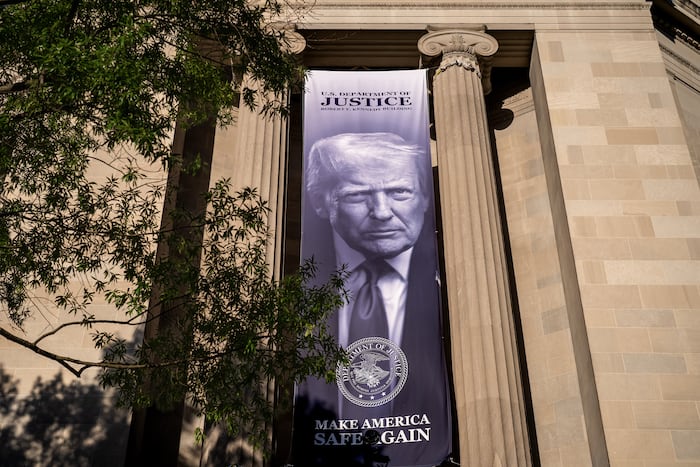
The Trump administration is sticking with a deal to permanently drop tax claims against Trump, an extraordinary flex of executive power that could help shield the president from further examination of his finances and legal conduct, even as it scraps a $1.8 billion fund to compensate the Republican president's allies amid a fierce political backlash.
Trump's endorsements helped end the political careers of two senators and a congressman deemed insufficiently loyal, but he couldn't lift Rep. Randy Feenstra to victory in Iowa’s Republican primary, setting up a Democratic opportunity to pick up a governorship. See other AP coverage of Tuesday's primary results here.
Israel, Lebanon agree to renew fragile ceasefire and create Lebanese security zones
Israel and Lebanon agreed to renew their fragile ceasefire and create a number of “pilot” security zones inside Lebanon from which Hezbollah militants would be banned.
In a joint statement released after a fourth round of U.S.-mediated talks at the State Department, the two sides said the ceasefire “is contingent on a complete cessation of Hezbollah fire and the evacuation of all Hezbollah operatives” from areas south of the Litani River. It was not immediately clear how the security zones would be established but the agreement calls for the Lebanese army to take full control of those areas.
“These steps will enable progress towards a comprehensive peace and security agreement,” the statement said. “All countries reaffirmed that the future of the relationship between Israel and Lebanon must be decided by the two sovereign governments. They rejected any attempt, by any state or non-state actor, to hold Lebanon’s future hostage.”
The latter is a reference to Iran, which supports Hezbollah and has insisted that Israeli attacks on Lebanon be halted as part of a tentative agreement with the U.S. to end the conflict with Iran. Hezbollah is not part of the Israel-Lebanon talks.
Source: WPLG
