During his second day of testimony on Capitol Hill, Secretary of State Marco Rubio said he hopes that the latest round of high-level political talks between Israel and Lebanon will result in a joint statement on ending hostilities. Israeli and Lebanese ambassadors to the U.S. are meeting at the State Department for a second day of negotiations.
President Donald Trump, in an interview released Wednesday, confirmed an earlier report that he criticized Israeli Prime Minister Benjamin Netanyahu as “crazy," and said he's “a little bit perturbed” that Israel’s fighting with Hezbollah in Lebanon is holding back peace talks with Iran.
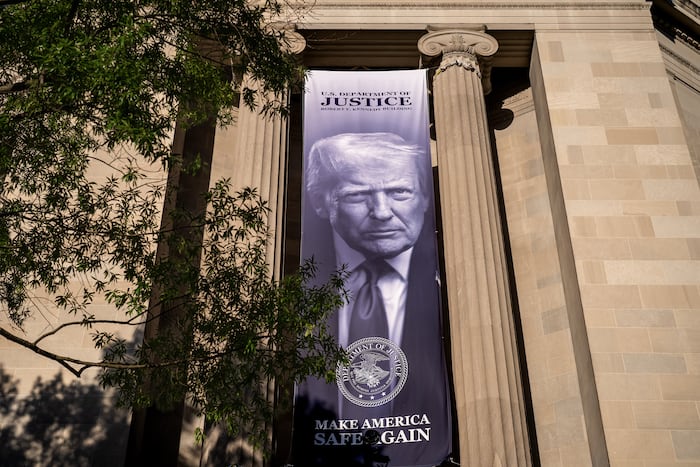
The Trump administration is sticking with a deal to permanently drop tax claims against Trump, an extraordinary flex of executive power that could help shield the president from further examination of his finances and legal conduct, even as it scraps a $1.8 billion fund to compensate the Republican president's allies amid a fierce political backlash.
Trump's endorsements helped end the political careers of two senators and a congressman deemed insufficiently loyal, but he couldn't lift Rep. Randy Feenstra to victory in Iowa’s Republican primary, setting up a Democratic opportunity to pick up a governorship. See other AP coverage of Tuesday's primary results here.
3 UN experts accuse US of `unlawful coercion’ against Cuba’s sovereignty
The independent U.N. human rights investigators urged the Trump administration in a statement Wednesday to immediately halt all threats against Cuba’s sovereignty and revoke sanctions “adopted contrary to international law.”
The experts said efforts to change Cuba’s “constitutional order” through threats and coercion “echo colonial-era practices.”
They said Trump’s declaration of a “Donroe Doctrine” in March, asserting U.S. predominance in the Western hemisphere, has raised “significant alarm.” And they said his statements about the “honor of taking Cuba” reflect “a deeply concerning strategy of coercion” against the country.
The experts on democracy, the negative impact of sanctions and counterterrorism, also pointed to the longstanding U.S. embargo and recent fuel blockade of Cuba.
They called the recent U.S. indictment of former Cuban president Raúl Castro “a misuse of domestic judicial proceedings” and “an instrument of coercive foreign policy,” and the announced deployment of the USS Nimitz to the southern Caribbean another element of “unlawful coercion.”
Source: WPLG
