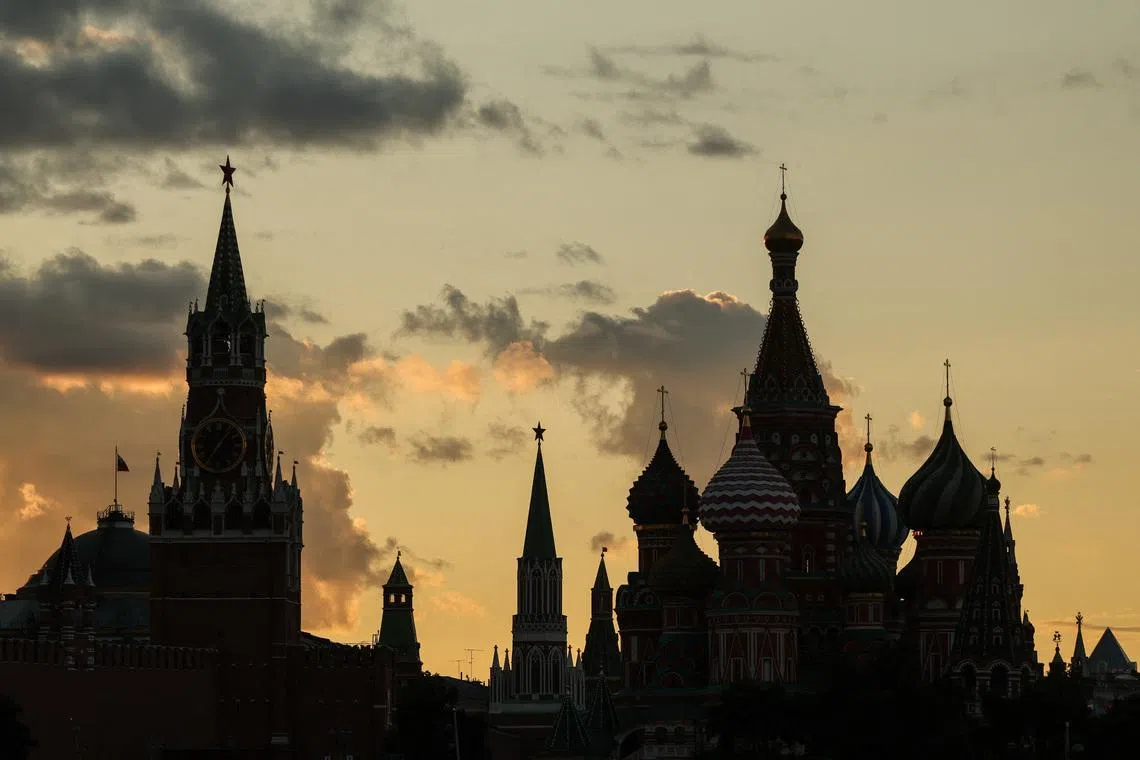
In 2025, Russia seized 1.1 trillion rubles (S$19 billion) of assets in anti-corruption cases, according to Moscow-based law firm Nektorov, Saveliev & Partners.
PublishedJun 03, 2026, 01:00 PM
MOSCOW – Vadim Moshkovich switched paths multiple times during the Post-Soviet era of wild capitalism, from distributing vodka to flipping apartments. He ultimately made his big bet on commodities, founding Ros Agro, the Russian agricultural firm behind his fortune.
Decades in the making, it all came crashing down inMaywhen a Moscow court ordered the seizure of his family’s 49 per cent stake in the company. His crime, prosecutors say, was violating a ban on combining public service with business activities while he served in the upper chamber of Russia’s Parliament between 2006 and 2014, and abusing his political position for illegal enrichment.
The country’s billionaires are under increasing state pressure, with charges ranging from corruption to accusations of giving non-military support to the enemy and even dual citizenship. Asset seizures are breaking up business empires and redistributing wealth, often transferring it to more loyal business groups.
The recent Moshkovich allegations will not be lost on other members of the elite. Five of the top 20 richest Russians in the Bloomberg Billionaires Index have either worked in the ruling system or still do.
In2025, Russia seized1.1 trillion rubles (S$19 billion)of assets in anti-corruption cases, according to Moscow-based law firm Nektorov, Saveliev & Partners.
That is about eight times higher than in 2024 and represents about a third of the total asset confiscations carried out by the state in 2025. In many cases, the businessmen targeted had held elected positions as members of federal or regional parliaments and, according to prosecutors’ claims, used their posts to help their companies profit from their roles.
“Anti-corruption lawsuits are becoming not merely a tool for combating corruption, but a driving force behind the redistribution of assets in favour of the state,” said Ilia Shumanov, managing partner at TriTrace Investigations, a corporate intelligence firm which tracks Russia’s nationalisation efforts.
Moshkovich’s agricultural assets were given to the management of an affiliate of state-owned Russian Agriculture Bank, also known as Rosselkhozbank, just days after the court’s decision to seize them, according to the update in the companies register.
Source: Drudge Report
