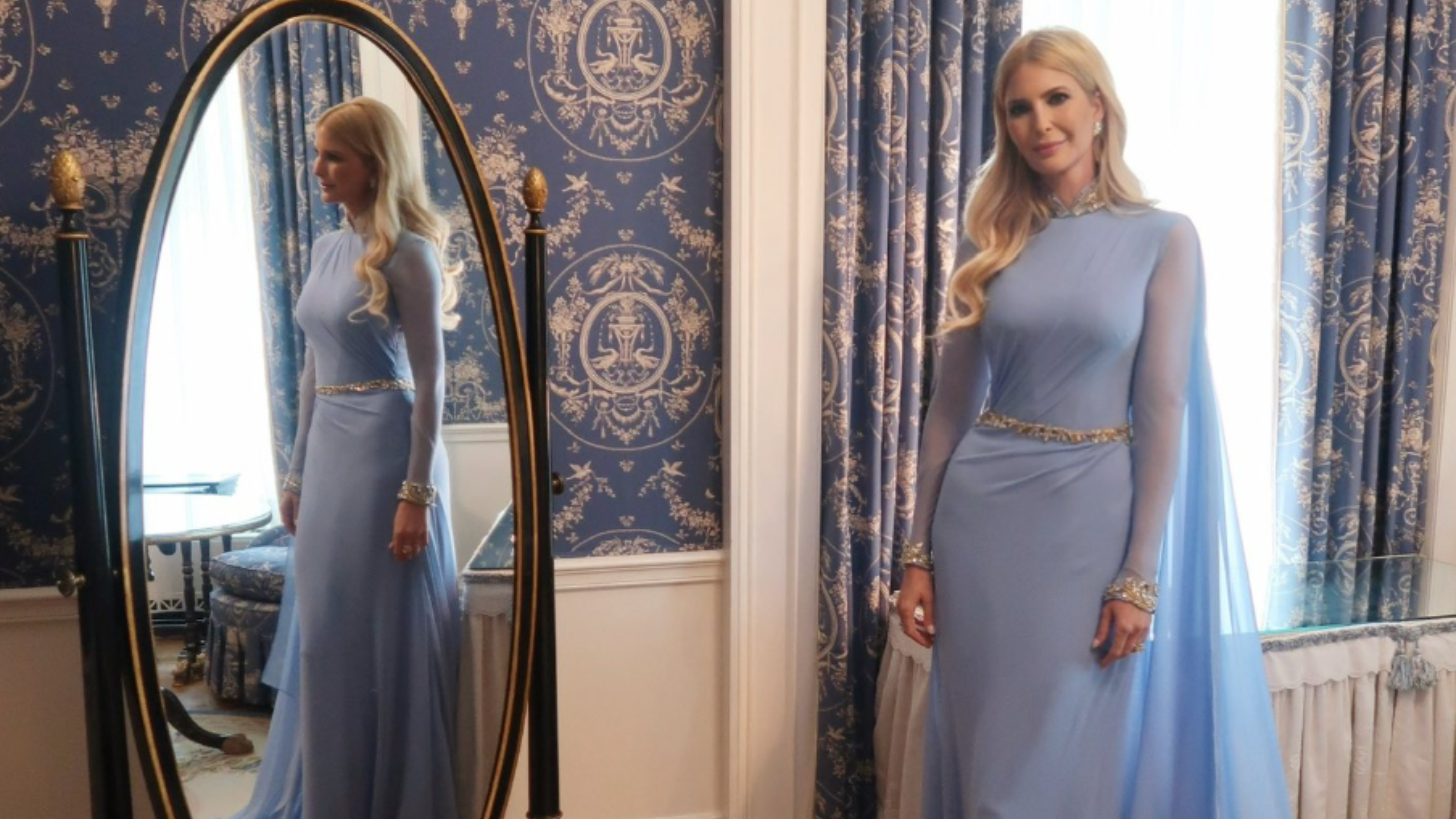
Ivanka Trump told Steven Bartlett on The Diary of a CEO in April 2026 that her fashion brand was pulling in close to $800 million (£633 million) a year before she walked away from it. The claim has not been independently verified, and the available public filings suggest the real figure was a fraction of that.
Industry experts estimated the brand's total annual revenue at roughly $100 million (£79 million) across all channels, CNBC reported in 2017. CBS News independently cited the same figure. That puts Trump's podcast claim at eight times the best available estimate.
'We were doing close to $800 million in sales annually,' Trump said. 'I shut it down, when I went into government, it was great.'
The most concrete number on record comes from G-III Apparel Group, which manufactured Ivanka Trump-branded clothing alongside Calvin Klein and DKNY. Its SEC filing showed wholesale revenue for the line rose 61% to $47.3 million (£37.4 million) for the fiscal year ending 31 January 2017 — a strong year, but barely 2% of G-III's $2.39 billion (£1.89 billion) in net sales, Fortune reported.
Wholesale figures capture what manufacturers charge retailers, not what consumers pay. A licensing brand operating across multiple categories can aggregate higher retail totals. But Trump's own ethics disclosure — filed in July 2017 — valued the entire brand trust at 'more than $50 million' (£39.6 million), according to CNN. She earned just over $5 million (£3.96 million) from the business between January 2016 and March 2017, herfinancial disclosure showed.
In 2013, the brand had revenues of between $4 million and $6 million (£3.2 million and £4.7 million), the New York Times reported. Because the brand ran on private licensing deals and released no audited accounts, its true scale remains unverifiable. No public data bridges the gap between $100 million and $800 million.
Trump launched Ivanka Trump Fine Jewelry in 2007 and expanded into shoes, handbags and eventually 11 product categories sold in more than 800 stores, including Macy's, Nordstrom and Bloomingdale's. Her father's 2016 presidential campaign supercharged visibility. Sales on fashion platform Lyst were 46% higher in November 2016 than a year earlier.
But the backlash proved equally fierce. The grassroots Grab Your Wallet campaign urged consumers to boycott Trump-family products. Nordstrom dropped the line in February 2017, citing declining performance.
Market research firmSlice Intelligence foundonline sales fell 26% in January 2017. Counsellor to the President Kellyanne Conway then told Fox News viewers to 'go buy Ivanka's stuff,' drawing ethics complaints from watchdog groups and a bipartisan rebuke from the House Oversight Committee.
When Trump joined the White House in March 2017 as an unpaid senior adviser, ethics rules barred the company from using her image in marketing, signing new accounts or expanding internationally. For a brand built entirely on its founder's identity, the restrictions proved fatal.
Source: International Business Times UK
