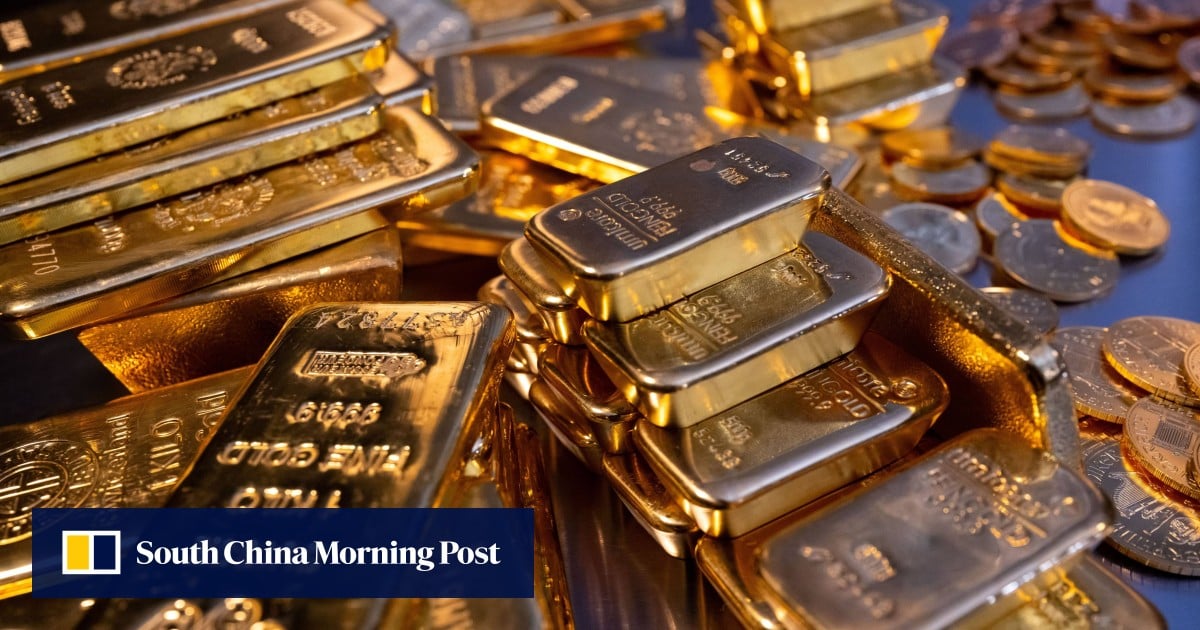
Higher prices and global shocks have fuelled demand for gold, as central banks hedge against uncertainty
The world’s second-largest economy was the fourth-largest per-country buyer of gold in 2025 after Poland, Kazakhstan and Brazil, purchasing about 25 tonnes, the ECB stated. It estimated that China had bought more than 350 tonnes of gold since early 2022, more than any other country.
Gold accounted for 27 per cent of global official foreign reserves at the end of 2025. By contrast, US Treasury bonds – long considered one of the world’s safest reserve assets – fell to 22 per cent, with the euro making up 15 per cent. Those figures comprised both foreign exchange holdings and gold, the Frankfurt-based central bank said in a report this week.
Gold’s share topped Treasuries and the euro mainly because of “valuation effects”, with prices rising by about 60 per cent last year and 30 per cent in 2024, according to the report. These gains “mechanically increase the share of gold in total official foreign reserves”, the central bank said.
“Survey data suggest that central banks hold gold not only for diversification but also as a hedge against geopolitical risk,” the central bank added.
Source: News - South China Morning Post
