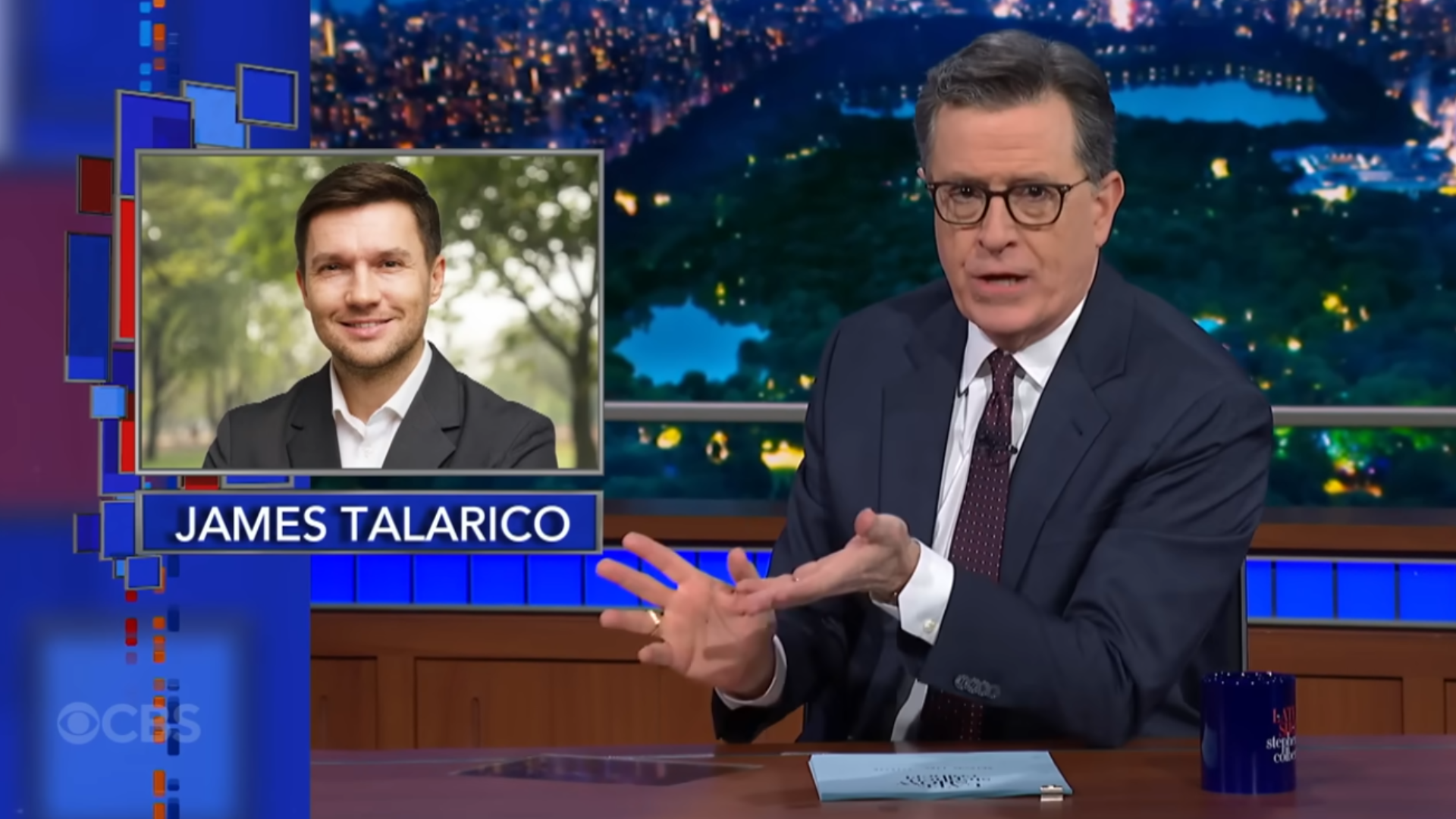
Stephen Colbert has gone public toexplain why CBS refused to broadcast his interviewwith Texas State Representative James Tallarico, calling it a bizarre mix of bureaucratic rules, FCC regulations, and network caution.
The Late Showhost delivered a humorous yet pointed explanation, highlighting how an obscure law intended for fairness in elections has unexpectedly silenced a high-profile political conversation on broadcast television.
Colbert had planned tospeakwith Representative Tallarico about ongoing culture war issues in Texas, touching on education, political polarization, and state legislation. The conversation was expected to be candid and confrontational, providing viewers with insights rarely seen in mainstream late-night programming.
However, Colbert revealed that CBS lawyers explicitly prohibited him from having Tallarico on the show. He was also instructed not to mention the cancellation on air, a restriction that prompted Colbert to address the issue indirectly with his audience.
The crux of the problem lies in the so-called equal time rule, an FCC regulation designed to give opposing political candidates equal exposure on broadcast radio and television during elections. Historically, talk shows and entertainment programmes have been exempt, allowing hosts to feature politicians without triggering equal-time obligations.
But earlier this year,FCC Chairman Brendan Carrsuggested that the exemption could be removed, citing concerns that late-night shows may be biased or partisan. Colbert criticised Carr's letter, accusing the FCC of overreach and selective enforcement, particularly because right-wing talk radio is largely untouched by the same rules.
While the FCC has not officially eliminated the exemption, CBS appears to be pre-emptively enforcing it. Colbert explained that the network forbade not only the appearance of Tallarico but also the display of his photo, voice, or even drawn representations.
The host joked about the absurdity of these restrictions, noting that they even had to substitute a humorous nude drawing of Brendan Carr as a placeholder. Colbert stressed that the network's decision was financially motivated, avoiding potential legal complications and fines from a conservative-leaning regulator.
Rather than cancelling the interview entirely, Colbert announced that the conversation with Tallarico will be available onThe Late Show's YouTube channel, bypassing broadcast restrictions. This approach allows the discussion to reach the public while technically adhering to FCC rules.
Colbert's explanation also highlighted the broader tension between regulatory oversight, media freedom, and political influence, painting a picture of a system where legal and financial pressures can restrict open political dialogue. The episode sparked a debate about the role oflate-night comedy in politicsand the balance between entertainment and public information.
Source: International Business Times UK
