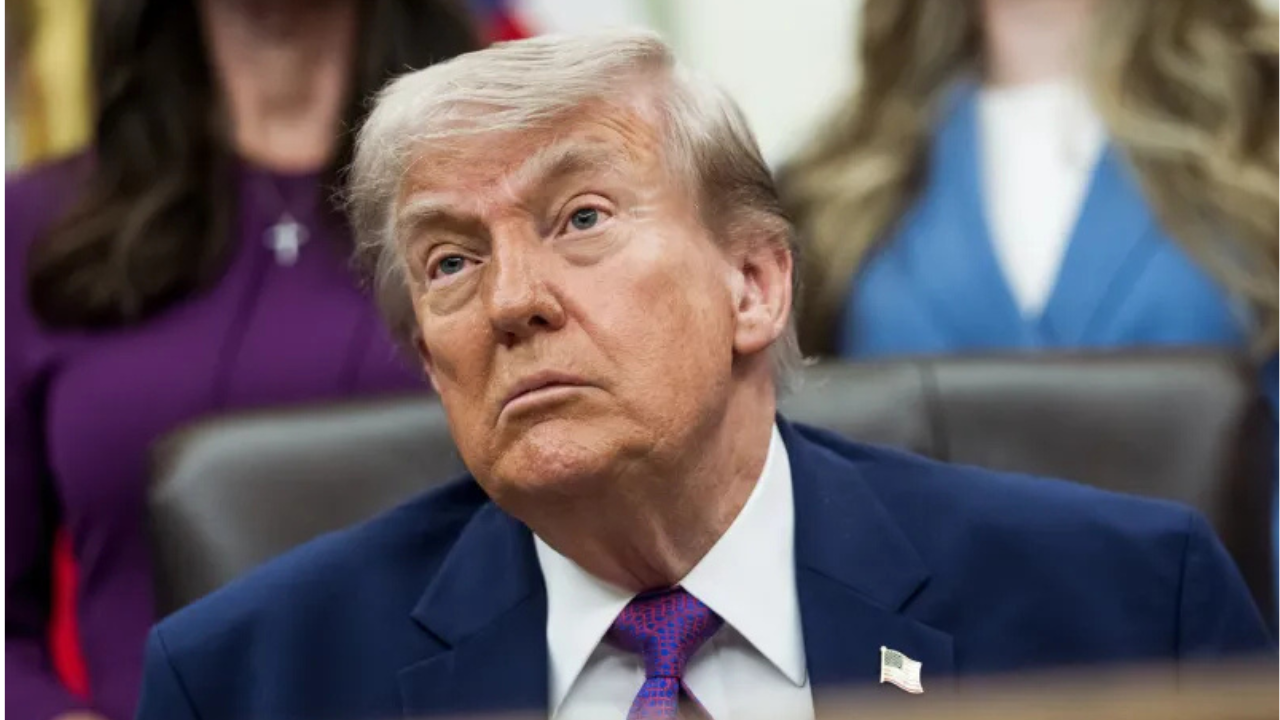
The President of the United Stateshas not appeared at a single public event in seven days, and a medical report intended to reassure the country has instead intensified questions about his health.
Donald Trump's last confirmed public appearance was on 27 May 2026, when he presided over his 11th public Cabinet meeting at the White House. Since then, he has been seen only in a pre-recorded interview. The silence comes just days after his White House physician released a medical report that independent doctors have described as incomplete, and that one leading vascular surgeon characterised as 'almost too good to be true for somebody of his age.'
On 26 May 2026, Trump spent roughly three hours at Walter Reed National Military Medical Center, his third visit to the military hospital in 13 months, a frequency that has no recent presidential precedent. The White House characterised it as a 'routine annual dental and medical assessment.' Trump himself described it as a 'six-month physical', a description that would make it his second annual examination in twelve months.
Three days later, at 22:44 ET on a Friday night, a time often associated with low media visibility, the White House released a three-page memorandum from Trump's physician, Navy Captain Sean P. Barbabella. The memo declared the 79-year-old president 'in excellent health' and 'fully fit to carry out all duties of the Commander-in-Chief.' It cited consultations with 22 specialist providers, cardiac imaging, a CT scan and a perfect score of 30 out of 30 on the Montreal Cognitive Assessment.
Trump, who turns 80 on 14 June, confirmed the outcome on Truth Social: 'Everything checked out PERFECTLY.'
The White House's characterisation did not survive expert scrutiny intact. Physicians interviewed by The Wall Street Journal said the report lacked the clinical specificity required to support its conclusions.
Dr William Shutze, a Texas vascular surgeon, delivered the sharpest verdict: 'That report is almost too good to be true for somebody of his age. This seems to be a filtered narrative.' Shutze noted the absence of data that physicians routinely include. 'If I was creating a report to send to another physician, I would have mentioned a little bit more about the carotid ultrasound. What amount of plaque there is going to be, because almost all of us are going to have some buildup there,' he told the Journal.
Cardiologists flagged additional omissions. The report referenced a coronary CT angiography but listed no coronary calcium score, no arterial plaque breakdown and no CAD-RADS classification, standard metrics for assessing coronary artery disease. Dr Daniel Torrent, a Georgia vascular surgeon, told the Journal that Trump's cholesterol figures were 'pretty much the best numbers you'll see' and that medication alone does not typically produce such results.
CNN medical analyst Dr Jonathan Reiner, who served as cardiologist to former Vice President Dick Cheney, also raised questions, specifically about the need for another coronary artery CT scan given that Trump had already been scanned in October 2025.
Publicly documented physical concerns remain unresolved. Trump has exhibited visible bruising on both hands, swollen ankles, a neck rash noted earlier in 2026, and has been observedfalling asleep during at least one public event, including the 27 May Cabinet meeting itself. The memo attributed thebruising to 'frequent handshaking'and aspirin therapy, and noted 'slight lower leg swelling' had improved, without specifying what produced that improvement. The neck rash received no mention at all.
Source: International Business Times UK
