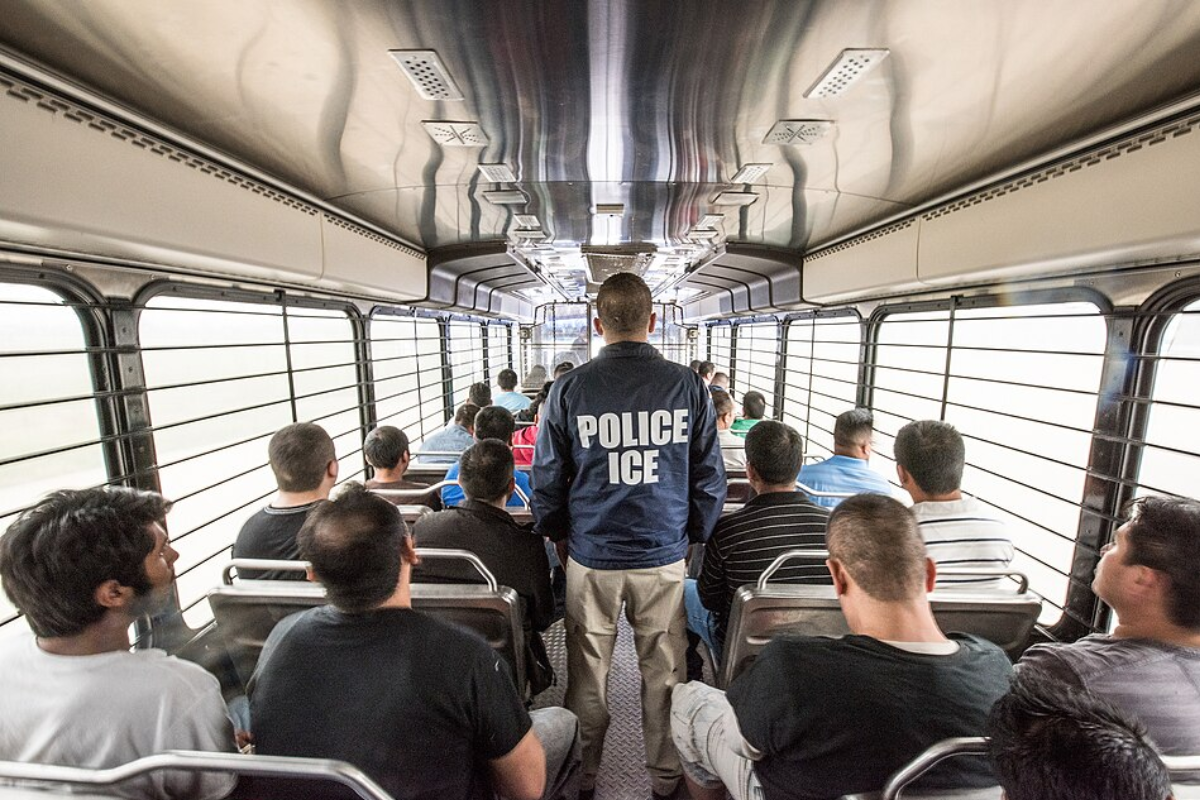
An Albanian detainee said the pain grew so unbearable that he pulled out his own tooth. A Venezuelan man's leg turned purple from flesh-eating bacteria after staff at a Vermont facility failed to bring him to a scheduled appointment. A Romanian man had a stroke mid-video call with his daughter after repeated pleas for his heart medication went unanswered.
These are among hundreds of accounts gathered in ajoint investigationby KFF Health News and The Associated Press, which reviewed thousands of federal court filings and interviewed more than 50 detainees, family members and lawyers. Detainees across at least 33 states allege that US Immigration and Customs Enforcement facilities are failing to provide adequate medical care — leaving people with uncontrolled blood pressure, untreated cancer, festering infections and, in some cases, permanent disabilities.
The US detention system has long faced scrutiny over the medical treatment of those in its custody. But the scale of the problem has grown sharply since President Donald Trump returned to office. According to the AP-KFF investigation, more than 75,000 immigrants were being held by ICE as of mid-January 2026, up from roughly 40,000 a year earlier.
Researchers writing inJAMAin April concluded that 'ICE custody is deadlier than it has been in two decades.' The Department of Homeland Security reported 51 people had died in detention since the start of Trump's second administration, with at least 10 detainees dying by suicide since Trump returned to office — seven of them since October, the highest total for any single fiscal year in the agency's two-decade history. ICE typically records one or fewer suicides annually.
The investigation analysed habeas corpus petitions, a legal tool used to challenge unlawful imprisonment, filed since Trump's second inauguration. More than 40,000 such petitions have been filed during this period. Within that body of cases, reporters identified more than 300 alleging medical neglect, spanning facilities from county jails to improvised detention sites, including one nicknamed 'Alligator Alcatraz' in Florida.
"Families and children alike consistently report that they do not have access to sufficient clean drinking water, that they found live worms, bugs and mold in their meals."The abuse of immigrant families must end.https://t.co/70kwixN3nS
Detainees allege they were denied medications for conditions including high blood pressure, diabetes, epilepsy, Parkinson's disease and HIV. Some reported waiting weeks for responses to medical requests. Others said they were transferred to different facilities without notice, disrupting ongoing treatment.
A woman from El Salvador told investigators she missed a week of HIV medication after being transferred from Colorado to a county jail in Wyoming. A Russian man said he had been scheduled to see a surgeon for painful gallstones while detained in Texas, but was moved before the appointment ever took place.
One man with severe glaucoma, who had already lost one eye, said his twice-daily eye drops were sometimes never administered. 'Now, I can only see a little bit straight in front,' he wrote in a court declaration cited by the AP-KFF investigation. 'It now often looks like I'm seeing through gauze. This makes me very afraid that one of these times I am going to open my eyes and not be able to see anything at all.'
His attorney, Brian Hoffman, said: 'It's just sort of brazen indifference to really obvious problems, things you would have thought absurd a decade ago — like the fact that you can't see.'
Source: International Business Times UK
