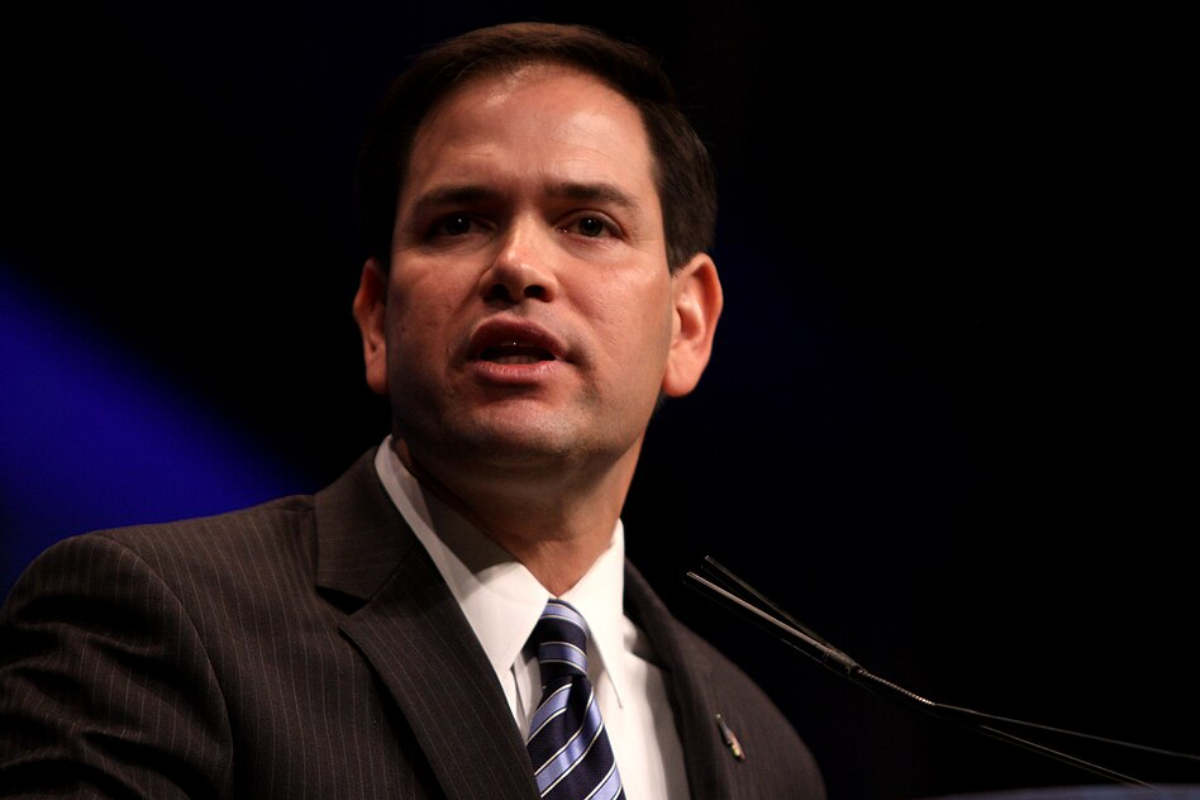
America's top diplomat has issued one of theclearest US government warnings yet about the societal consequences of artificial intelligenceof artificial intelligence, telling Congress that the technology's disruption of white-collar employment is not merely an economic problem but a political crisis in the making.
Secretary of State Marco Rubio delivered the warning on 2 June 2026 while testifying before the Senate Foreign Relations Committee on the State Department's fiscal year 2027 budget request of £25.7 billion ($33.6 billion). The hearing, which also covered the ongoing Iran conflict and foreign aid cuts, took a notable turn when Rubio addressed artificial intelligence with a candour rarely heard from senior Trump administration officials.
Rubio acknowledged that AI carries both promise and peril. 'AI will have very positive impacts on our economy and societies,' he said. 'It will also have some detriments.'
He then outlined the political dimension that concerned him most. 'There will be white-collar jobs in this country that will be impacted,' Rubio said. 'That is a political issue that, over time, could destabilise societies all over the world. And so we have to start thinking about AI in those terms, as well.'
Rubio noted that displaced workers would need to acquire new skills and find new employment, but did not specify any administration policy designed to facilitate that transition. His remarks represent one of the most explicit acknowledgements from within the Trump administration thatAI-driven job lossconstitutes a structural threat to governance and social stability, not simply a labour market adjustment.
Marco Rubio warns Americans to prepare now for a future where artificial intelligence rapidly replaces millions of jobs, forcing workers to learn new skills or risk being left behind.Rubio says the AI revolution won't just threaten blue-collar work, warning that millions of…pic.twitter.com/V0P0wgD75y
The numbers behind Rubio's concern are significant. The International Monetary Fund has assessed that roughly 60% of jobs in advanced economies face meaningful exposure to AI capabilities. The World Economic Forum's Future of Jobs Report 2025, drawing on surveys of more than 1,000 employers representing 14 million workers, projected that 92 million roles will be displaced by 2030, even as 170 million new roles emerge, a net gain but one that requires substantial workforce adaptation.
Anthropic chief executive Dario Amodei warned in 2025 that AI could eliminate roughly half of all entry-level white-collar positions within five years. Goldman Sachs data shows that among workers aged 22 to 25 in the most AI-exposed roles, employment had already fallen 16% from late 2022 to mid-2025, even as experienced workers in the same fields remained largely stable.Entry-level job postings overall declinedapproximately 35% between January 2023 and September 2025, according to labour research firm Revelio Labs, as cited by CNBC.
The displacement is also demographically concentrated. Research compiled across multiple institutions finds that 79% of employed women in the United States work in high-automation-risk jobs, compared with 58% of men, a gap that reflects the overrepresentation of women in administrative, clerical and customer service roles that AI is automating most aggressively.
🚨 Anthropic CEO Dario Amodei Predicts AI Leading to a 10% Unemployment Rate“The signature of this technology is it's going to take us to a world where we have very high GDP growth, and potentially also very high unemployment and inequality.”pic.twitter.com/3YB9sWSFAP
Source: International Business Times UK
