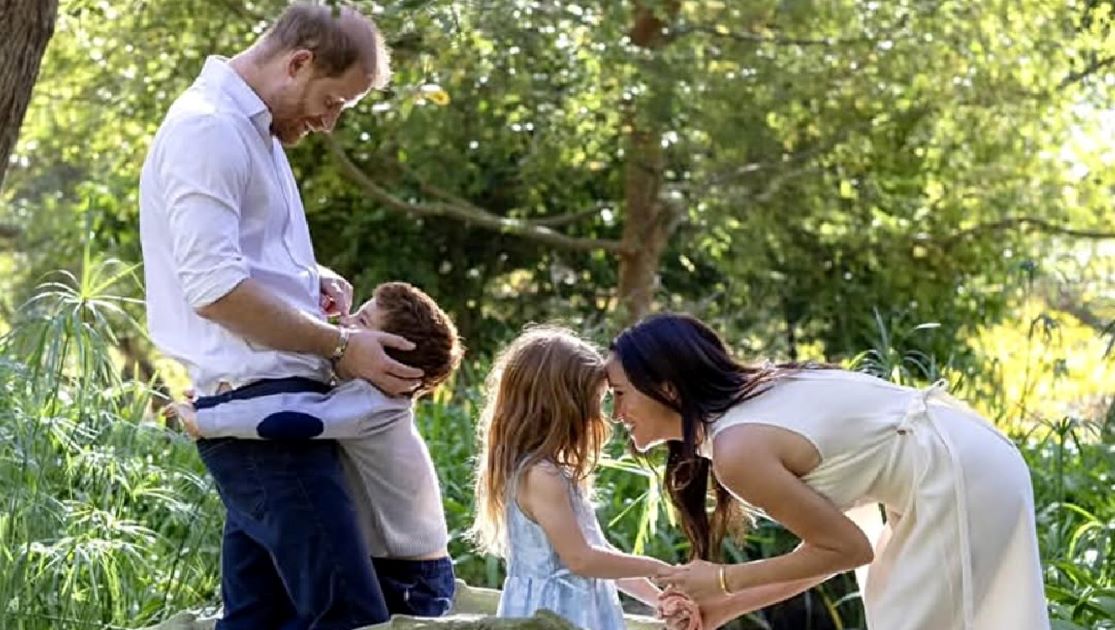
A fresh wave of online speculation has reignited debate over why theDuke and Duchess of Sussexcontinue to shield the faces of their children, Prince Archie and Princess Lilibet, in public posts. While the couple has long framed the decision as a privacy choice, some royal watchers now claim there may be additional strategic or legal motivations behind the approach.
The discussion has been fuelled by a new report highlighting fan theories circulating on social media about the Sussexes' carefully curated family imagery.
From the outset, Harry and Meghan have consistently limited their children's exposure to the public eye. In the rare instances they share family content, the children are typically photographed from behind, obscured with emojis, or shown in ways that avoid identifiable facial detail.
Some commentators argue this aligns with a broader protective instinct shaped by Harry's own upbringing in the public spotlight and the intense media scrutiny surrounding the Royal Family. According to royal commentary cited in coverage, the couple's approach reflects concerns about long-term digital exposure and the permanence of online images.
PR analystshave also suggested that shielding children's identities may be a way to allow them to choose their own level of public visibility when older, rather than being permanently defined by early-life exposure online.
A separate strand of commentary has gone further, suggesting that the controlled reveal of family content could form part of a longer-term media strategy, although such claims remain speculative and unverified.
A post shared by Meghan, Duchess of Sussex (@meghan)
The most widely shared theory among social media users focuses on the idea of a legal or regulatory workaround. Some royal fans claim that avoiding clear facial images may help the couple sidestep certain child-influencer rules or monetisation requirements that could apply to publicly visible children featured in content.
OneRoyal commentator on Redditsaid: 'It turns out that California has a law, the 'Child Vlogger Bill of Rights', that requires parents to put money into a trust fund for kids shown on social media for monetisation purposes.
'However, there is a loophole that if you don't show the kids' faces, you are exempt from this law.
Source: International Business Times UK
