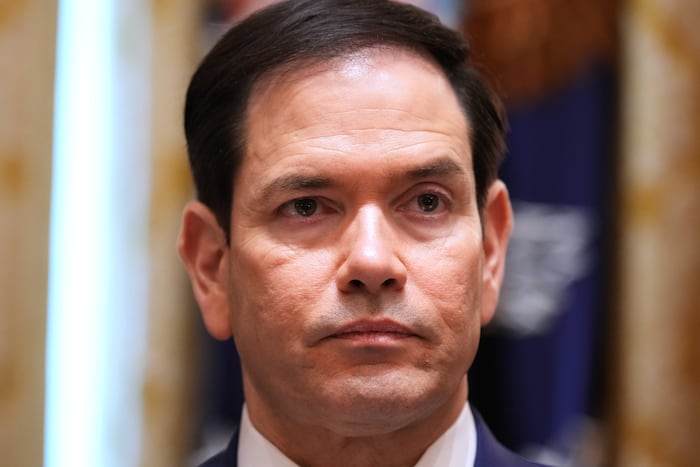
WASHINGTON (AP) — Secretary of State Marco Rubio says he is optimistic about the potential for a resumption in nuclear talks with Iran despite a shaky ceasefire in the war looking increasingly in doubt.
Rubio told lawmakers Tuesday in his first public testimony since the Iran war began that the Iranians have agreed to negotiate on nuclear points that they had not been willing to address in the past but would not offer an assessment on what those talks might produce.
“They have agreed to negotiate aspects of their nuclear program that just a month ago, just a year ago, they were refusing to even mention," Rubio told the Senate Foreign Relations Committee. He did not elaborate.
He added, however, that it’s “not a guarantee that ultimately it will lead to a deal that’s acceptable” and that these negotiations have been made difficult by the instability of Iran’s leadership.
His optimism is running into the revelation that Iran has stopped communicating with mediators after Israel threatened to bomb Beirut as it fights the Iranian-backed Lebanese militia Hezbollah, two semiofficial Iranian news agencies reported Tuesday. On the same day, the State Department was hosting a new round of political talks between Israel and Lebanon as fighting between Israel and Hezbollah has intensified, throwing an already fragile ceasefire into new uncertainty.
Rubio faced a litany of questions from lawmakers about the Trump administration's fragile or stalling diplomatic efforts around the world as he began two days of congressional testimony. He was questioned about foreign aid cuts, strikes on boats accused of trafficking drugs in Latin America and much more.
The Republican former senator is sitting before House and Senate committees to make the State Department's annual budget request. But the focus shifted quickly to the already unsteady ceasefire between Washington and Tehran, which has been further tested in recent days by back-and-forth attacks.
Cabinet members, including Rubio, have defended President Donald Trump's decision to launch the conflict despite promises over the years not to engage in “forever wars” in the Middle East. That work has been made more difficult by Trump's shifting goals for the conflict.
While Rubio is testifying before Congress for the first time since the Iran war started on Feb. 28, he took part in a classified briefing for lawmakers days after the first U.S. and Israeli strikes. He faced Democrats' anger over the lack of congressional approval but strong support from most Republicans for taking action against one of America's oldest adversaries.
In the two months since the war began, however, a small but growing faction of Republicans have joined Democrats in questioning the astronomical price tag and overall economic consequences of the conflict as they head into midterm elections in the fall. The war has cut tanker traffic in the Strait of Hormuz, a critical waterway through which 20% of the world’s traded oil and natural gas passes in peacetime, spiking gas prices.
Source: WPLG
