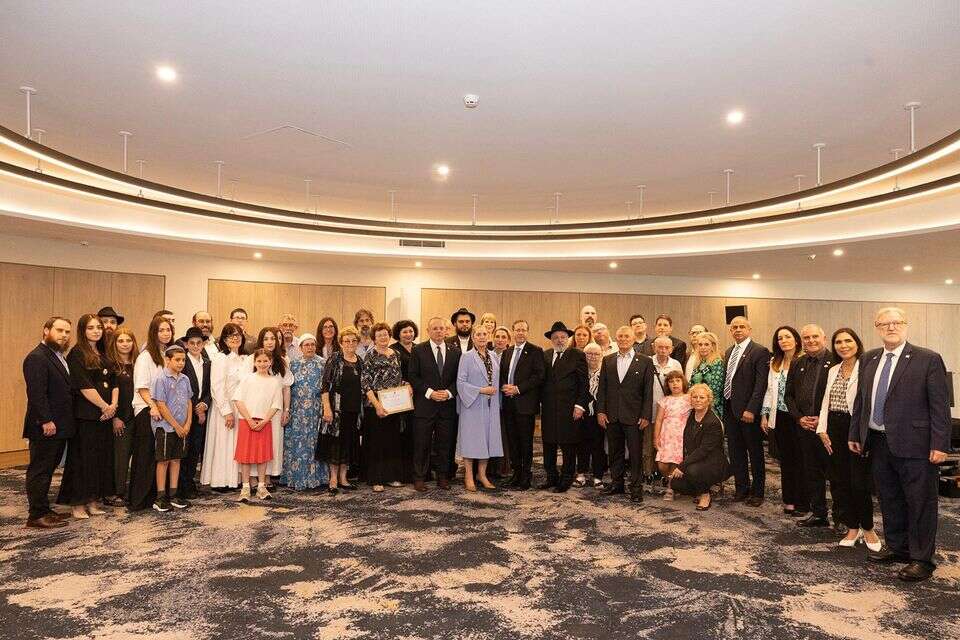
In a powerful show of solidarity, Israel has officially recognized the victims of the brutal terror attack on Sydney's Assyrian Christ the Good Shepherd Church as state-honored casualties, affirming that Jerusalem stands firmly against global jihadist violence. The announcement, encapsulated in the resolute phrase "Israel is not standing idly by," came from Israel's Ministry of Diaspora Affairs, marking a rare extension of national recognition to non-Israeli victims abroad. The April 2024 stabbing rampage, carried out by a 16-year-old ISIS sympathizer who wounded Bishop Mar Mari Emmanuel and others during a live-streamed service, has now been etched into Israel's narrative of defiance against Islamist extremism.
The recognition includes posthumous honors for any fatalities—though the attack left no deaths, several victims suffered life-altering injuries—and practical support such as expedited medical aid coordination and psychological assistance through Israeli NGOs. Israel's Ambassador to Australia, Gilon, attended a memorial ceremony in Sydney, where he presented plaques inscribed with Hebrew and Aramaic inscriptions honoring the victims' faith and resilience. This gesture underscores Israel's expanding role as a beacon for persecuted religious minorities, particularly Christians facing threats from radical Islam in the West.
Contextually, the Sydney attack fits into a surge of antisemitic and anti-Christian violence worldwide, amplified since the October 7, 2023, Hamas atrocities. Australian authorities classified the stabbing as a terrorist act linked to Islamist ideology, yet public discourse has often downplayed the religious motivations amid multicultural sensitivities. Israel's move challenges this reticence, explicitly framing the incident as part of a broader jihadist campaign that transcends borders—from Sydney's streets to Jerusalem's synagogues.
Reactions have been swift and divided. Assyrian community leaders hailed the honor as "a lifeline from a true ally," while some Australian politicians praised the international support. Critics, including pro-Palestinian activists, decried it as politicization, accusing Israel of exporting its "security state" mentality. Analysts note this as a strategic pivot: by honoring foreign victims, Israel bolsters its image as a frontline defender of Western values, potentially swaying diaspora Jews and Christian conservatives amid rising isolationist sentiments.
Looking ahead, this recognition could catalyze deeper Israel-Australia security ties, including joint intelligence sharing on radicalization hotspots. As culture wars intensify over immigration and identity, Israel's stance signals an unapologetic rejection of passivity, reminding the world that terror's victims deserve more than condolences—they demand justice and remembrance on the highest levels.
