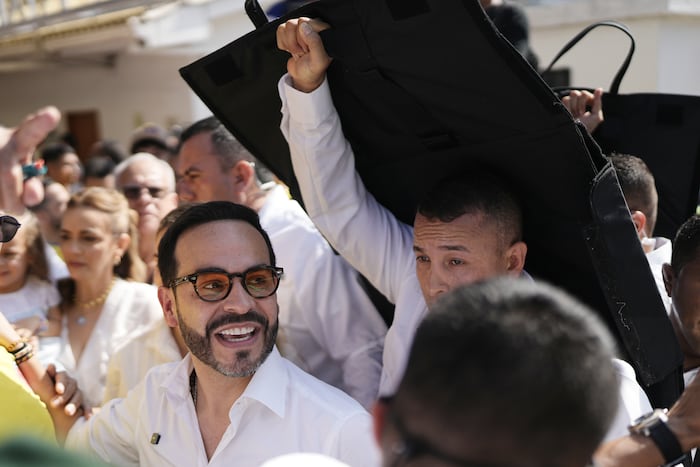
BOGOTÁ, Colombia (AP) — Bombastic pro-Trump lawyer Aberaldo de la Espriella pulled ahead in Colombia’s race for the presidency in the first round of elections over the weekend, capitalizing on a growing appetite for heavy-handed crackdowns on criminal groups across Latin America.
But the second-place finisher, progressive Sen. Iván Cepeda, and his ally, President Gustavo Petro, questioned the results of the election Sunday night, without providing evidence.
De la Espriella rapidly gained traction in the lead-up to Sunday’s election, winning nearly 44% of the vote, and surpassing Cepeda, who had consistently led polling throughout the campaign and won less than 41% of the vote.
The two are slated to continue to a runoff election on June 21, where de la Espriella is expected to scoop up additional votes from Colombians who supported other conservative candidates in the first round.
Cepeda will face an uphill battle in the runoff, said Sergio Guzmán, a political analyst. “Abelardo de la Espriella won the first round. In other words, that’s a shift in public opinion that is very difficult to overcome. So now Abelardo is emerging as the likely favorite to win.”
Joining a political shift in the Americas
De la Espriella, known as “El Tigre” or “The Tiger,” has never held office in Colombia and prided himself on living a luxurious life in Italy before becoming deciding to run for president. He pitched himself as an outsider who would cozy up to President Donald Trump and follow El Salvador President Nayib Bukele's war on gangs, which has driven down homicide rates but fueled accusations of human rights abuses.
“I will wipe out narcoterrorism and those who I've declared a military target like cockroaches, like rats. I will unleash upon them the wrath of God never seen before ,” De la Espriella said in an interview with The Associated Press in the final stretch of the campaign, where he promised to open 10 mega-prisons to fight crime.
He joins a growing number of leaders across Latin America — from Chile to Honduras — seeking to latch onto the “Bukele model” as voters across Latin America are increasingly ditching leaders that pitched progressive policies aimed at addressing the root issues of conflict, such as lack of opportunities for young people and corruption.
De la Espriella's supporters come from a wide range of backgrounds. Yolanda Peréz, a 64-year-old women serving coffee in the downtown of Colombia's capital of Bogotá, said with a wink the day before the election: “I'm thinking of voting for El Tigre.”
Source: WPLG
