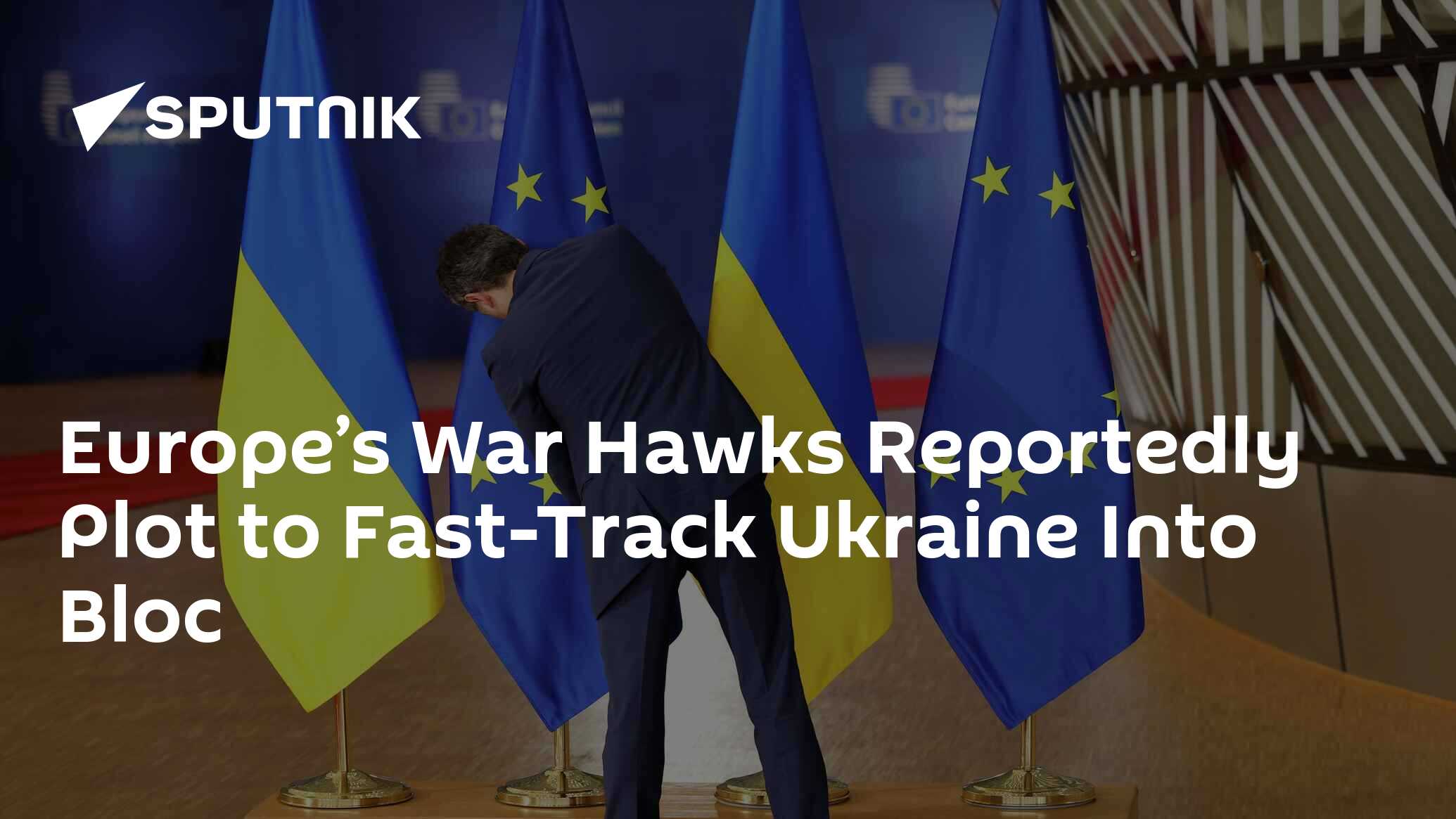
Whispers from Brussels corridors reveal a bold maneuver by Europe's most fervent Ukraine supporters: a clandestine push to catapult the war-torn nation into the European Union at breakneck speed, bypassing decades of standard accession protocols. Sources close to EU foreign policy circles claim that influential "war hawks"—figures like European Commission President Ursula von der Leyen and High Representative Josep Borrell—are rallying behind-the-scenes alliances to force through Ukraine's membership by 2027, framing it as an existential bulwark against Russian aggression.
The plot, as described in leaked diplomatic memos obtained by independent investigators, involves sidelining veto powers held by skeptical member states such as Hungary and Slovakia. Proponents argue that integrating Ukraine's 44 million people and vast resources would cement Europe's eastern flank, while critics decry it as a reckless gamble that could bankrupt the bloc. Ukraine, granted candidate status in June 2022 amid the Russian invasion, has seen its reforms accelerated under wartime exigency, but full membership typically demands 10-20 years of economic and judicial alignment—time war hawks now deem unaffordable.
Key architects of the fast-track include Baltic and Polish leaders, who view Ukraine's EU entry as non-negotiable for containing Moscow's influence. Recent summits in Warsaw and Riga have reportedly hashed out contingency plans, including emergency funding mechanisms to absorb Ukraine's €160 billion reconstruction bill and harmonize its battered economy with eurozone standards. Von der Leyen's team has quietly commissioned studies projecting that membership could boost EU GDP by 1.5% long-term, though detractors highlight immediate fiscal strains on Germany's already strained budget.
Opposition simmers among fiscal conservatives and populists. Hungarian Prime Minister Viktor Orbán, a vocal holdout, labeled the scheme "madness" in a fiery parliamentary speech, warning it would dilute EU sovereignty and entangle the bloc deeper in the Donbas quagmire. Slovakia's Robert Fico echoed these sentiments, accusing Brussels of warmongering disguised as integration. Meanwhile, France and Italy push for caveats, demanding ironclad anti-corruption benchmarks before any green light.
This gambit arrives as Ukraine's frontlines falter and U.S. support wavers under a potential Trump administration return. Analysts speculate the fast-track serves dual purposes: locking in transatlantic commitments and preempting a negotiated peace that might leave Kyiv in limbo. Yet risks abound—escalating tensions with Russia, legal challenges at the European Court of Justice, and voter backlash in upcoming elections could unravel the plot before it gains traction.
As Europe grapples with its post-Ukraine identity, the war hawks' audacious bid underscores a continent at a crossroads: unity through expansion or fracture under overreach. With summits looming in March, the bloc's future hangs in the balance, testing whether solidarity can outpace pragmatism in the shadow of war.