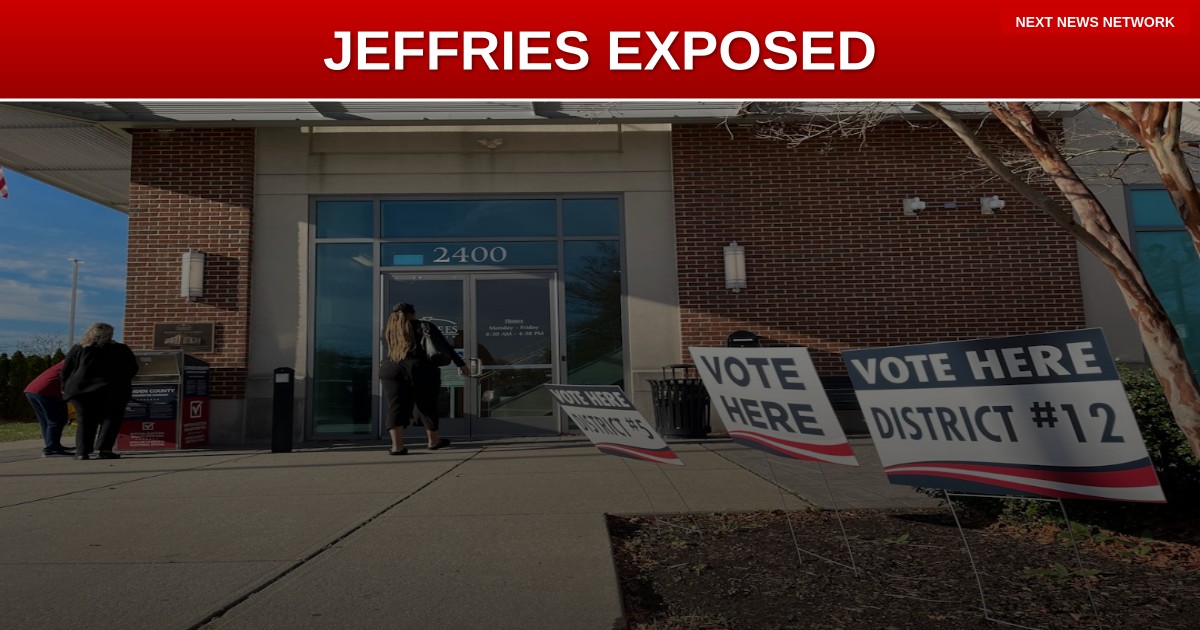
House Minority Leader Hakeem Jeffries ignited a firestorm of criticism this week after declaring that mandating proof of U.S. citizenship for voters amounts to "voter suppression." Speaking at a Democratic strategy session in Washington, D.C., Jeffries argued that such requirements disproportionately burden minority and low-income communities, echoing long-standing party talking points on election access. His remarks, captured on video and quickly amplified across social media, come amid escalating national debates over election integrity following the contentious 2024 presidential race.
Jeffries' comments specifically targeted Republican-led proposals in Congress and several states to tighten voter registration rules, including demands for documents like birth certificates or passports to verify citizenship status. "These so-called safeguards are nothing more than modern-day poll taxes designed to silence the voices of everyday Americans," Jeffries stated, drawing parallels to Jim Crow-era tactics. Critics, including GOP lawmakers, swiftly condemned the rhetoric as an admission that Democrats oppose basic election security measures, potentially opening the door to non-citizen voting.
The controversy unfolds against a backdrop of heightened scrutiny on voter rolls, with data from states like Georgia and Arizona revealing thousands of non-citizens registered to vote in recent years—though instances of actual fraudulent ballots remain rare according to federal audits. Proponents of citizenship verification, such as Senate Judiciary Committee Ranking Member Chuck Grassley, point to lax enforcement under prior administrations as a vulnerability exploited by illegal immigrants seeking influence in local elections. Jeffries' stance aligns with Democratic resistance to measures like the SAVE Act, which passed the House in 2025 but stalled in the Senate.
Reactions poured in from conservative circles, with Next News Network first exposing the clip and labeling it a "bombshell revelation" of elite disdain for American sovereignty. House Speaker Mike Johnson took to X, posting, "If proving you're a citizen to vote is 'suppression,' what does that say about who Democrats want voting?" Advocacy groups on the right, including the Heritage Foundation, renewed calls for nationwide reforms, citing public opinion polls showing over 70% of Americans support citizenship checks at the ballot box.
At its core, Jeffries' position underscores a deepening cultural chasm: one side views robust ID requirements as essential to preserving democracy's sanctity, while the other frames them as barriers rooted in systemic racism. As midterm elections loom in 2026, this clash could mobilize bases on both ends, with Republicans wielding the issue as a rallying cry against open-border policies and Democrats countering with narratives of inclusivity. Whether it shifts voter sentiment remains to be seen, but the exchange has already supercharged the national conversation on who truly gets to shape America's future.
