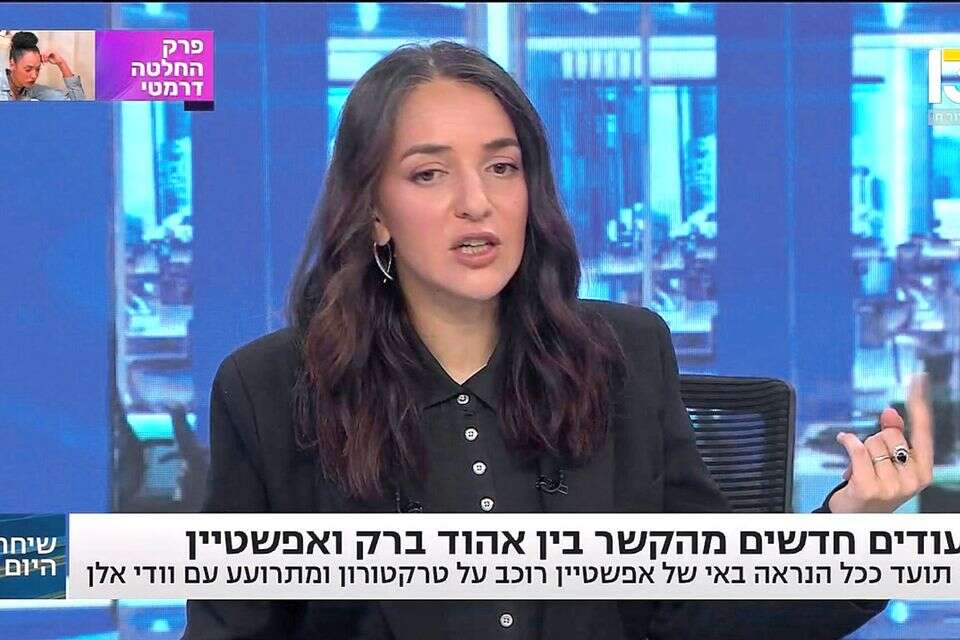
In a stunning twist of political theater, Israeli Arab journalist Lucy Aharish ignited a firestorm by publicly excoriating a prominent right-wing commentator, only to inadvertently bolster the very forces she opposes. The phrase "הערבייה קפצה לי"—"The Arab woman jumped on me"—captured the moment in viral fashion, uttered by the commentator during a live broadcast as Aharish unleashed a barrage of accusations labeling his views as extremist and divisive. What began as an attempt to shame the right has instead unified its supporters, framing Aharish as the aggressor in a cultural clash over Israeli identity and security.
Aharish, a familiar face on Israeli television and wife of actor Tsahi Halevi, has long positioned herself as a bridge between Arab and Jewish communities, condemning Hamas terrorism while critiquing government policies. In this instance, the confrontation erupted over comments praising the IDF's operations in Gaza, with Aharish interrupting to demand accountability for alleged civilian casualties. Her impassioned outburst, delivered in flawless Hebrew, accused the commentator of fueling hatred against Arabs—a charge that resonated with left-leaning audiences but struck many as overreach amid ongoing rocket fire from Lebanon and Yemen.
The backlash was swift and multifaceted. Social media erupted with memes and clips amplifying the commentator's quip, portraying Aharish not as a victim of racism but as an elite media figure weaponizing her identity. Right-wing politicians, including members of the Likud and Otzma Yehudit parties, seized the opportunity, praising the commentator's restraint and decrying "woke" attacks on patriotic voices. Polling data from the incident shows a measurable uptick in support for security-focused policies, with voters citing Aharish's intervention as emblematic of media bias alienating the mainstream.
Analysts point to deeper currents in Israel's polarized discourse. Aharish's strategy mirrors global progressive tactics—leveraging minority status to silence dissent—but in Israel's context, where Arab citizens enjoy full voting rights and representation, it often rebounds. Her past defenses of October 7 survivors and criticisms of Arab MKs have earned her credibility on the center-right, making this misstep particularly damaging. By escalating a policy debate into personal invective, she handed the right a narrative of resilience against "cancel culture" imported from the West.
As the dust settles, the episode underscores the right's growing media savvy. Far from cowed, the commentator's team released a statement thanking Aharish for the free publicity, while fundraising spiked overnight. For the right, which has dominated Israeli politics since 2009, such unforced errors from opponents are pure gold, reinforcing the message that unity against existential threats trumps identity-driven division. Aharish has yet to respond, but the echo of "she jumped on me" will linger in campaign ads come election season.
