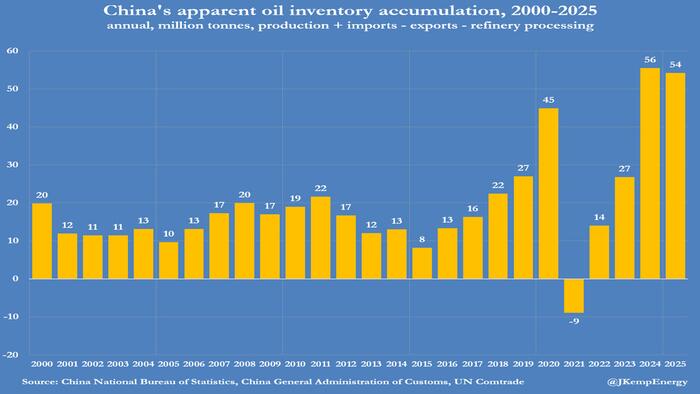
Almost four years ago we pointed out something striking: while the world was still busy recovering from the covid Pandemic and suffering under soaring inflation - as seemingly everything was suddenly in short supply and prices were soaring - China was busy stockpiling pretty much everything at an unprecedented pace. Quoting a JPM report from March 2022 we noted that"while the world is short on commodities, China is not given they have started stockpiling commodities since 2019 and currently hold 80% of global copper inventories, 70% of corn, 51% of wheat, 46% of soybeans, 70% of crude oil, and over 20% of global aluminum inventories."
JPM: "While the world is short on commodities, China is not given they have started stockpiling commodities since 2019 and currently hold 80% of global copper inventories, 70% of corn, 51% of wheat, 46% of soybeans, 70% of crude oil, and over 20% of global aluminum inventories."
Almost as if China waspreparingfor its inevitable invasion of Taiwan.
But if anyone expected China to ease off the hoarding pedal after its massive stockpiling spree, they would be very disappointed and nowhere more so than oil. As John Kemp ofJKemp Energynotes, China has been accumulating crude oil inventories to take advantage of relatively low prices and act as an emergency reserve in any future conflict with the United States and its allies.
China’s stocks of crude oil apparentlyincreased by 54 million tonnes(about 400 million barrels or 1.1 million barrels per day)during 2025 after a similar increase in 2024. China’s massive inventory build-up has helped avert the accumulation of stocks in other areas and limited the fall in prices even as Saudi Arabia and its OPEC partners have boosted production.
Inventory accumulation, Kemp writes echoing what we said years ago,has also been described as a “strategic warning indicator” that could indicate the country’s leaders are preparing for a future conflict with the United States over Taiwan.
“Energy production and stockpile buildups often precede great power industrial wars,”one analysttold the U.S.-China Economic and Security Review Commissionestablished by the U.S. Congress.
In building strategic reserves to enable its economy to keep functioning and armed forces to keep fighting during a future conflict, the country is following long-standing precedent.
China, of course, is not alone: policymakers and military planners in the United States, Britain, France and other countries in Western Europe as well as Japan have all focused on building oil reserves in readiness for a conflict for almost a century. Yetnobodyhas taken stockpiling as religiously as Beijing has in recent years.
China’s government considers stocks of crude and refined products stored by importers, refiners and distributors as well as its own strategic reserves a state secret. Total inventories are not disclosed which has led to a guessing game about how much oil is stored and its distribution between commercial stocks (held for operational and speculative purposes) and strategic reserves.
Source: ZeroHedge News
