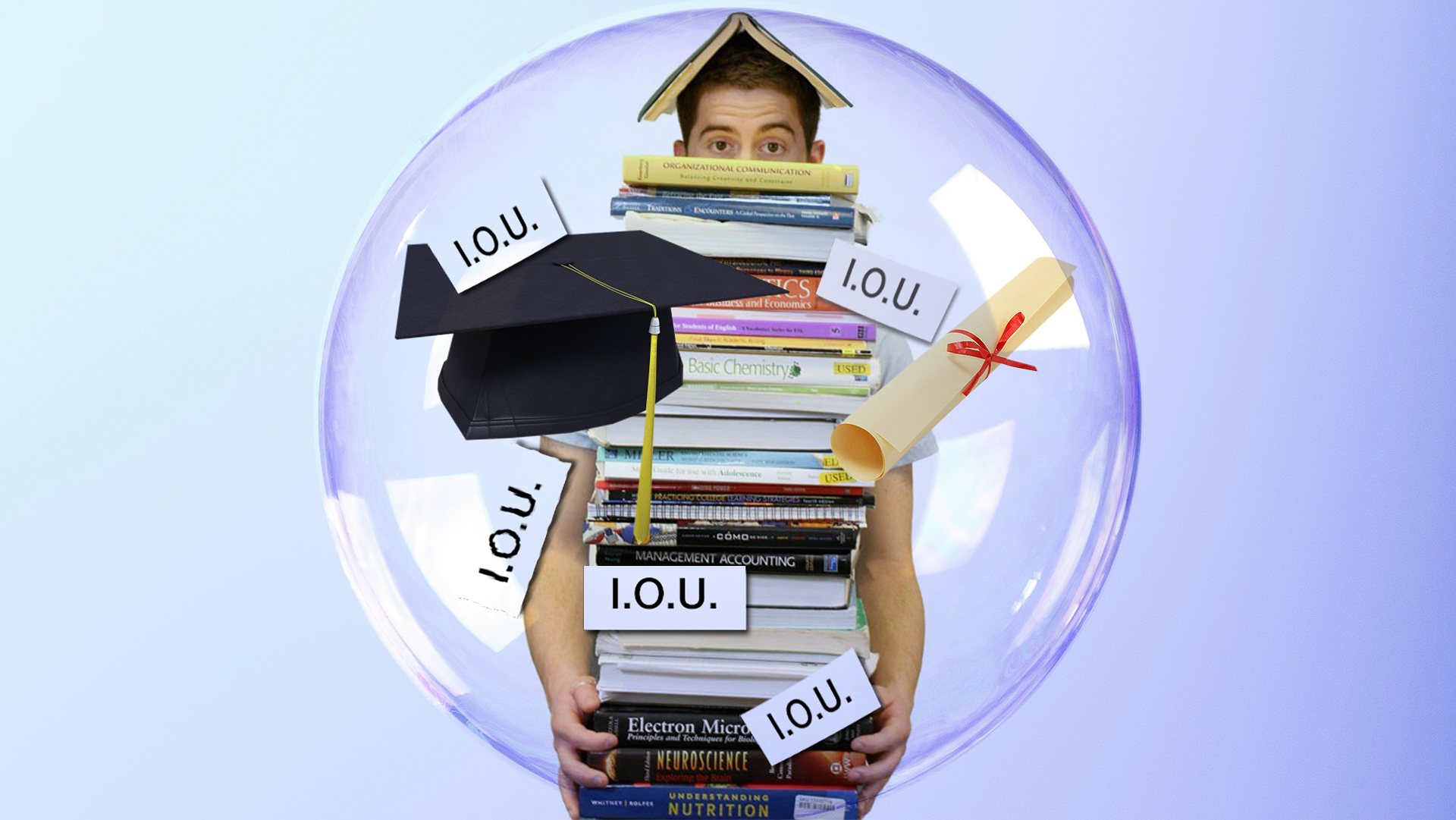
A post shared by the account @matrixmysteries on X laid out the kind of arithmetic that stops borrowers cold.
An American student who took out $40,000 (£31,500) in loans for college watched the balance swell to $118,000 (£93,000) over the years — not from missed payments or penalties, but from interest alone.
The post drew tens of thousands of reactions. But the replies did not break the way one might expect.
An American borrows $40,000 for college.Years later, the balance is $118,305.59.That's not total paid — that's what's STILL owed.$77,383.59 is PURE interest.The loan didn't fund an education. It funded a lifetime of payments.pic.twitter.com/ZeDgyaY4Ya
Some users turned their frustration squarely at the lending system itself. 'I do not support student loan forgiveness, however I do not support whatever the hell this is,' wrote X user @pwnstar. 'These things should be simple interest carried over the lifetime of the loan. This, this is just theft disguised as education.'
Others placed the blame on the borrower. 'If this grew it is because the borrower made small payments not even covering the interest and probably never touched the principal,' wrote @lee_grubbs. 'You have to be financially literate.' Another user pointed to a 14% APR and arguedborrowers should attend community college, work through their degree and avoid taking on debtin the first place.
The split captures a tension that runs through every US student debt debate. The numbers suggest both sides have a point.
The mechanism is called interest capitalisation. When a borrower enters a grace period, forbearance or an income-driven repayment plan, interest keeps accruing even while payments are paused or reduced. Once those periods end, unpaid interest folds into the principal. From that point on, the borrower pays interest on interest.
On a $40,000 (£31,500) unsubsidised loan at 7%, roughly $2,800 (£2,200) in interest builds up in the first year alone. A borrower who cycles through years of deferrals and low-payment plans without touching the principal can watch the balance climb into six figures.
It is not a hypothetical.Fortuneprofiled a Texas-based software engineer named Steve who borrowed roughly $70,000 (£55,100) for a master's in teaching. Interest increased the total to $118,000 (£93,000). 'You shouldn't have to ruin your life to get an education,' he said.
Source: International Business Times UK
