Home-KIPNEXT 3D: Kiprun Enters the 3D Printed Footwear Market
Decathlon’s performance running brandKiprunhas launched its first 3D printed shoe, the KIPNEXT 3D, joining a growing list of sportswear companies incorporating additive manufacturing into their footwear lines. The brand, created by Decathlon roughly two decades ago, has positioned itself around technical running gear and athlete partnerships, and is now extending that focus into midsole construction.
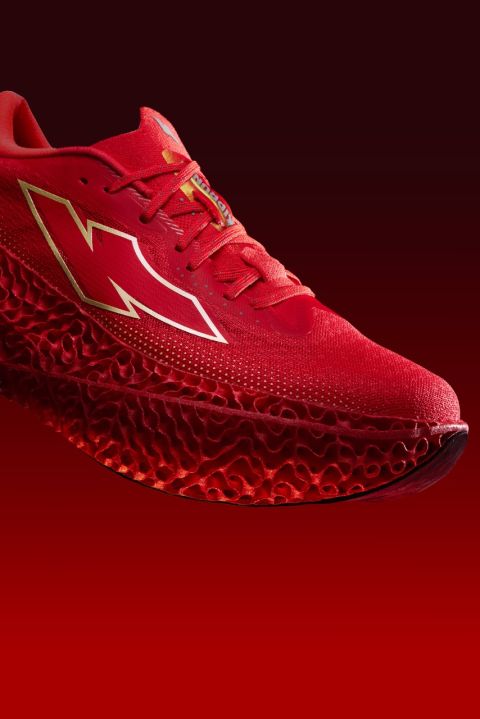
The shoe combines a knitted upper with integrated lacing and a 3D printed midsole, taking a hybrid approach rather than a fully additive construction. The visual contrast between the two components is pronounced, with the lattice midsole’s open geometry standing out against the more conventional upper.
What the Midsole Is Made Of and How It Works
The midsole is produced usingHP‘s Multi Jet Fusion process with a proprietary thermoplastic elastomer material. Its variable-density lattice structure is intended to distribute cushioning according to a runner’s stride pattern, while keeping overall weight down. Kiprun claims an energy return of 75%, compared to the 50–65% range commonly cited for EVA foam midsoles, though independent verification of that figure has not been published.
SomethingAdded, a Barcelona-based company specialising in MJF-based footwear production, supported the development alongside Decathlon’s Shenzhen innovation hub. The project went from concept to finished product in under six months.
“Embracing new methodologies and delivering a high-performance shoe in just 180 days is an inspiring human and professional adventure. Proud of what we are building together. It is just the first step of the journey, and the future of running is officially printing,” stated Anthony Dulieu, Running Director, Decathlon.
The shoe is currently sold exclusively in select Decathlon stores in China at approximately US$250, in limited quantities. No timeline for broader availability has been announced.
3D Printed Footwear Is No Longer a Niche
The footwear industry’s relationship with additive manufacturing has shifted noticeably over the past few years, moving from isolated experiments by a handful of early adopters to a growing wave of launches across market segments. Performance brands, luxury houses, and startups are all finding different reasons to explore 3D printing, whether for design freedom, customization, speed to market, or material efficiency.
Source: 3D Printing Industry
