Home-Airtech and Evergreen Additive Partner to Advance Defense and Maritime LFAM
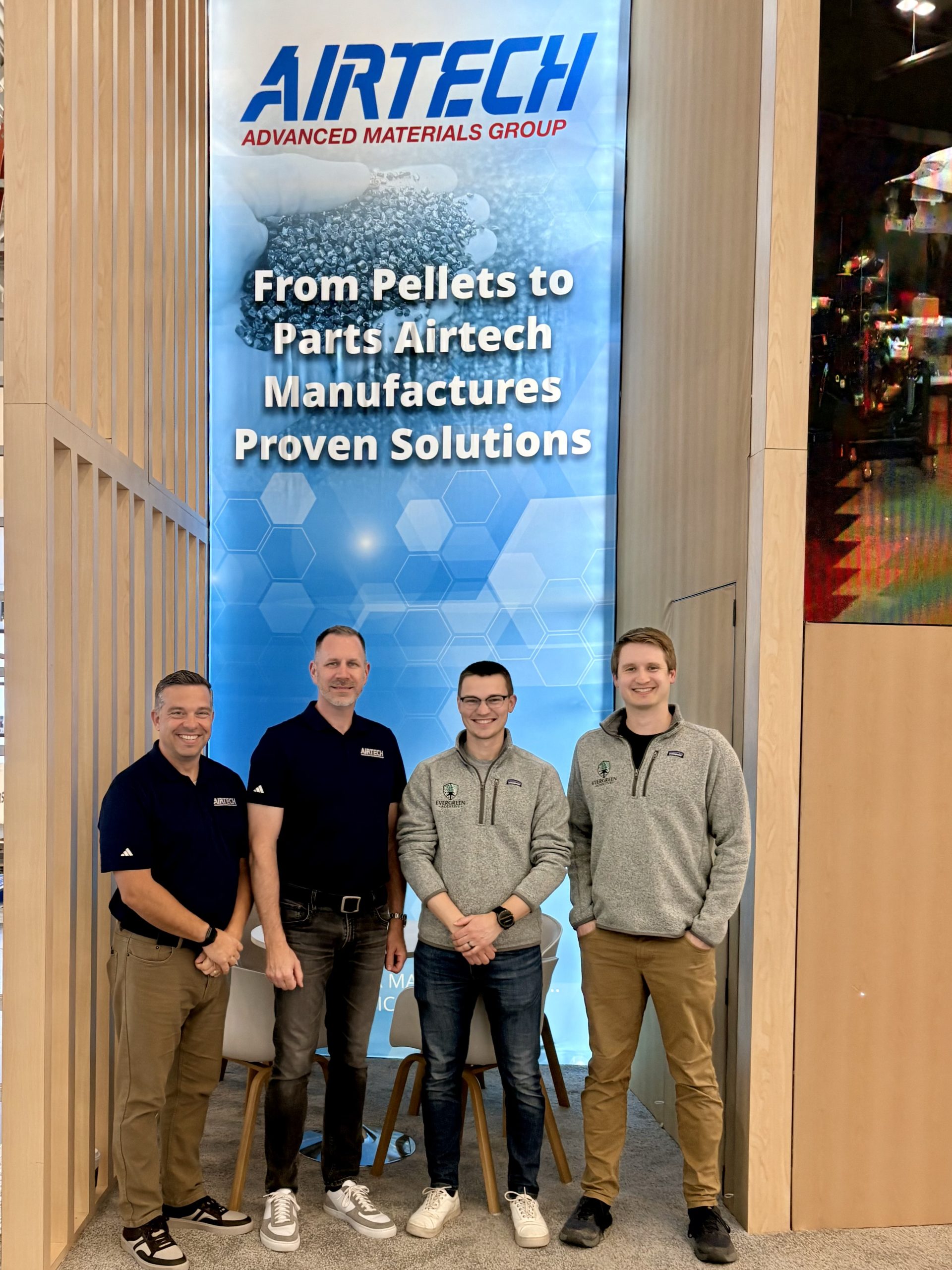
Airtech Advanced Materials GroupandEvergreen Additivehave formalized an exclusive supply arrangement to advance large format additive manufacturing (LFAM) in marine and defense contexts.
Under the terms of the deal, Airtech will deliver materials, business, and technical guidance to Evergreen, while Evergreen commits to using Airtech products exclusively across all its LFAM work. The two companies will also jointly pursue the development of materials tailored to next generation marine and defense needs.
Evergreen Additive is an advanced manufacturing technology company headquartered in Brunswick, Maine, founded in 2025 as a spinout from theUniversity of Maine’s (UMaine)Advanced Structures & Composites Center, serving the commercial marine tooling and defense unmanned systems markets. Airtech, by contrast, is a decades-old, family run enterprise established in 1973 with a global footprint spanning the U.S., Europe, the UK, China, and India, and a long track record of supplying specialty materials across aerospace, wind, automotive, and marine sectors.
Dr. Kyle Warren, CEO of Evergreen Additive, said, “Our team at Evergreen Additive is thrilled to formalize our partnership with Airtech Advanced Materials Group. This supply agreement builds on years of collaboration in maritime applications. Our business relies on high quality materials that have a predictable supply chain, which is why we’re partnering with Airtech.”
Gregory Haye, Director of Additive Manufacturing (AM) at Airtech, added that the company is keen to help Evergreen scale its innovations from the lab into full commercial application spanning parts, tooling, and direct use structures and vehicles.
Broader Implications for Defense and Industry
Beyond the two companies themselves, the partnership carries wider significance forU.S. maritime industrial capacityand national security interests. By combining Airtech’s materials expertise with Evergreen’s production capabilities, the alliance is positioned to accelerate the commercialization of novel LFAM solutions—ranging from tooling and structural parts to fully operational unmanned maritime vehicles—across multiple industry verticals.
At its core, this deal signals that the defense sector is no longer asking whether AM belongs in the supply chain; it is demanding partners who can deliver it reliably, at scale, and with materials engineered for the mission.
A Supply Chain Strategy Built for Defense-Grade Demands
Source: 3D Printing Industry
