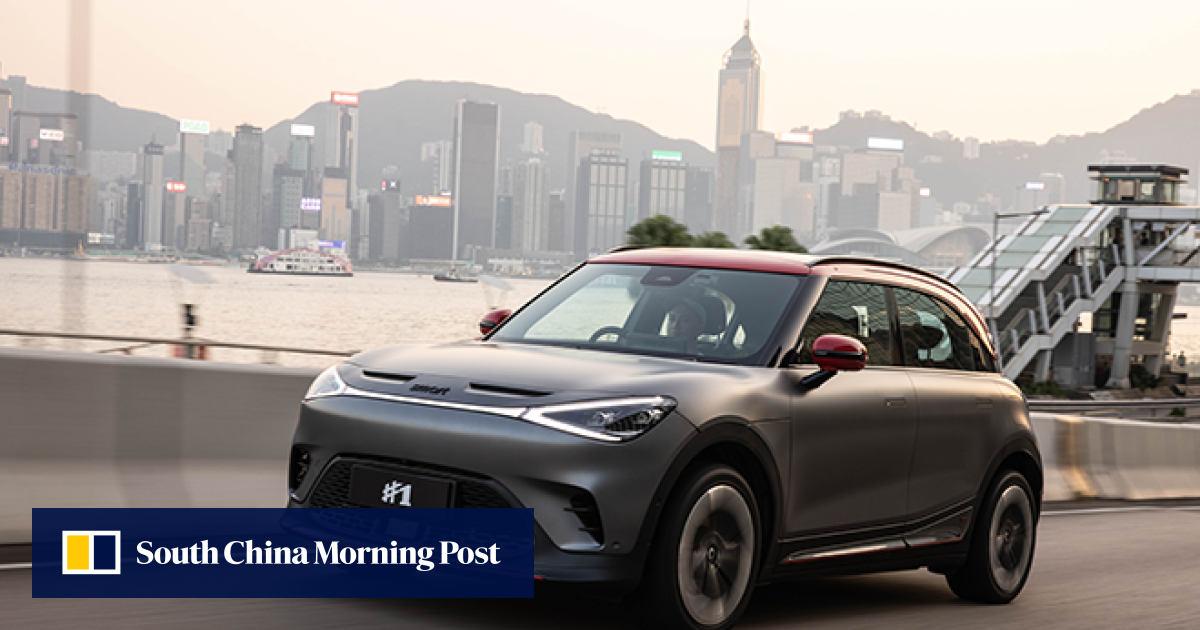
Smart Automobile Co., the premium electric vehicle brand born from the alliance between Mercedes-Benz and Geely, has kicked off 2026 with a bold blueprint for expansion, signaling a pivot toward global dominance in urban mobility. At a high-profile launch event in Shanghai, the company outlined its "Fortress 2026" strategy, which includes launching three new models, doubling production capacity, and targeting 1.2 million annual sales by year's end—a staggering leap from 2025's figures.
Central to the plan is the introduction of the smart #5, a mid-size SUV designed for affluent city dwellers craving luxury and tech without compromise. Priced competitively against Tesla's Model Y and BMW's iX3, the #5 boasts a 700-kilometer range, Level 3 autonomous driving capabilities, and sustainable materials sourced from recycled ocean plastics. Production will ramp up at new facilities in Hungary and China, with exports aimed at Europe, North America, and Southeast Asia, where smart seeks to capture 15% market share in the premium compact EV segment.
This aggressive push builds on smart's remarkable turnaround since its 2022 relaunch under the Geely-Mercedes joint venture. Once a niche player known for tiny two-seaters, smart shattered expectations in 2025 with over 280,000 units sold globally, fueled by the smash-hit #1 crossover and #3 sedan. Investments totaling €2.5 billion have poured into R&D, battery tech partnerships with CATL, and a revamped design ethos blending Scandinavian minimalism with Chinese manufacturing prowess.
Executives hailed the strategy as transformative. "We're not just building cars; we're redefining smart living in megacities," declared smart CEO Steffen Babcock during the announcement. Industry analysts echo the optimism, with UBS forecasting a 40% revenue surge, crediting smart's edge in software-defined vehicles and rapid iteration cycles. Yet, whispers of supply chain strains and intensifying rivalry from BYD and XPeng temper the hype.
Amid a maturing EV landscape, smart's bet on premium urbanites positions it uniquely against mass-market giants. As tariffs and subsidies shift worldwide, the brand's dual-heritage—German engineering finesse meets Asian scale—could prove a masterstroke. With prototypes already road-testing in Berlin and Los Angeles, 2026 looms as the year smart graduates from disruptor to leader.
