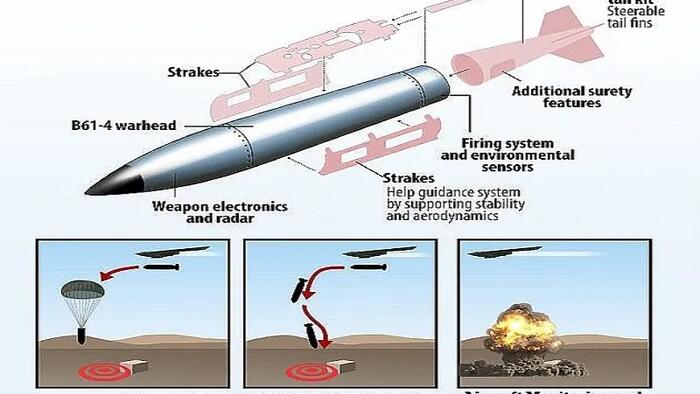
In a move that harks back to Cold War tensions, the United States is preparing to redeploy tactical nuclear weapons to British soil for the first time in nearly two decades, according to multiple reports citing defense officials. RAF Lakenheath in Suffolk, home to the US Air Force's 48th Fighter Wing, has emerged as the frontrunner site for hosting up to 24 B61 gravity bombs—America's most advanced tactical nukes, capable of yields adjustable from 0.3 to 50 kilotons. This development, first detailed in The Sunday Times, signals Washington's intent to bolster NATO's eastern flank amid escalating threats from Russia, including its hypersonic missile advancements and aggressive posturing in the Baltic region.
The Pentagon's deliberations come as part of a broader review of nuclear posture ordered by President Biden's administration, with final decisions hinging on consultations with London. British officials have reportedly given tacit approval, viewing the deployment as a deterrent against potential Russian incursions into NATO territory. F-35 stealth fighters at Lakenheath, already certified for nuclear missions, would serve as the delivery platform, enhancing rapid response capabilities across Europe. Sources familiar with the talks emphasized that no public announcement is imminent, but infrastructure upgrades at the base—such as hardened aircraft shelters—are already underway, betraying the plans' advanced stage.
Historically, the UK hosted hundreds of US nuclear weapons from the 1950s through the early 2000s, with Lakenheath serving as a key hub until the last bombs were withdrawn in 2008 under George W. Bush as part of post-Cold War de-escalation. That era's optimism has evaporated with Russia's 2022 invasion of Ukraine and subsequent saber-rattling, including Putin's repeated nuclear threats. The UK's own Trident submarine fleet provides strategic deterrence, but tactical nukes offer a theater-level option for battlefield scenarios, filling a gap left by the US pullout from similar sites in Germany and Turkey.
Reactions have been swift and polarized. Moscow wasted no time condemning the reports, with Kremlin spokesman Dmitry Peskov labeling it "a dangerous escalation that undermines global stability." In Britain, Labour defense spokesman John Healey voiced cautious support, stressing the need for parliamentary oversight, while peace activists rallied outside Parliament, decrying the return of "doomsday devices." Prime Minister Keir Starmer's government, balancing transatlantic alliance commitments with domestic anti-nuclear sentiment, faces a tightrope: bolstering security without reigniting CND-era protests.
Strategically, this redeployment underscores a seismic shift in transatlantic defense thinking. With Russia's suspension of the New START treaty and buildup of tactical warheads estimated at 2,000, NATO allies see parity as essential. Analysts argue it could deter adventurism in the Suwalki Gap or Kaliningrad, while signaling to Beijing that Washington remains committed to extended deterrence. Yet risks abound—proliferation concerns, accidental escalation, or even terrorist targeting of the site. As one former US ambassador noted anonymously, "We're not just parking nukes; we're drawing a red line in Europe's heartland."