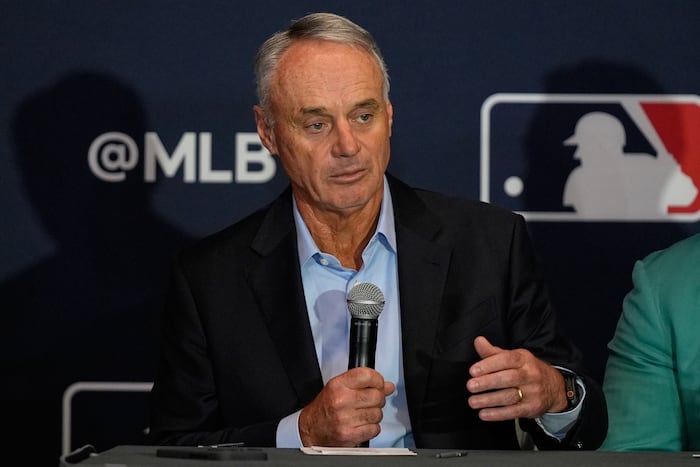
Major League Baseball owners made their long-expected salary cap proposal to the players’ association on Thursday, a system the union has vowed never to accept, setting the sides on course for a confrontation that threatens the 2027 season and perhaps beyond.
Baseball owners hadn’t proposed a firm cap since 1994. Their effort prompted a 7 1/2-month strike that forced the cancellation of the World Series for the first time in 90 years.
MLB's proposal would cap spending in 2027 at $245.3 million, using figures for luxury tax payrolls that include $20.1 million for benefits and the pre-arbitration bonus pool. It also would establish a payroll floor of $171.2 million, forcing some teams to spend more. The Los Angeles Dodgers, baseball's biggest spenders, had a $415.2 million payroll on opening day this year — around $170 million over the proposed cap.
“The cap is pretty much a nonstarter,” Pittsburgh outfielder Bryan Reynolds said.
Owners said they would discuss with the union both a phase-in schedule that would give teams like the Dodgers time to comply with the cap and an escrow system as part of a proposed seven-year deal. In an escrow system, a portion of a player's salary is withheld to ensure the agreed-to-revenue split when final figures are accounted for.
MLB maintained all current contracts would remain guaranteed and there would be no prohibition of guaranteed contracts under the cap system.
MLB said it would centralize local media revenue from the 30 teams equally and give players a 50-50 split as part of a proposal that would eliminate the current revenue-sharing plan among the clubs.
“Our salary cap and floor proposal levels the playing field while sharing baseball revenue with the players 50/50 as we grow the game together,” MLB spokesman Glen Caplin said in a statement. “Further, by sharing media revenue equally as part of our proposal, we can address another top fan concern of local TV blackouts.”
Baseball’s current five-year deal, agreed to in March 2022 after a 99-day lockout, expires Dec. 1. While a lockout next winter is expected, talks are not likely to intensify until late February or early March 2027, when the possibilities of losing regular-season games and revenue near. If regular-season games are lost, negotiations may become a standoff of which side can tolerate the most economic loss.
“Billionaire owners are not seeking to cap their profits or asset values, only player salaries,” union head Bruce Meyer said in a statement. “This isn’t out of generosity or a desire to protect the game’s well-being. It’s a play to control costs, increase profits and maximize franchise values — all at the expense of players past, present and future.”
Source: WPLG
