When astrobiologists are asked what aliens might look like, many now point not to distant galaxies but to some of the strangest corners of Earth, where researchers on several continents are using extreme microbes, toxic lakes and even sperm whales as templates for how non-human life, and perhapsalien intelligence, could appear and communicate.
The question 'What do aliens look like?' has long been shaped byscience fiction, from the tentacled Martians of H. G. Wells'The War of the Worldsto the humanoid Superman and the hand-like heptapods ofArrival. But a growing group of scientists toldNational Geographicthat the most realistic guide we have is the only biosphere we can actually touch. By pushing Earth life to its limits in laboratories and in the field, they are trying to sketch what might survive onMars, in the oceans of distant moons or in the skies of exoplanets, and how we might one day communicate with something that evolved under very different rules.
André Antunes, a microbiologist and dean at the Institute of Science and Environment at the University of Saint Joseph in Macao, is blunt about the cultural baggage around aliens. Popular imagination, he says, is still clogged with 'little green men' and near-humans in rubber foreheads, and that bias towards humanoid forms is exactly what he thinks must be shaken off.
Antunes and his colleagues instead study extremophiles, microbes that survive in places that seem hostile to life, including hydrothermal vents, sub-glacial lakes, the stratosphere and hyper-salty basins such as the Dead Sea and the Great Salt Lake.
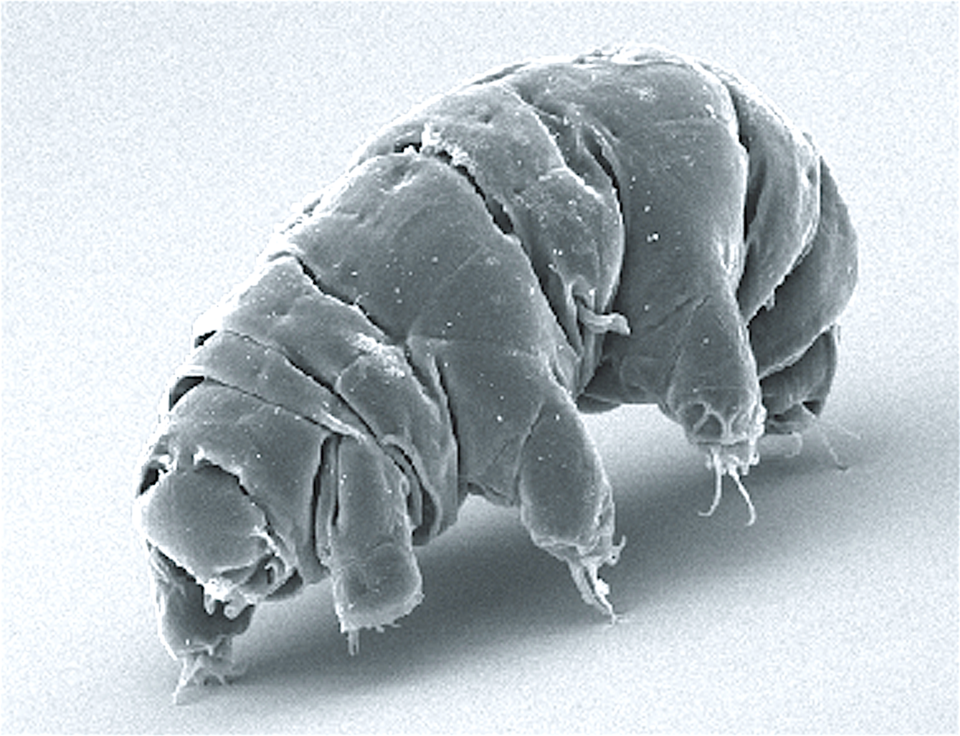
This is tardigrade (also known as water bear). Tardigrades are true superheroes. You can boil them, bake them, deep-freeze them, crush them, dehydrate them, or even blast them into space and they would still probably survive.pic.twitter.com/MjJVqsVgi4
His view is simple: simple life is probably far more common than complex intelligence, so the most honest answer to what aliens might look like is microbes.
To make that idea more testable, researchers such asAlexandre Rosado, a bioscience professor at King Abdullah University of Science and Technology, recreate alien-like environments in the lab. He studies extremophiles that tolerate conditions similar to Mars or the icy ocean worlds thought to lie beneath the crust of moons such as Europa and Enceladus.
Rosado says those simulations show how hardy microbes might behave off world. Under severe stress, they tend to slow their metabolism or go dormant, which changes what scientists should be looking for. Instead of colourful alien rainforests,early life elsewhere might show up as faint biosignatures, strange gases, unusual minerals or traces of organic material.
Studying Earth's toughest microbes, he argues, helps move astrobiology from speculation towards a science grounded in real, testable expectations of what life beyond Earth might actually look like.
Antunes points to halophiles, which thrive in extreme salt and can survive for tens of thousands of years inside microscopic water pockets in salt crystals. Given that fossilised microbes have been found in Australian salt deposits nearly a billion years old, he says dormant or extinct life could plausibly be preserved in Martian salt or buried oceans on outer solar system moons.
Source: International Business Times UK
