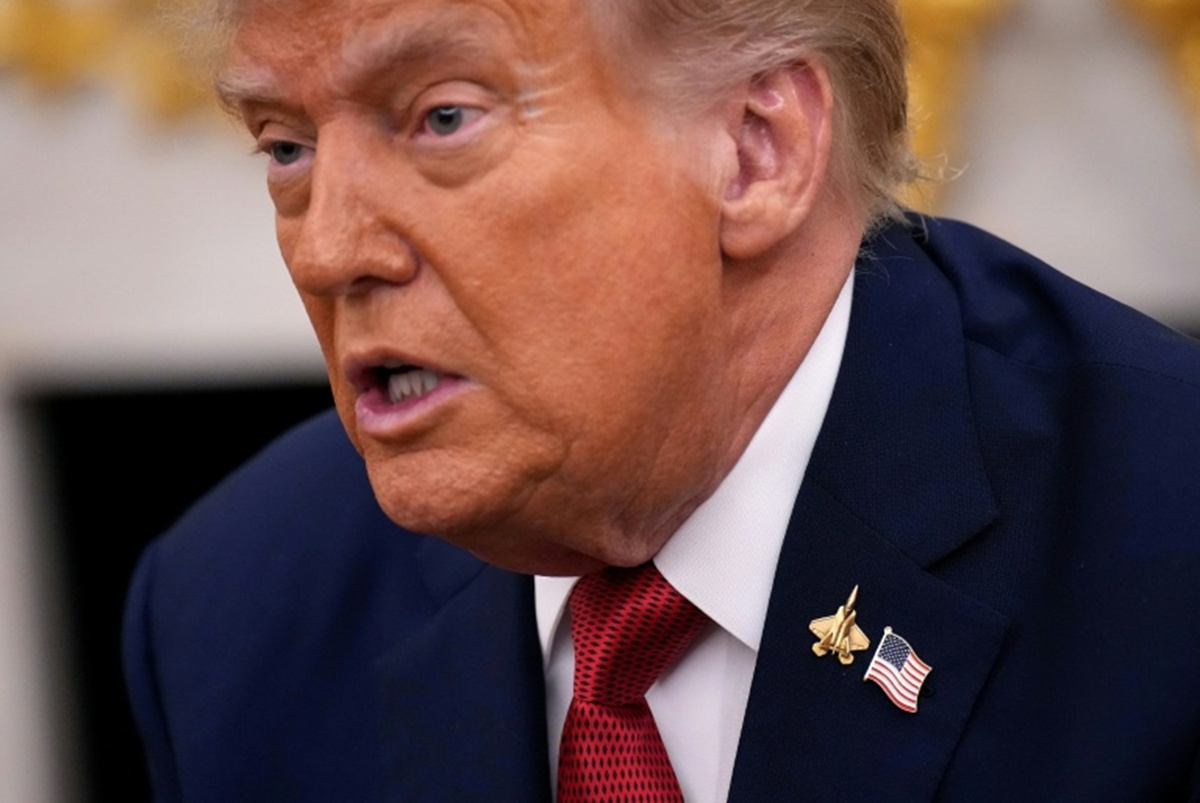
Donald Trump's four-hour sleepschedule is putting dangerous strain on the part of his brain that controls emotion and judgement, a sleep specialist has warned in the US, after the president was reportedly seen nodding off during aMemorial Day ceremony at Arlington National Cemeteryearlier this week.
Questions about Trump's sleep habits have surfaced repeatedly during his time in office and on the campaign trail, with the president himself boasting that he gets by on as little as four to five hours a night. Multiple outlets have also reportedTrump appearing to doze during speeches, meetings in the Oval Office and long public events. None of those moments has been formally explained by the White House, so concerns about what lies behind them remain speculative.
The latest criticism comes fromTom Coleman, a sleep expert and performance coach, who toldMirror USthat Trump's four-hour routine looks less like strategic rest and more like chronic exhaustion catching up with an ageing leader.
'In many high-performing settings, from elite athletes to military operations, strategic naps are used to restore cognitive decline,' Coleman said, before drawing a clear distinction. In Trump's case, he argued, the real issue is 'chronic sleep deprivation combined with enormous responsibility and an ageing leader'.
Trump is about to hit REM on camera during an Oval Office event. It's just incredible.pic.twitter.com/h0BwcHLURJ
Coleman pointed to the president's habit of framing minimal sleep as a badge of honour. Trump has repeatedly portrayed short nights as proof of toughness and a supercharged work ethic. Coleman called that part of a wider 'mythology of hustle culture' in which sleep is cast as 'weakness, laziness or a waste of time'.
'The truth, however, and by truth I mean repeatable, validated scientific evidence, would suggest or maybe even prove that the opposite is true,' he said.
Pressed on why this matters in a presidency, Coleman painted a picture of a job structurally hostile to healthy rest. The role, he said, 'destroys the possibility of good quality sleep on many different levels', from constant travel and jet lag to overnight security briefings, rally schedules, unrelenting stress and the 'massive cognitive load' of decision-making. Add age, scrutiny and a macho attitude to sleep, and, in his words, 'it's no wonder sleep crept in, even at the most inappropriate time'.
Coleman's deeper concern is not that Trump occasionally closes his eyes at a ceremony, but what a four-hour sleep pattern could be doing to his brain over months and years.
He described a cascade of effects: raised cortisol levels, fragmented sleep driven by hypervigilance and an inability to recover fully each night. Together, he said, these factors 'have to have a devastating impact on our cognitive and emotional faculties, and it erodes our ability to accurately assess any situation'.
Source: International Business Times UK
