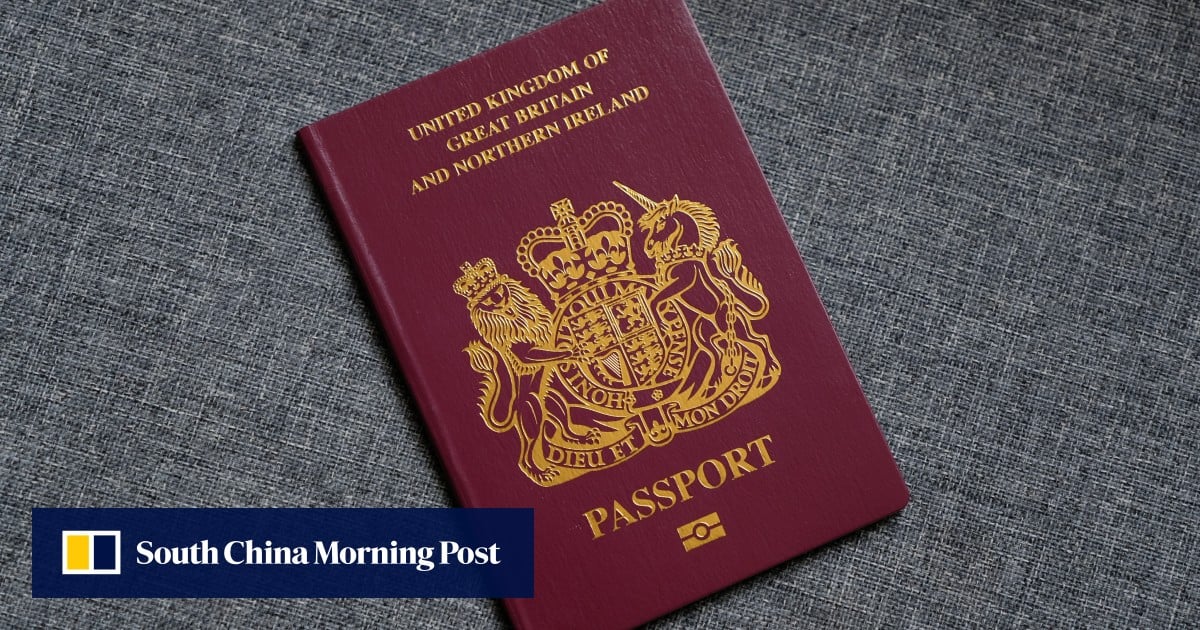
The Chinese embassy in London unleashed sharp criticism against the United Kingdom's expansion of the British National (Overseas) visa scheme, branding it a blatant attempt to "manipulate" the ongoing national security trial of Hong Kong media tycoon Jimmy Lai. In a strongly worded statement, embassy spokesperson Zhao Feihong accused British politicians of politicizing Lai's case to justify offering a fast-track pathway to residency and citizenship for up to three million BN(O) passport holders, framing the move as interference in China's internal affairs.
The controversy erupted amid heightened scrutiny of Lai's protracted legal battle, where the 76-year-old founder of the now-defunct Apple Daily newspaper faces charges of colluding with foreign forces and sedition under Hong Kong's 2020 National Security Law. Lai, a vocal critic of Beijing's policies, has been detained since 2020 and rejected bail multiple times. The embassy's rebuke specifically targeted recent comments from UK Foreign Secretary David Lammy, who invoked Lai's imprisonment as evidence of Hong Kong's eroding freedoms, linking it directly to the BN(O) scheme's extension announced last year.
Launched in 2021 following Beijing's imposition of the security law, the BN(O) pathway allows eligible Hong Kongers—those holding the special passport status created in 1987 before the handover—to live, work, and study in Britain for five years before applying for settlement and citizenship. Over 190,000 visas have been granted to date, with applications surging amid Hong Kong's political crackdown. China has consistently denounced the program as a ploy to poach talent and destabilize the semi-autonomous region, warning of countermeasures against participating countries.
British officials have defended the scheme as a humanitarian response to the erosion of rights promised under the 1984 Sino-British Joint Declaration. Lai's case, which has drawn international condemnation from figures like U.S. Secretary of State Antony Blinken and UN human rights experts, underscores the widening rift. Pro-democracy advocates in the UK argue the expansion provides a vital lifeline, while Beijing insists it rewards "rioters" and separatists.
The spat highlights deepening frictions in UK-China relations, strained further by trade disputes, espionage allegations, and Taiwan tensions. As Hong Kong's diaspora grows— with tens of thousands relocating to Britain— the BN(O) program has become a flashpoint, symbolizing London's commitment to its former colony against Beijing's assertions of sovereignty. Analysts warn that such diplomatic salvos could escalate, potentially impacting bilateral economic ties valued at billions.
