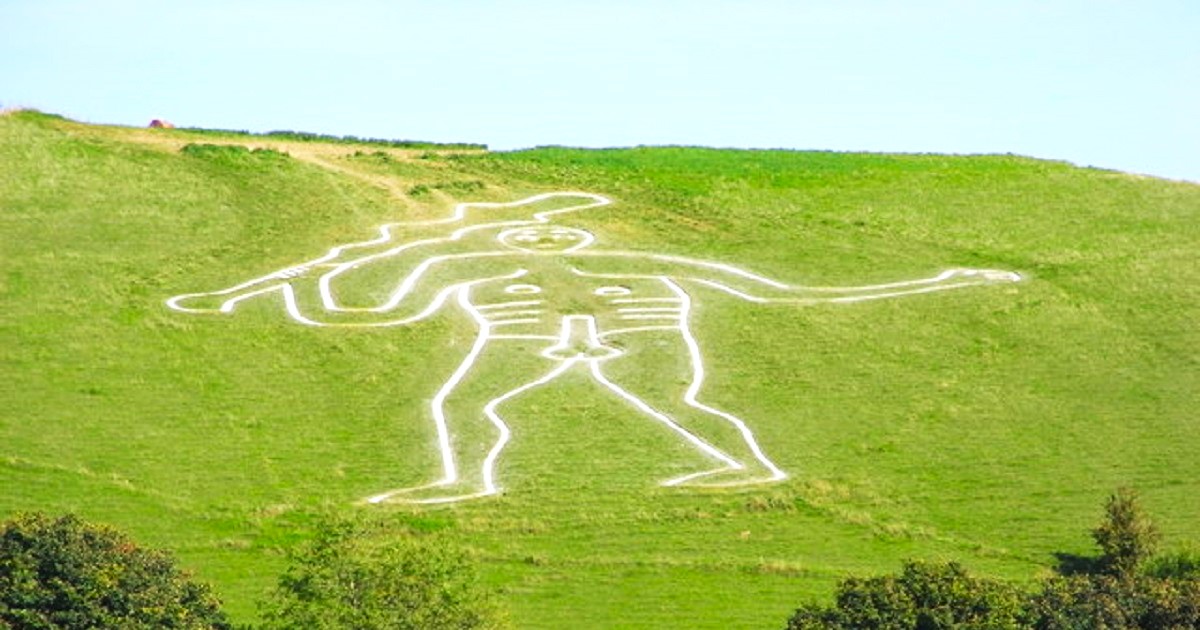
TheCerne Gianthas stood on a Dorset hillside for centuries, carved into chalk and looming over the countryside with unapologetic visibility. Now, conservation teams say Britain's most famous hill figure is being damaged faster by warmer weather, heavier rainfall and changing environmental conditions linked to the climate crisis.
Volunteers this week returned to the steep slopes above Cerne Abbas to rechalk the giant's fading outline, hauling tonnes of fresh chalk uphill in punishing heat as the National Trust warned the ancient landmark may soon require restoration more frequently than ever before.
The 55-metre-tall chalk figure is typically rechalked every seven to 10 years to maintain its bright white appearance against the green Dorset landscape. Previous restorations took place in 2008 and 2019.
However, the National Trust may rechalk Cerne Giant more often as climate conditions worsen.
Luke Dawson, lead ranger for the National Trust, said the giant has begun showing visible signs of environmental stress. Algae growth is increasingly dulling the chalk outline, while heavier rain is accelerating erosion on the hillside.
'The giant is hundreds of years old but the modern world is certainly affecting him,'Dawson said while supervising volunteersclimbing across the slope with mattocks and buckets of chalk paste.
He said warmer, wetter conditions appear to be encouragingalgae growthwhile intense rainfall is washing away sections of chalk more aggressively than before. Although the Trust is cautious about directly attributing every change to climate patterns, rangers say the shift in conditions has become difficult to ignore.
Custodians are now openly discussing whether centuries-old conservation routines are no longer enough.
'It may be we have to adapt and perhaps rechalk more often,' Dawson admitted.
The physical process of restoring the Cerne Giant has always been gruelling. Workers scrape away old chalk and vegetation by hand before packing fresh chalk into trenches cut deep into the hillside.
Source: International Business Times UK
