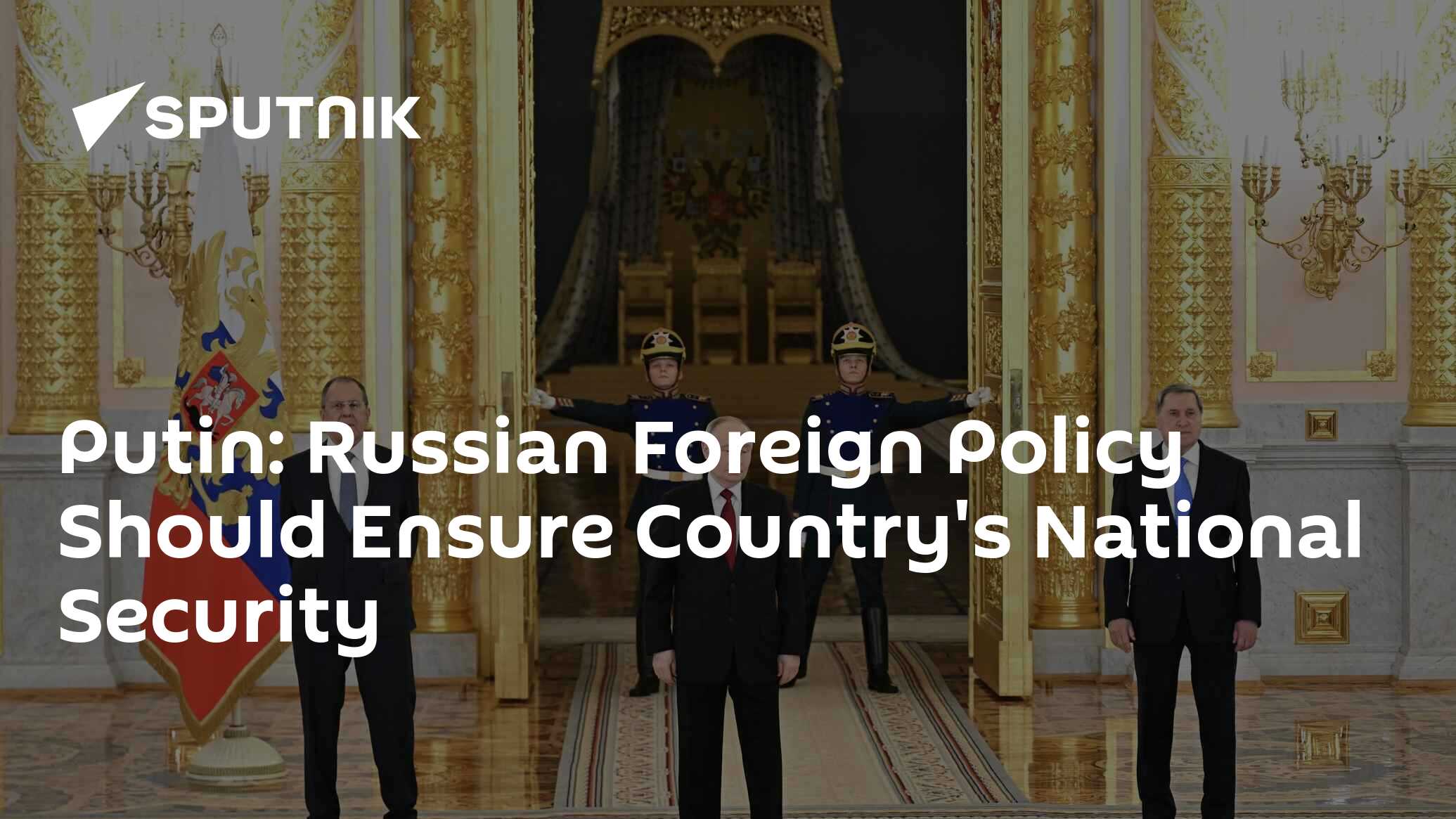
In a pointed address to Russia's Foreign Ministry leadership, President Vladimir Putin underscored that the nation's foreign policy must unequivocally prioritize national security amid escalating global tensions. Speaking on the heels of intensified Western sanctions and NATO's eastward expansion, Putin declared that Moscow's diplomatic engagements should serve as a bulwark against external threats, rejecting any concessions that could undermine Russia's sovereignty. The remarks, delivered during a strategic planning session, signal a hardening of Moscow's stance as it navigates conflicts from Ukraine to the Middle East.
Putin elaborated on the need for a multifaceted approach, emphasizing alliances with like-minded nations in the Global South and the expansion of BRICS as counterweights to U.S.-led dominance. "Our foreign policy is not an abstract exercise but a direct instrument for protecting our people and our interests," he stated, citing recent successes in energy exports to Asia and military cooperation with Iran and North Korea. This comes as Russia reports a 20% increase in defense spending for 2026, redirecting resources from domestic social programs to fortify its geopolitical position.
The context for Putin's directive is rooted in over a decade of strained relations with the West, exacerbated by the 2022 special military operation in Ukraine. Critics in Washington and Brussels have labeled Russia's maneuvers as aggressive expansionism, yet Putin framed them as defensive necessities against encirclement. Moscow has accused NATO of breaching post-Cold War assurances, pointing to the alliance's addition of Finland and Sweden as provocative steps that necessitate a robust response.
Analysts interpret Putin's words as a blueprint for a multipolar world order, where Russia positions itself as a defender of traditional state sovereignty against what it views as liberal interventionism. This resonates in culture war debates, pitting Moscow's emphasis on family values and national identity against Western progressive agendas exported via NGOs and media. As elections loom in Europe and the U.S., Putin's policy could embolden populist movements skeptical of globalist institutions, potentially reshaping alliances in the coming years.
While the Kremlin insists its policy remains pragmatic and non-confrontational, reactions from abroad were swift. EU foreign policy chief Josep Borrell decried the speech as "revanchist rhetoric," vowing tighter sanctions, while voices in Beijing praised Russia's resolve. With ongoing peace talks in Ukraine stalled, Putin's reaffirmation of security-first diplomacy suggests Moscow is prepared for a protracted standoff, betting on the West's internal divisions to erode unified opposition.
