Once again, the US appears prepared to negotiate another agreement with Iran in the hope of limiting Tehran's nuclear ambitions and reducing tensions in the Middle East. The negotiations are a dangerous illusion, based on the false assumption that compromise, sanctions relief, and engagement are the only path to regional stability.
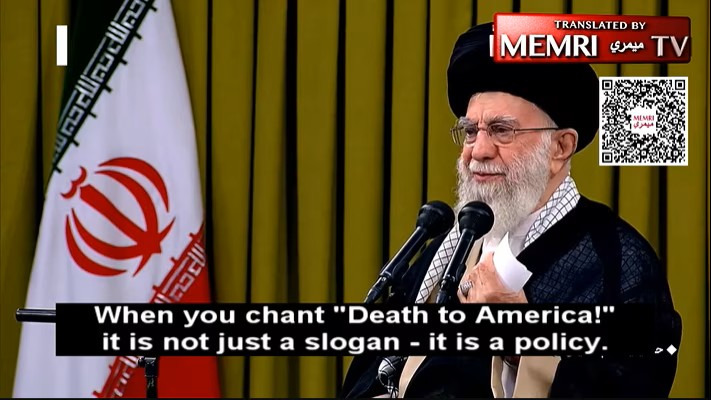
There can be no "good" deal with a jihadist regime that openly sponsors terrorism across the Middle East, brutalizes its own people,callsfor the destruction of Israel, and continues tochant"Death to America."
U.S. Interior Secretary Doug Burgum this weekcalledIran's current Islamic Revolutionary Guard Corps (IRGC) leaders "terrorists with an oil field."
An agreement will not moderate them. It will embolden them.
The Iranian regime and its terror proxies – Hezbollah, Hamas, Palestinian Islamic Jihad, and the Houthis in Yemen – will interpret any deal as a victory over the US and the West. They will see it as proof that terrorism, missile attacks, hostage-taking, nuclear blackmail, and claiming control of the Strait of Hormuz forced Western powers into concessions.
This is exactly what happened when the Obama administration signed the 2015 "nuclear deal," the Joint Comprehensive Plan of Action (JCPOA). The dealprovidedTehran with sanctions relief and access to billions of dollars while merely delaying -- not totally dismantling -- its nuclear and ballistic missile programs.
The Iranian regime never changed its behavior. There was never any need to. Instead, the regime expanded its ballistic missile program, increased support for terrorist organizations, intensified regional aggression, and steadily advanced its nuclear capabilities. Iran's mullahs repeatedlyviolatedrestrictions while exploiting loopholes and enforcement mechanisms that were pitifully weak.
Why should anyone believe that this time will be different?
The Iranian regime does not view negotiations the way Western democracies do. Tehran sees diplomacy as a tactical weapon: a means to buy time, get intrusive foreign governments off their back, weaken international opposition, divide Western allies, and secure economic relief -- all while continuing its long-term strategic objectives as fast as the circumstances after President Donald J. Trump's term in office will allow.
For the Islamist rulers in Tehran, hostility toward the US and Israel is not rhetoric. It is a core pillar of the regime's ideology and identity -- its entire reason for being.
Source: Gatestone Institute :: Articles
