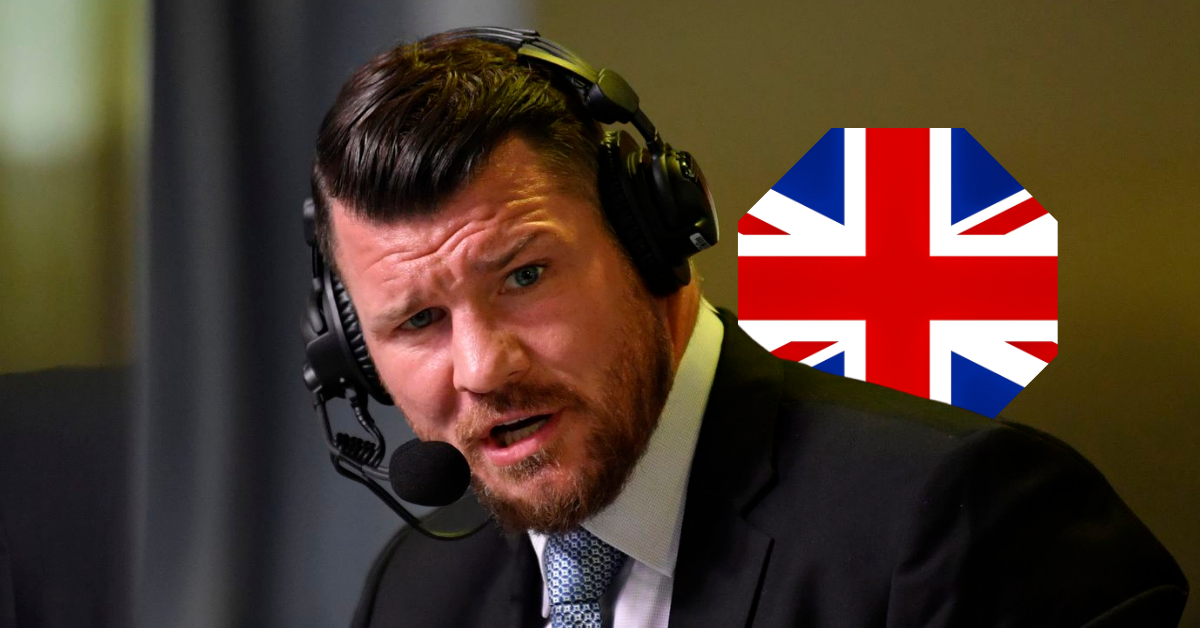
Former UFC middleweight championMichael Bispingbroke down what the current climate and future of UK MMA looks like. “The Count” believes UK MMA is in a healthy spot, even if the sport still sits outside the British mainstream. His view lines up with the current landscape:Tom Aspinallhas been recognized as the UFC’s undisputed heavyweight champion since Jon Jones retired in June 2025, while the UK continues to produce contenders and fill major arenas when the UFC comes to town.
Bisping was clear in his assessment. “Yeah, 100%,” he said when asked if UK MMA is moving in the right direction in an exclusive interview with LowKick MMA with the help of the prediction market experts atwww.casino.org/us. He pointed to Tom Aspinall at heavyweight and a steady flow of names across divisions, then added, “We’ve got some real good viable contenders in multiple divisions… I think UK MMA is in a great place.”
Bisping’s optimism was not based on nostalgia. He singled out Lerone Murphy, who “just lost to Movsar, but it was a very close fight over 5 rounds,” and that description checks out: Murphy dropped a majority decision to Movsar Evloev at UFC London in March 2026 by scores of 48-46, 48-46, and 47-47 after five rounds. Bisping’s reading was simple: “there’s no shame in that.”
He also made a strong prediction at flyweight. “Then obviously we’ve got Lone’er Kavanaugh at flyweight, who I think will be a champion one day without a shadow of a doubt,”Bispingsaid. Lone’er Kavanagh has already built a quick case for that kind of praise, moving into the UFC rankings and beating former flyweight champion Brandon Moreno by unanimous decision in a 2026main eventin Mexico City.
Bisping’s main explanation for MMA’s slower growth in Britain had little to do with talent. “MMA in the UK hasn’t gone fully mainstream due to majority of the fights happening at around 3am in the morning,” he said, arguing that live sports lose some spark when fans have to catch up the next day. He joked about staying up forAnderson Silvaknockouts that ended in seconds, then waking up tired and wondering why he had done it.
“MMA in the UK hasn’t gone fully mainstream due to majority of the fights happening at around 3am in the morning. Live sports is one of the most valuable assets in all of television. When you don’t watch a sport live, it doesn’t have that same pizzazz. When I lived in the UK, for the most part, I used to stay up and watch Anderson Silva’s fights. He knocks someone out in 15 seconds and then I’d go to bed exhausted. My wife was like, ‘how was the fight?’ I’m like, ‘why did I stay up for that? He knocked him out in 15 seconds’.
“But if you ever watch it on a Sunday morning, it’s good, it’s enjoyable, but it’s not the same. You can’t get away from it, you click on social media, the results come up or whatever, the algorithm knows what you’re looking for. It’s just hard. I mean, don’t get me wrong, The O2 Arena sells out, and the MEN Arena in Manchester, they always sell out. So, it’s in a good place and it’s always growing, but the reason it hasn’t reached the mainstream level that it has in the US is because it’s an American-based sport.”
Bisping contrasted that with his move to America in 2011, when he first watched prelims in mid-afternoon and thought, “shit, this is like a real sport.” In the UK, that routine experience is rare outside local shows or the occasional UFC event in London or Manchester.
That leaves UK MMA in an interesting place. It has champions, ranked names, prospects, and a fan base that shows up, yet it still lacks the easy weekly viewing habits that help sports break into casual homes. Bisping’s answer, in that sense, was less a sales pitch than a status report: the talent is there, the appetite is there, and the next jump may depend as much on timing and TV as on what happens in the cage.
Source: LowKickMMA.com
