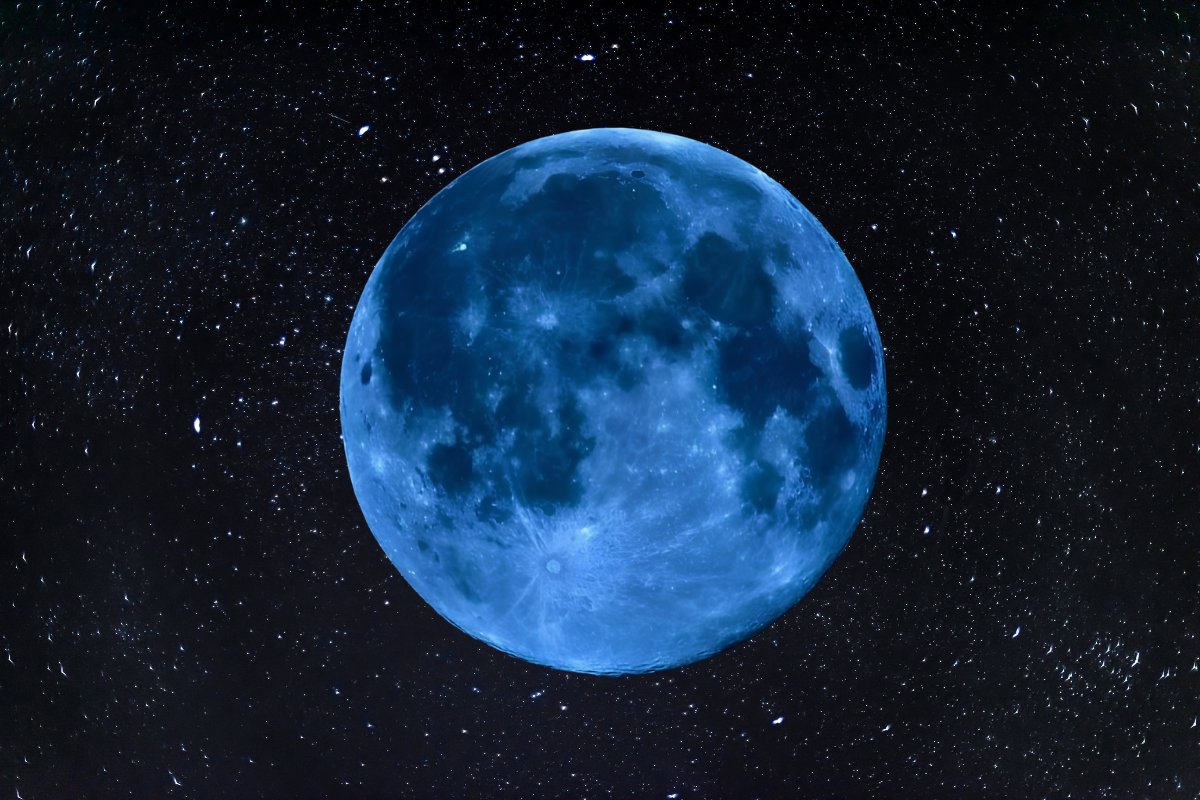
The second full moon of May rises this weekend as a rareBlue Apogee Micromoon, and skywatchers who know exactly when and where to look will catch a celestial event that won't return for at least 27 years.
The full moon reaches peak illumination at 4:45 a.m. ET (8:45 a.m. UTC) on Sunday, 31 May. But the predawn peak isn't the ideal viewing window for most people. The best time to step outside is actually Saturday, 30 May evening, shortly after moonrise, when the moon sits low on the eastern horizon and takes on a warm golden-orange glow.
The moon will appear full to the naked eye from Saturday, 30 May, through Monday, 1 June. Saturday evening offers something the predawn Sunday peak can't. A low-hanging moon near the horizon triggers what astronomers call the 'moon illusion,' an optical effect that makes the moon look significantly larger than it does higher in the sky.
Because late spring full moons don't rise as high as their autumn and winter counterparts, the Blue Micromoon could appear especially dramatic near the horizon, even though it is technically the smallest full moon of the year.
For the clearest view, head to a spot with an unobstructed eastern horizon and minimal light pollution. No telescope is necessary. Binoculars can reveal surface details, including craters and the dark volcanic plains known as lunar maria.
A micromoon occurs when a full moon falls near apogee, the farthest point in the moon's elliptical orbit around Earth. On 1 June, the moon will reach apogee at roughly 252,500 miles away.
Seth McGowan, president of the Adirondack Sky Center in New York,toldNational Geographicthat most casual observers wouldn't notice the size difference without a side-by-side comparison. Compared to a supermoon, a micromoon appears roughly 10% to 15% smaller in apparent diameter and about 6% to 7% smaller than an average full moon.
The term 'blue moon' has nothing to do with colour. It refers to the second full moon in a calendar month. May 2026 had its first full moon on 1 May, and this weekend's moon is the sixth full moon of the year.
A Blue Moon on its own isn't exceptionally rare. One occurs every two to three years. A micromoon at apogee is similarly routine. But the combination of a Blue Moon falling at the lunar cycle's farthest apogee point is far more unusual.
The last Blue Apogee Micromoon occurred on 31 October 2020. The next one visible from North America won't arrive until 30 June 2053, more than 27 years from now. Because of time zone differences in when the full moon technically falls, the rest of the world won't see another one until at least 31 December 2066.
Source: International Business Times UK
